





Gunmen Kill Worshippers in Kaduna Churches as Intersociety Says 3,083 Christians Killed in Eight Months
 West Africa WeeklyOctober 12, 20262 Mins read8
At least seven worshippers were killed and several others abducted when armed attackers struck two churches in Ariko community, Kachia Local Government Area of Kaduna State, during Easter Sunday celebrations on April 5, 2026. The affected churches were the First ECWA Church and St. Augustine Catholic Church. The councillor representing Awon Ward, Mark Bawa, said the attackers came in large numbers, surrounded the area and opened fire on worshippers. Residents said the assailants operated for a prolonged period without resistance, and poor telecommunications coverage in the area may have delayed any immediate response.
The Kaduna attack was not an isolated incident. On April 28, 2026, suspected gunmen attacked an open-air crusade organised by the Christ Apostolic Church in Eda Oniyo-Ekiti, Ilejemeji Local Government Area of Ekiti State. The officiating pastor was killed during the attack, and 15 worshippers were abducted. One of the abducted worshippers died in captivity. The remaining 14 were released more than two months later, on July 3, 2026, in what security analyst Zagazola Makama described as critical physical and emotional condition.
On May 23, 2026, gunmen attacked a Christian prayer ground in Kwara State, killing three worshippers and abducting at least 15 others. In March 2026, Islamic terrorists attacked the Christian village of Turan in Kwande Local Government Area of Benue State, killing local residents, including two parishioners of the Russian Orthodox Church. In February 2026, scores of worshippers were abducted during a church gathering in Kurmin Wali community, also in Kachia Local Government Area of Kaduna State.
A report released on September 6, 2026, by the International Society for Civil Liberties and the Rule of Law, known as Intersociety, stated that no fewer than 3,083 Christians were killed and 3,193 abducted in attacks allegedly carried out by jihadist groups in Nigeria between January and August 2026. The report said July and August were the deadliest months, with 437 Christians killed and 393 abducted. It also reported that 400 churches were attacked and 25 priests and pastors were killed or abducted during the same period. The report said most of the killings took place in Nigeria’s Middle Belt, where the largely Muslim north meets the largely Christian south.
READ MORE: Ghana and US Crack Down on $10m Cyber Scam Network as Credit Dispute Erupts
Intersociety’s broader figures claim that since Boko Haram launched its campaign in 2009, at least 19,800 churches have been attacked, 130,783 Christians have been killed and at least 82,603 have been abducted. The organisation also estimates that 61,400 moderate Muslims were killed and 50,000 abducted between 2009 and March 2026.
The Nigerian government has rejected the characterisation of the violence as a genocide against Christians, arguing that extremist groups attack Muslims, Christians and people of no religion who reject their ideology. The government maintains that terrorism, ethnic tensions, criminal networks, land disputes and state weakness all contribute to the country’s insecurity.
The BBC has previously reported on Intersociety’s role in spreading claims about a Christian genocide in Nigeria, scrutinising the origins and credibility of figures that have been widely cited by US conservative media and politicians. Social media users have accused the BBC and other international outlets of downplaying the scale of attacks on Christian communities in Nigeria, with one post stating: “This is what BBC doesn’t want you to see, the truth.”
The attacks on churches have continued despite repeated government promises to improve security. Rural communities in Southern Kaduna, Benue, Plateau and other parts of the Middle Belt remain particularly vulnerable, especially during religious gatherings and festive periods. For the families of those killed and abducted, the Easter attack in Kaduna and the crusade attack in Ekiti are not statistics. They are loved ones who went to worship and never came home.
About The Author


Related Articles
Ethiopia Opens Its First Gold Refinery With $50 Million Investment
Ethiopia has inaugurated its first national precious metals refinery, a $50 million...

Ghana and US Crack Down on $10m Cyber Scam Network as Credit Dispute Erupts
Ghanaian and United States authorities have dismantled a major cybercrime operation in...

US Builds Largest Consulate in the World in Lagos While Visa Ban Keeps Nigerians Out
The United States is constructing its largest consulate in the world in...
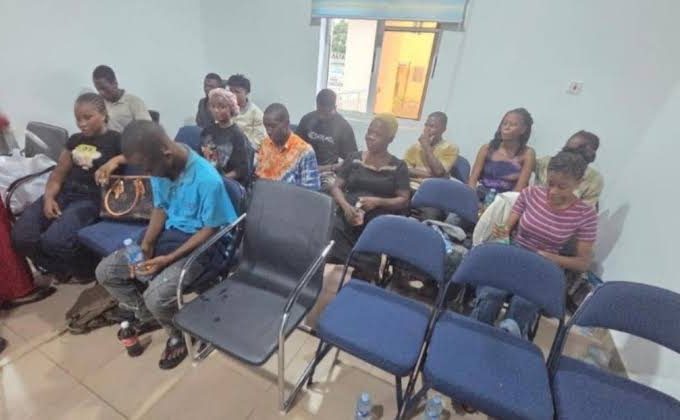

Police Claimed Mines Prevented Rescue of NYSC Members, But Corps Members Walked Out of the Forest After Ransom Was Paid
The release of 20 abducted National Youth Service Corps members in Imo...
Leave a comment