





SOS: Nigerians Are Selling GM TELA Maize On Jiji for ₦4,000 Without Proper Labeling
 Mayowa DurosinmiSeptember 1, 20251 Mins read2k
Unlabeled genetically modified (GM) TELA Maize is being sold openly on the Nigerian online marketplace Jiji for as low as ₦4,000 ($2.62), highlighting the need for consumer protection in a country where enforcement of GMO labelling remains weak.
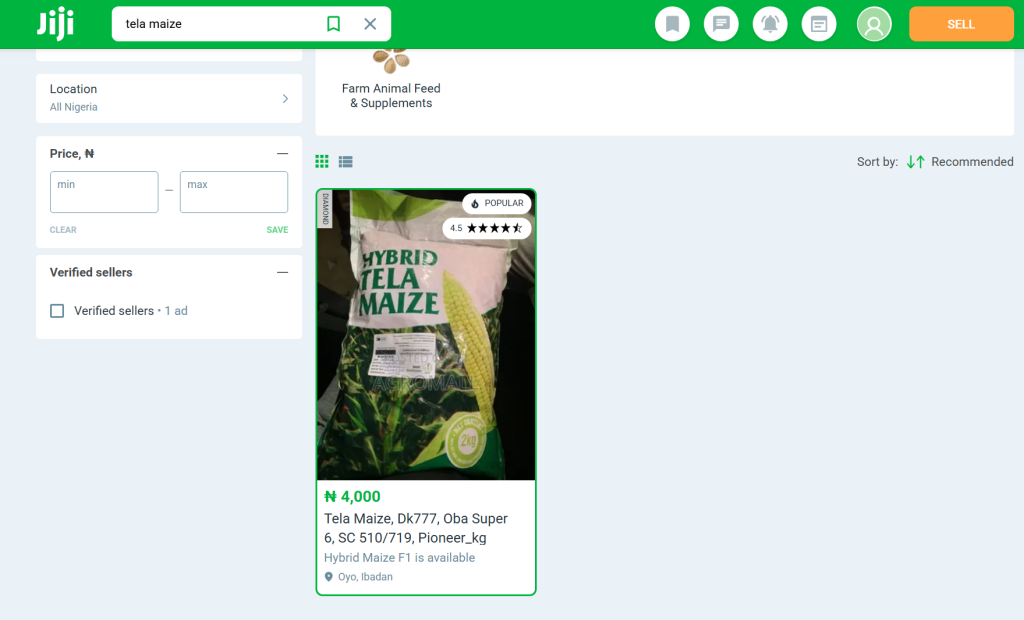
A check on Jiji revealed that several vendors on the platform are offering GM Maize without providing information about its origin or a ‘GMO’ label to inform potential buyers what they might be buying.
One of the vendors whose selling address originates from Oyo State, South-West Nigeria, posted an advert for the lab-altered seeds packaged as “maize seeds.” The advert’s vague description leaves buyers unaware that they may be purchasing a genetically modified crop.
The TELA maize variety, developed with funding support from the Bill & Melinda Gates Foundation, USAID, Rockefeller Foundation, Bayer (formerly Monsanto) and routed through the African African Agricultural Technology Foundation (AATF), and into a public-private partnership with the National Biosafety Management Agency (NBMA), Ahmadu Bello University’s (Zaria) Institute for Agricultural Research (IAR), and was introduced for human consumption in Nigeria.
While Nigeria’s NBMA approved its commercial release in 2021, it has failed to comply with a Freedom of Information request from West Africa Weekly demanding the risk assessment conducted to ascertain the environmental and health safety of GM TELA Maize. However, consumer advocates and food rights groups such as Home of Mother Earth Foundation (HOMEF) and the Centre for Food Safety and Agricultural Research (CESFAR), both against its adoption, have called for proper labelling enforcement by the National Agency for Food and Drug Administration and Control (NAFDAC) and other relevant authorities.
This improper labelling amounts to deception by the vendors on Jiji, putting millions of Nigerians at risk of consuming GMOs without informed consent.
Many food sovereignty campaigners also warn that the unregulated sale of TELA maize undermines local food systems, especially since farmers will be purchasing the seeds without understanding the intellectual property restrictions or the long-term dependency that could result.
Read: Nigerian Box Office Crosses ₦10Billion, Records 1.84M Admissions in 2025
About The Author




%s Comment
Leave a Reply
Related Articles
Ghana Responds to Israel With Reciprocal Deportations
Ghana and Israel are locked in an unusual diplomatic standoff after Accra...
Zamfara’s Mass Wedding Raises Fresh Alarm About Welfare, Religion, and the Rights of the Girl Child
The Zamfara State Government has once again sponsored a mass wedding programme,...
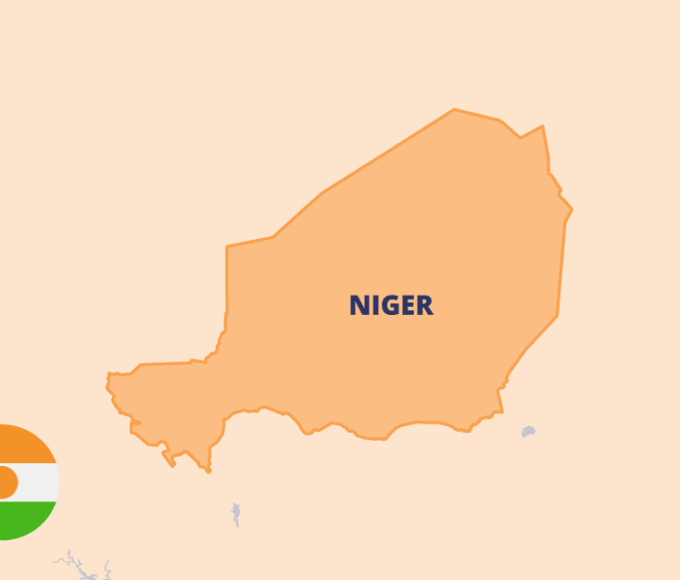
Niger Suspends More Than 320 NGOs in Niamey Over Financial Reporting Violations
Authorities in Niger have suspended the activities of more than 320 non-governmental...


South Africa Offers Refuge to Gaza Survivors While Powering Their Oppressors With R3.3bn in Weapons
South Africa’s decision to take in 160 undocumented Palestinians fleeing Gaza has...
Hmmmm shame in leaders influencers n celebrities in Nigeria for keeping quiet