


Marco Rubio Suggests Return to Western Dominance, Sparking Fears of Neo-Colonial Agenda After Controversial Munich Speech
 West Africa WeeklyFebruary 16, 20262 Mins read1.1k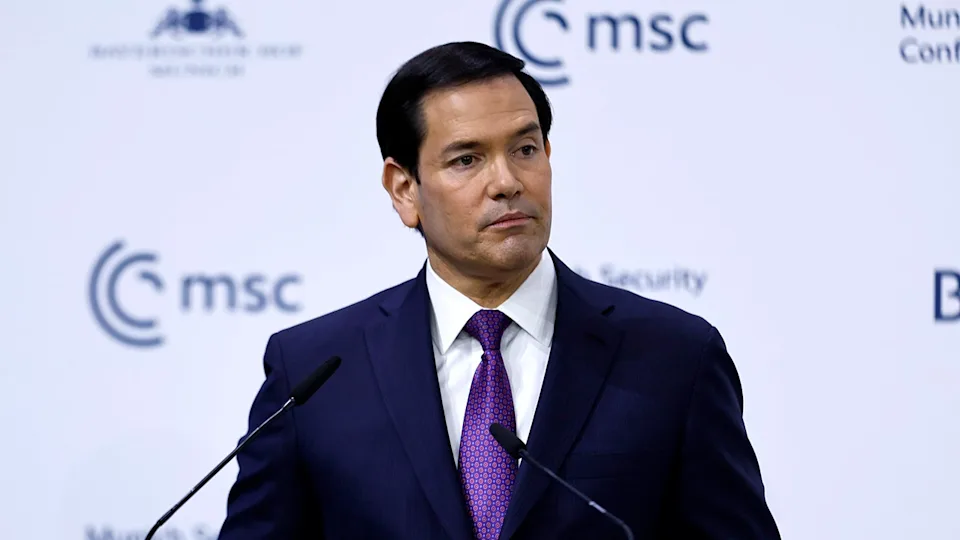
United States Secretary of State Marco Rubio has stirred intense global debate after delivering a speech at the Munich Security Conference that framed colonial history in a favourable light and called for renewed Western dominance.
Speaking before an audience of European and transatlantic leaders, Rubio reflected on the history of Western expansion, describing the period when European and North American powers built vast empires across the globe. He said Western civilisations had once projected their influence worldwide and shaped global political and economic systems.
He argued that the decline of Western empires was accelerated by anti-colonial movements and communist revolutions, which he described as forces that reshaped global power structures in the twentieth century. According to Rubio, the West must now confront what he called a period of “managed decline” and work together to restore its influence.
Rubio urged closer cooperation between North America and Europe, calling for unity to “renew” what he described as the greatest civilisation in human history. His remarks, delivered at one of the world’s most prominent security forums, drew applause from parts of the audience but quickly triggered strong reactions outside the conference hall.
Many people across Africa, Asia, and Latin America said the speech echoed colonial rhetoric and ignored the violent legacy of empire. Many commentators argued that framing colonial expansion as a civilizational achievement overlooks centuries of exploitation, forced labour, and economic extraction that shaped much of the Global South.
Rubio’s remarks come at a time when Western powers are seeking to strengthen alliances and maintain strategic influence in regions rich in natural resources and geopolitical importance. From Africa to Latin America, debates over foreign military presence, economic partnerships, and control over resources have intensified in recent years.
The speech also came amid growing tensions between Western countries and emerging powers such as China and Russia, both of which have expanded their political and economic footprints in Africa, the Middle East, and parts of Asia. In that context, some observers interpreted Rubio’s call for Western unity as part of a broader effort to counter rival influences.
The speech symbolised a persistent colonial mindset in global politics, in which powerful nations seek to maintain dominance over weaker ones.
The debate around Rubio’s remarks highlights deeper questions about the future of global power. As former colonies assert greater economic and political independence, the balance of influence between the West and the rest of the world continues to shift.
Whether Rubio’s speech will have lasting diplomatic consequences remains unclear. Still, it has reignited long-standing debates over colonial history, global inequality, and the direction of Western foreign policy in the twenty-first century.
About The Author


Related Articles
How the Multi-Trillion Naira Coastal Road Became an APC Cash Cow Just Like the Notorious Nigeria Air Aviation Scandal
The ruling All Progressives Congress is facing an intense wave of public...
Ethiopia Opens Its First Gold Refinery With $50 Million Investment
Ethiopia has inaugurated its first national precious metals refinery, a $50 million...
Ghana and US Crack Down on $10m Cyber Scam Network as Credit Dispute Erupts
Ghanaian and United States authorities have dismantled a major cybercrime operation in...

US Builds Largest Consulate in the World in Lagos While Visa Ban Keeps Nigerians Out
The United States is constructing its largest consulate in the world in...
Leave a comment