




Niger Signs $1.9 Billion Deal for West Africa’s Third-Largest Refinery
 West Africa WeeklyAugust 17, 20262 Mins read373
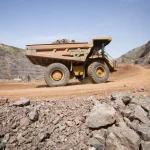
Niger has signed a $1.9 billion agreement to build a 100,000-barrel-per-day refinery and petrochemical complex in the southwestern city of Dosso, a project that would make it one of West Africa’s largest refining facilities and significantly expand the landlocked country’s domestic processing capacity. The agreement was signed on August 15 between Niger and Canadian industrial energy company Zimar Group, alongside its partner High Tech, covering the design, financing, construction, operation and eventual transfer of the refinery to the Nigerien government under a build-operate-transfer structure. The project is expected to take three years to construct and will operate for 13 years before being transferred to the state. The Nigerien government has given the consortium four months to mobilise financing and complete detailed engineering, with financial close expected within 12 months.
At 100,000 barrels per day, the planned facility would rank among West Africa’s largest refining projects by capacity once fully operational, behind only Nigeria’s 700,000-barrel-per-day Dangote Refinery and Ghana’s 120,000-barrel-per-day Sentuo Oil Refinery. The new facility would have five times the capacity of Niger’s existing Zinder refinery, operated by Société de Raffinage de Zinder (SORAZ), which processes about 20,000 barrels per day. The Zinder refinery, built with investment from PetroChina which holds a 60 per cent stake, was commissioned in 2011 and mostly supplies the Nigerien domestic fuel market. The Dosso project marks a significant expansion of Niger’s refining ambitions and could allow the country to move beyond exporting crude towards supplying refined petroleum products to domestic and regional markets. The agreement also includes pipelines, storage facilities and a wider petrochemical complex, creating the potential for an industrial hub rather than simply another refinery.
Zimar Group CEO Benjamin Day Marc said the company plans to develop the infrastructure needed to support the refinery and create thousands of direct and indirect jobs, with a focus on training Nigerien workers. He also said the refinery would process Nigerien crude for domestic consumption and that surplus petroleum products could be supplied to neighbouring countries. That regional ambition is particularly significant for Niger, which is landlocked and relies heavily on external supply chains for fuel. The project builds on a memorandum of understanding signed between Niger and Zimar in October 2024, which also described a 100,000-barrel-per-day facility. The latest agreement moves the project beyond the earlier MOU into a formal public-private partnership framework, although financing remains a major milestone.
READ MORE: Osun Election Was Not a Success, It Was a Warning for 2027
The refinery is part of Niger’s broader push to extract greater value from its growing petroleum sector. Niger began exporting crude through the Niger-Benin oil pipeline in 2024, a 950-kilometre pipeline built by CNPC as part of a $4.6 billion investment in the country’s petroleum industry. The pipeline has a capacity of 110,000 barrels per day and has increased Niger’s crude production five-fold, making the country a significant exporter. Niger has also exported 14 million barrels of oil via Benin since the pipeline began operations. The country is now seeking to develop more downstream capacity so that a larger share of the value generated from its petroleum resources remains within the country. The Dosso project could eventually strengthen Niger’s position within the Alliance of Sahel States, particularly if it can supply refined products to neighbouring Burkina Faso and Mali, both of which are landlocked and heavily dependent on imported fuel.
Foreign Minister Bakary Sangaré described the agreement as a landmark for Niger’s energy sector. The estimated cost of the project is $1.9 billion, with the Nigerien government holding a 40 per cent stake while the private consortium holds 60 per cent. The project’s success will depend on whether the private-sector partners can secure the capital needed to move from agreement to construction. Those deadlines will be closely watched as Niger attempts to transform itself from a crude exporter into a regional energy hub.
About The Author


Related Articles
Senegal’s Power Cuts Force Government to Push Gas as the Long-Term Fix
Senegal’s energy minister says the power cuts that hit the country hard...
Ethiopia and Eritrea Cut Diplomatic Ties as Tigray Conflict Escalates
Ethiopia and Eritrea have severed diplomatic relations as renewed fighting in northern...

Tinubu Cannot Even Speak for Himself, Nigerians Say After Edited Broadcast Exposed
Nigerians on social media have accused the Presidency of manipulating President Bola...
Tinubu’s Cancer Analogy Backfires as Nigerians Remind Him He Was in Power Since 2015
President Bola Tinubu’s attempt to paint himself as the leader who inherited...
Leave a comment