


Kogi State Has N820 Billion Budget for 2026, Yet Schools Have No Roofs and Roads Are Death Traps
 West Africa WeeklyAugust 17, 20263 Mins read313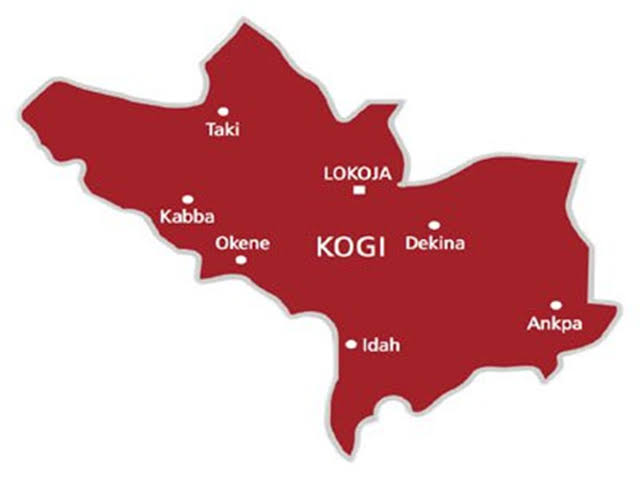
A visit to Kogi State has laid bare the shocking reality of a state that continues to receive billions of naira in monthly federal allocations while its people are left to survive without basic infrastructure, a development that has sparked fresh outrage over the disconnect between governance and the lived experience of citizens.
The Kogi State Government passed an N820.49 billion budget for the 2026 fiscal year, comprising N470 billion for recurrent expenditure and N453 billion for capital projects. The state also received N45.96 billion from the Federation Account in the first three months of 2026 alone. Yet despite these staggering sums, schools across the state have no roofs, no chairs, no tables and barely any basic infrastructure. Roads remain largely impassable. Electricity is a major issue. And the general state of things is deeply distressing.
In a post shared on X on Monday, Esther Umoh recounted her visit to the state, describing conditions she said were deeply distressing. “We travelled to Kogi today, and I honestly still cannot believe that a state can be in such a deteriorating condition in 2026,” she wrote. “I simply don’t want to believe what I saw.” According to Umoh, some of the schools visited had no roofs, no chairs, no tables and barely any basic infrastructure. Roads were terrible, electricity was a major issue, and the general state of things was deeply distressing. “And yet, money is allocated to the state every single month. So, where is the governance? Where is the accountability? What exactly are the leaders doing with the resources entrusted to them?” she asked. Umoh said what she saw had left her broken, and she questioned how leaders could be comfortable while the people they were elected to serve were left without basic necessities. “There is no excuse for this level of neglect and gross mismanagement in 2026. Nigeria deserves better. Kogi deserves better. And Nigerians must demand for good governance,” she wrote.
We travelled to Kogi today, and I honestly still cannot believe that a state can be in such a deteriorating condition in 2026. I simply don’t want to believe what I saw.
Some of the schools we visited had no roofs, no chairs, no tables and barely any basic infrastructure. The…
— Esther Umoh (@EstherUmoh10) August 15, 2026
The roads in Kogi State are in a state of collapse. The Lokoja-Abuja highway, a major federal road that connects the state to the Federal Capital Territory, has been in a deplorable condition for years, causing hardship for commuters and businesses. In June 2026, Works Minister David Umahi gave contractors a 72-hour deadline to resume work on the road after more than 90 per cent of the Abuja-bound carriageway was damaged. The situation was so dire that Governor Usman Ododo expressed confidence that federal intervention would finally end the recurring traffic nightmare on the highway. In April 2026, gridlock along the Nataco-Banda axis left thousands of commuters and businesses stranded. The governor has since restructured the road contract, splitting it among six construction firms instead of assigning it to a single contractor.
But the problems extend far beyond the Lokoja-Abuja highway. The Ayangba-Dekina-Shintaku federal road has deteriorated to a deplorable state. The Otuocha-Ibaji-Idah Road, which serves thousands of people in riverine communities, remains largely impassable. The strategic Itobe-Ayangba-Ankpa-Otukpa federal road continues to claim lives, damage vehicles, and stifle economic activities. The Aloma-Akpanya-Enugu-Ezike Road, despite being awarded for construction, has been abandoned without explanation. The Idah-Nsukka Road has also become a death trap after years of neglect. Residents of Idah have petitioned Governor Ododo over the deplorable state of township roads, accusing the contractor handling the project of gross incompetence and abandoning the site. In Kabba, the Ikowa Opa Road has become terribly deplorable and almost impassable for vehicles, especially during the rainy season.
READ MORE: Niger Signs $1.9 Billion Deal for West Africa’s Third-Largest Refinery
The education sector is in a similar state of decay. Okene Secondary School, one of Kogi State’s oldest and most prestigious educational institutions, has seen its infrastructure crumble after years of neglect. Classrooms and learning facilities continue to deteriorate, with crumbling classrooms, dilapidated infrastructure, a neglected environment, and inadequate learning facilities painting a heartbreaking picture. A public affairs commentator warned that allowing the institution to deteriorate further would undermine human capital development in Kogi Central and the state at large. “The collapse of Okene Secondary School is not merely an infrastructural failure; it is a threat to the human capital development of Kogi Central. Every neglected classroom represents lost opportunities, while every abandoned laboratory signifies unrealised scientific discoveries,” he said.
The state government has also been criticised for proposing a N50 billion airport project while basic infrastructure remains in ruins. Critics have described the airport as a misplaced priority and a shameful waste of resources, warning that funds could be better spent on people-centered infrastructure. Others have questioned why the government has not entered into a Memorandum of Understanding with cement companies located in the state to build houses for its citizens.
The questions raised by Umoh are not new, but they have been given fresh urgency by her firsthand account of the deteriorating condition of schools and roads in the state. Kogi State, like many other states in Nigeria, receives billions of naira from the Federation Account every month. Yet the dividends of governance remain largely invisible to the ordinary citizen. The state has an N820 billion budget, yet schools have no roofs. The state receives billions in federal allocations, yet roads remain impassable. The state government is proposing a N50 billion airport, yet children are learning in crumbling classrooms.
As Umoh put it, “Nigerians must demand for good governance.” The question is whether the leaders will finally listen.
About The Author


Related Articles
Senegal’s Power Cuts Force Government to Push Gas as the Long-Term Fix
Senegal’s energy minister says the power cuts that hit the country hard...
Ethiopia and Eritrea Cut Diplomatic Ties as Tigray Conflict Escalates
Ethiopia and Eritrea have severed diplomatic relations as renewed fighting in northern...

Tinubu Cannot Even Speak for Himself, Nigerians Say After Edited Broadcast Exposed
Nigerians on social media have accused the Presidency of manipulating President Bola...
Tinubu’s Cancer Analogy Backfires as Nigerians Remind Him He Was in Power Since 2015
President Bola Tinubu’s attempt to paint himself as the leader who inherited...
Leave a comment