


Osun Election Was Not a Success, It Was a Warning for 2027
 West Africa WeeklyAugust 17, 20264 Mins read9
The August 15 governorship election in Osun State has exposed the fragile state of Nigeria’s electoral system, revealing widespread violence, institutional failures, and the weaponisation of state machinery against voters. Despite the re-election of Governor Ademola Adeleke, the election laid bare the deep-seated problems that threaten to undermine the 2027 general elections.
The Independent National Electoral Commission declared Adeleke the winner on Sunday after he polled 511,067 votes, defeating his closest challenger, Bola Oyebamiji of the All Progressives Congress, who scored 444,815 votes. Adeleke won 19 of the state’s 30 local government areas, while Oyebamiji won 11. But beneath the surface of the result lies a troubling picture of an electoral process under siege.
Election observers documented 323 electoral offences and irregularities across 726 polling units, alongside 38 security incidents. Vote trading topped the reported offences with 103 cases, followed by ballot-paper exposure with 85 cases. Observers also recorded 38 cases of campaigning at polling units, 31 cases of voter obstruction, 28 cases of inducement of polling and security officials, 14 cases of voter impersonation, and 12 cases of multiple voting. The Hub also reported 25 cases of thuggery, 12 attacks on election officials, and cases of voter intimidation allegedly involving security personnel.
In one of the most brazen incidents, suspected political thugs invaded a polling unit in Ejigbo Local Government Area, forcing voters and electoral officials to flee and disrupting accreditation and voting. The violence was so severe that INEC officials and residents had to scamper to safety. Teargas was reportedly deployed against voters in some locations, and ballot boxes were snatched in multiple areas.
The scale of the violence was not limited to isolated incidents. In Ejigbo, trouble erupted shortly after the governorship candidate of the African Democratic Congress cast his vote. In Ikire, a serving member of the Osun State House of Assembly, Hon. Abiola Ibrahim Inaolaji, was arrested alongside 146 suspected electoral mercenaries in a joint security operation. According to police, about 200 Permanent Voter Cards were recovered from the lawmaker’s residence. A video obtained after the arrest showed Inaolaji allegedly stating that he facilitated the movement of the 146 suspects into Osun from neighbouring states to participate in the election.
In another operation, security operatives arrested 33 suspected electoral mercenaries at a hotel in Ede. Police said preliminary investigations indicated that the suspects had been brought into Osun State from Ondo State for alleged unlawful electoral activities. Four voter cards were reportedly recovered from them. The suspects allegedly told investigators that an unidentified politician recruited them and promised them financial rewards for participating in the election.
The prevalence of vote-buying was staggering. Reports indicated that one of the political parties sent N5 million to each polling unit, giving out a minimum of N20,000 per voter. The party allegedly gave between N2 million and N5 million to top security officers in each of the local government areas, with the Divisional Police Officer receiving the least. The Centre for Journalism Innovation and Development said it received reports that N50,000 was given to each voter in some polling units in Ilesa East Local Government Area. Security personnel were also implicated in vote-buying, as they allegedly received cash from a certain political party in Ayedaade and Ife North local governments.
At Polling Unit 13 in Ejigbo Local Government, bundles of cash were seized from an agent of a party buying votes. A viral video showed voters confronting a party’s agent with bundles of cash allegedly for vote-buying at Polling Unit 11 in Olorunda Local Government Area. There was also a report of vote-buying in Osogbo, where a party allegedly paid each voter N25,000.
The election also exposed serious operational failures by INEC. Governor Ademola Adeleke expressed concern over the malfunctioning of BVAS machines in several polling units, saying the slow pace of accreditation was frustrating voters. He alleged that suspected thugs were disrupting the electoral process in Olorunda and Irewole Local Government Areas, accusing a man he identified as Enuku and his associates of intimidating voters.
Observers reported 58 BVAS malfunctions, with 41 devices later restored. The Centre for Democracy and Development, which monitored the election across Osun’s 30 local government areas, reported operational issues with BVAS, including slow processing and biometric verification problems. Yiaga Africa reported that BVAS malfunctioned in 20 percent of polling units, and has called on INEC to conduct a comprehensive technical audit of the devices.
Economist and founder of ANAP, Atedo Peterside, raised concerns over the non-uploading of results from 62 polling units on INEC’s Result Viewing portal. As of the day after the election, only 98.35 per cent of results had been uploaded, short of the expected 100 per cent. Peterside said INEC still needed to explain why results from 62 of the state’s 3,763 polling units remained unpublished. He noted that while the outstanding results might no longer affect the outcome because Adeleke had already been declared winner, the commission should nevertheless explain the delay and stakeholders must hold INEC’s feet to the fire to ensure transparency and accountability in future elections.
The violence was not confined to election day. At least 34 election-related violent incidents and 18 deaths were recorded in Osun State between May and August 2026, according to the Centre for Journalism Innovation and Development’s Conflict Tracker. In June, a 14-year-old boy was shot dead in what his father blamed on suspected political thugs. INEC had earlier identified 11 local government areas in Osun as potential flashpoints, and security forces were issued strict operational directives to neutralise thuggery and cult activities. Despite these preparations, the violence still occurred.
The Osun election serves as a stark warning for the 2027 general elections. The same patterns that have plagued Nigerian elections for decades, violence, vote-buying, thuggery, and institutional failures, were on full display. SERAP has called on INEC, EFCC, and ICPC to investigate alleged vote-buying, financial inducement, violence and other electoral offences linked to the 2026 Osun State governorship election. The group noted that the legitimacy and credibility of the Osun election result ultimately depend upon whether voters were genuinely able to freely exercise their right to participation and political choice.
The Transition Monitoring Group has cautioned against blaming INEC for every electoral malpractice, noting that vote buying, intimidation, thuggery and other forms of manipulation are largely perpetrated by politicians and their agents. But the group also urged political parties to move away from politics driven by violence.
Atedo Peterside has made a crucial point: a large voter turnout is the best antidote to rigging. The 43.4 per cent turnout recorded in the Osun election was high by recent Nigerian standards and demonstrated that strong voter participation remains the most effective safeguard against electoral malpractice. But turnout alone is not enough. INEC must address its operational weaknesses, security agencies must be held accountable for their conduct, and political parties must renounce violence and thuggery.
The Osun election was not a success. It was a lesson in how not to conduct an election. And if the lessons are not learned, the 2027 general elections will be a disaster.
About The Author

Related Articles
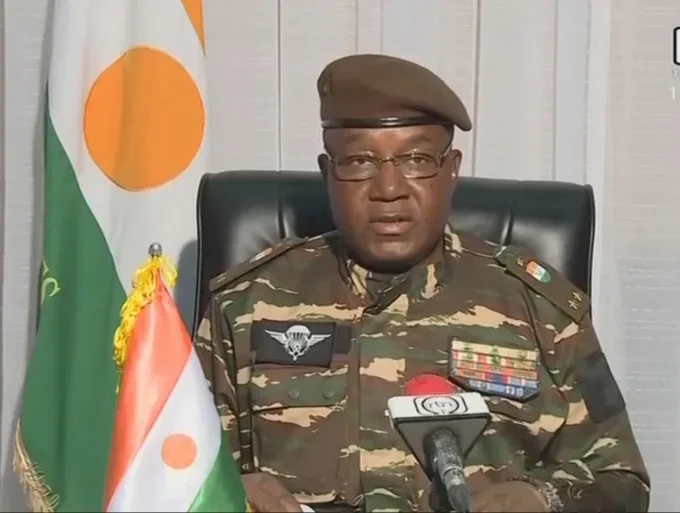
Niger Signs $1.9 Billion Deal for West Africa’s Third-Largest Refinery
Niger has signed a $1.9 billion agreement to build a 100,000-barrel-per-day refinery...
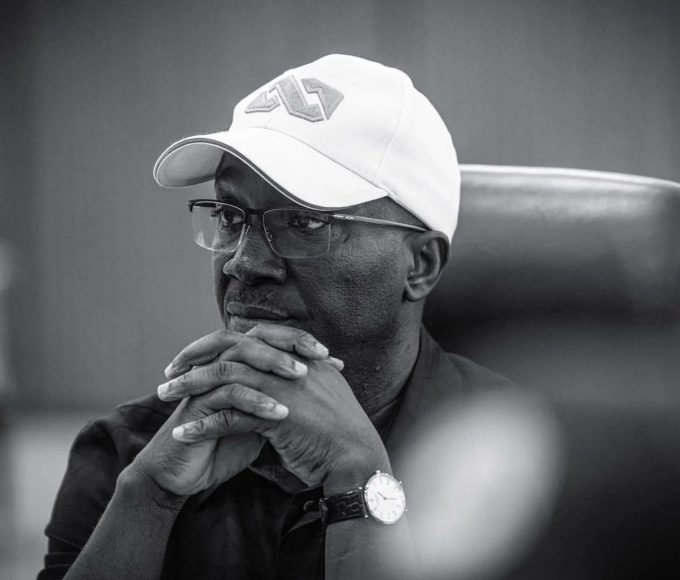
Edo Governor Who Confused Million and Billion During Budget Speech Sees Domestic Debt Surge N59 Billion, State Now Sixth Most Indebted in Nigeria
Edo State’s domestic debt has surged by N59.37 billion under Governor Monday...
Ghana Traders Question New Defence Deal with Burkina Faso Over Security Concerns
The Ghana National Tomatoes Traders and Transporters Association has expressed skepticism about...

Ebonyi and Abia Assemblies Pass Bills Regulating Rents and Agent Fees, Ebonyi Adds Scrap Trade Regulation
The Ebonyi State House of Assembly has passed a legislation to regulate...
Leave a comment