






Senegalese Company Produces First Africa-Made Treatment for Sickle Cell Disease
 West Africa WeeklyAugust 27, 20262 Mins read537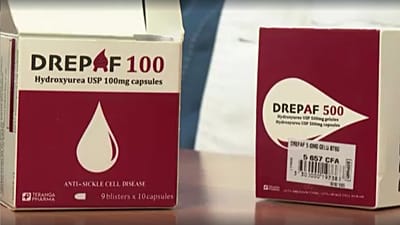
A Senegalese pharmaceutical company has produced the first Africa-made treatment for sickle cell disease, a breakthrough that offers hope to millions of sufferers across the continent who have long relied on expensive imported medication.
Teranga Pharma, based in Senegal, has developed Drepaf, a generic version of hydroxyurea, which the World Health Organization recommends as the gold standard for managing the inherited blood disorder. The drug was launched in November 2025 and is now available in 500mg doses for adults and 100mg doses for children, with the goal of reducing painful crises by threefold.
Africa accounts for nearly 80 per cent of global sickle cell cases, yet the continent has historically depended on costly imports from Europe and the Americas. For many families, the price of treatment has been a crushing burden. Mamadou Tahirou, an 18-year-old patient, looks frail and much younger than his age because of the disease. Symptoms including bone pain, severe anaemia, extreme fatigue and intense headaches frequently land him in hospital. “It hurts a lot, and you suffer so much. And when you don’t have enough resources to protect yourself from the illness, you suffer even more. My parents are exhausted, I know that,” he said. His mother, Rabiatou Diallo, spoke with tears in her eyes, saying her son is very tired and often in hospital. “He has pain in his feet, and at the moment he cannot walk. It is very difficult. The medication and hospital costs are very expensive,” she said.
Before Teranga Pharma developed Drepaf, if a person could not obtain or afford imported medicine, no local solution was available. Doctors often had to treat the consequences of the disease rather than addressing its root cause, the abnormal red blood cells that cause blockages and severe pain.
Teranga Pharma CEO Mouhamadou Sow said the company’s mission is to take charge of and shape the pharmaceutical future of sub-Saharan Africa. “Africans do not have access to the active ingredient. So the first key point is that Teranga Pharma has enabled Senegalese and Africans to gain access to this molecule,” he said. He added: “Our approach is based not only on financial considerations but also on public health. Because if Africa is to develop, if Africa is to enjoy good health, the medicines that Africans take must be produced in Africa.”
The initiative is backed by $7.1 million in funding and comes at a time when access to imported treatments has become increasingly difficult. Teranga Pharma is working with an Indian technical partner to ramp up production and supply other African nations. The company is already working with Burkina Faso, Guinea and Ivory Coast, and has received requests from the Democratic Republic of Congo, Gabon and Cameroon. The company aims to meet demand from the entire sub-Saharan continent by 2030, as part of a broader strategy to strengthen Africa’s pharmaceutical sovereignty.
About The Author



Related Articles

How the Multi-Trillion Naira Coastal Road Became an APC Cash Cow Just Like the Notorious Nigeria Air Aviation Scandal
The ruling All Progressives Congress is facing an intense wave of public...

Ethiopia Opens Its First Gold Refinery With $50 Million Investment
Ethiopia has inaugurated its first national precious metals refinery, a $50 million...

Gunmen Kill Worshippers in Kaduna Churches as Intersociety Says 3,083 Christians Killed in Eight Months
At least seven worshippers were killed and several others abducted when armed...


Ghana and US Crack Down on $10m Cyber Scam Network as Credit Dispute Erupts
Ghanaian and United States authorities have dismantled a major cybercrime operation in...
Leave a comment