






Royal Caribbean Delayed Medication for African Family, Then Forced Them Off the Ship
 West Africa WeeklyJuly 30, 20263 Mins read407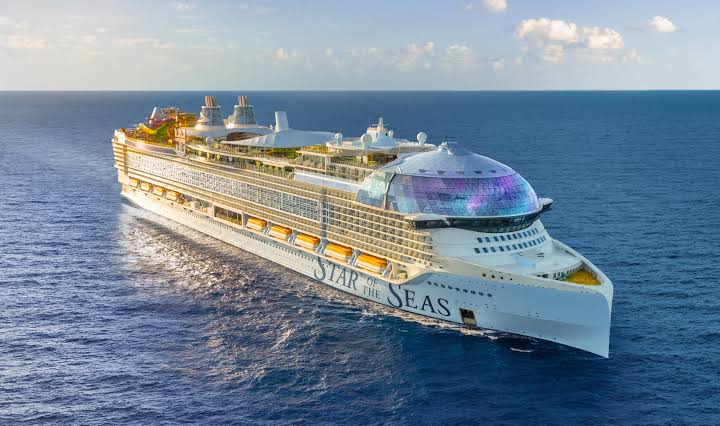
A Nigerian family of five saw their dream vacation become a traumatic ordeal when Royal Caribbean forced them off the ship in Greece, all because ship staff delayed giving their teenage son his prescribed anxiety medication. The incident, which unfolded during what was supposed to be a joyful 50th birthday celebration for the father, has left the family separated and stranded, and it has sparked serious questions about whether race played a deciding role.
The family consisted of the father, mother, their teenage son, and two daughters. Relatives from both the United States and the United Kingdom had joined them on the cruise to mark the milestone birthday, making it a large and meaningful family reunion at sea. But the mood shifted dramatically when the son suddenly began experiencing an acute anxiety episode during the voyage. The episode was unexpected; the boy had never experienced anything like this before, so the family did not have a prescription with them. However, the ship’s medical facility did have the exact medication he needed. When the family requested it, the ship’s doctor flatly refused to administer it.
As the boy’s anxiety escalated, the family took the logical step of contacting their own doctor back home. The physician spoke directly to the chief medical officer aboard the Royal Caribbean ship, making it unequivocally clear that the boy simply needed his routine medication. It was a straightforward medical request, one that any competent onboard medical team could have fulfilled in minutes. Yet the chief medical officer chose to ignore the doctor’s professional advice. Instead of providing the simple prescription, he recommended that the family be removed from the vessel.
The captain followed that recommendation and ordered the mother, father, and their son to disembark at the next available port, which happened to be Mykonos, Greece. The two daughters remained onboard with an aunt who had also come for the celebration, leaving the family cruelly split apart. On the Greek island, the family found themselves completely abandoned. There was no medical assistance available for the boy, no support network, and no accommodations arranged by the cruise line. They were left to navigate a foreign country with nothing but the clothes on their backs, all because the ship’s medical team refused to perform a task that would have taken moments.
What makes this incident even more troubling is the stark contrast in how other passengers were treated. Observers among the family’s relatives from the US and UK noted that other passengers with far more severe disabilities, including children with significant physical and developmental challenges, remained onboard without issue. Their conditions did not lead to forced disembarkation. Yet this Nigerian family, whose son’s anxiety was manageable with standard medication, was cast off without hesitation.
This raises an unavoidable and deeply uncomfortable question: Was this truly a medical decision, or was it racial discrimination? The family is Nigerian. They are African. And the disparity in treatment is impossible to ignore. Severely disabled passengers of other backgrounds were allowed to continue their cruise uninterrupted, while an African family with a treatable condition was summarily removed.
The suspicion that this happened because of their race is not unfounded. Cruise lines, including Royal Caribbean, have faced previous accusations of racial bias and discriminatory treatment toward passengers of color. The pattern is troubling. In this case, the evidence points to a deliberate choice: a medical officer overruled a family doctor’s clear guidance, a captain enforced an unnecessary removal, and a family was left stranded while others with greater medical needs stayed aboard.
Royal Caribbean’s own policies and the Cruise Passenger Bill of Rights guarantee passengers access to medical care while at sea. Those protections were clearly violated here. The family did not receive the care they were entitled to. Instead, they were punished for requesting it.
The family is now separated, with the parents and son in Greece and the daughters still on the ship with their aunt. They face logistical and financial hardships that were entirely avoidable. Their dream of celebrating the father’s golden birthday has been shattered, replaced by confusion, anger, and the haunting feeling that their skin color marked them for mistreatment.
Royal Caribbean has yet to issue a public statement about this incident. But the silence speaks volumes. If this is how the company treats African passengers, the message is devastating: that on the open seas, some lives and some families are considered less worthy of care, less worthy of dignity, and less worthy of a fair chance.
This is not just about one family. It is about a systemic failure that must be investigated. It is about whether the cruise industry holds itself accountable to all passengers equally, or whether it allows prejudice to dictate who gets to stay and who gets thrown overboard, figuratively and literally.
Let this be a call for answers. The family deserves justice. The traveling public deserves transparency. And Royal Caribbean must explain why a simple dose of medication was denied to a Nigerian boy, and why his family was removed while others stayed. Because when the evidence is laid bare, the only conclusion that holds weight is that this family was targeted not for their medical needs, but for their identity.
Is this racism? All the signs point to yes. And the world should be watching.
About The Author



Related Articles

Algeria Severs Diplomatic Ties With UAE, Closes Airspace to Emirati Aircraft
Algeria announced on Thursday that it was cutting diplomatic ties with the...
Gambia Protests Turn Chaotic as Power Outages Worsen Ahead of December Elections
Thousands of Gambians took to the streets overnight in Banjul and surrounding...

Russia and North Korea Open First Road Bridge, Raising Fears of Covert Military Corridor
Russia and North Korea have opened the first road bridge linking the...


Only Two African Players Nominated for 2026 Men’s Ballon d’Or
Only two African players have been named among the 30 nominees for...
Leave a comment