



Nigeria Ranks Fourth in Africa for Dollar Millionaires as Tinubu’s Policies Push 141 Million Into Poverty
 West Africa WeeklyJuly 29, 20263 Mins read426
Nigeria has retained its position as Africa’s fourth-largest hub for dollar millionaires, with 7,200 millionaires, 20 centi-millionaires and three billionaires, according to the 2025 Africa Wealth Report by Henley & Partners in collaboration with New World Wealth. The country trails only South Africa, Egypt and Morocco on the continent’s wealth ranking.
But behind this statistic lies a story of staggering inequality engineered by President Bola Tinubu’s economic policies. While Nigeria hosts 7,200 dollar millionaires and three billionaires, tens of millions of its citizens live below the poverty line. The same report shows that Nigeria recorded one of the steepest declines in high-net-worth individuals over the past decade, with the millionaire population falling by 47 per cent between 2015 and 2025, reflecting the toll of prolonged macroeconomic instability, including persistent currency depreciation, soaring inflation and sluggish economic growth.
The wealth report comes as poverty in Nigeria reaches historic levels under Tinubu’s watch. PricewaterhouseCoopers projects that an additional two million Nigerians will fall below the poverty line in 2026, bringing the total to 141 million people, the highest rate ever recorded. The World Bank has revealed that poverty rose sharply from 56 per cent in 2023 to 61 per cent in 2024, peaking at 63 per cent in 2025. According to the World Bank, 61 per cent of Nigerians currently live below the poverty line, while 33 per cent are classified as ultra-poor and unable to meet their minimum food requirements.
The numbers tell a devastating story. Seven thousand two hundred millionaires and 141 million people in poverty. Three billionaires and 33 per cent of the population unable to afford food. Nigeria is the fourth richest country in Africa by millionaire count, yet it has the highest number of people living in poverty on the continent. This is not an accident of history. This is the direct result of President Tinubu’s policies.
Under Tinubu, the removal of the fuel subsidy triggered a 463 per cent increase in petrol prices. The floating of the naira has seen the currency projected to weaken to roughly N1,640 to the dollar by the end of 2026. Transportation costs multiplied. Food prices surged. Wages, frozen in nominal terms while inflation ravaged purchasing power, simply could not keep up. Energy expert Olarinre Salako has stated that Tinubu’s two major policies of floating the naira and removing the subsidy drove 30 million Nigerians into poverty within his first year in office. “Tinubu was well aware of the possible impacts of petrol subsidy removal, but he didn’t care,” Salako said. “He just wanted the money.”
Former Vice President Atiku Abubakar has blamed Tinubu’s reforms directly, stating that the worsening poverty levels are not accidental but a direct consequence of what he described as “poorly conceived and harshly implemented policies.” Atiku criticised the abrupt removal of fuel subsidies and the devaluation of the naira, arguing that both were carried out without adequate safeguards to protect citizens. “While the Tinubu administration points to abstract macroeconomic indicators, Nigerians are living a far harsher reality, one defined by hunger, uncertainty, and a daily struggle for survival,” Atiku said.
Human rights lawyer Femi Falana has also condemned Tinubu’s economic policies, stating that “because of the religious implementation of neoliberal policies by the government, poverty is on the ascendancy.” Falana added that the middle class has been virtually wiped out under Tinubu.
The disconnect between Tinubu’s macroeconomic claims and household reality is stark. The government points to GDP growth of 3.85 per cent in 2025 and foreign reserves above $50 billion. But the World Bank confirms that roughly 140 million Nigerians now live below the poverty line, with food inflation peaking at 40.9 per cent in June 2024. The International Monetary Fund estimates that poverty has reached 63 per cent of Nigeria’s population, with 27 million Nigerians facing food insecurity.
The Tinubu administration’s response has been to announce plans to track poverty and inequality, as if measuring the disaster somehow constitutes a solution. But Nigerians do not need a scorecard to tell them they are suffering. They need a government that stops enriching the wealthy elite while the rest of the country starves.
Nigeria’s ranking as the fourth African country with the most dollar millionaires is not a badge of honour. It is an indictment of a system that has failed the vast majority of its people. Seven thousand two hundred millionaires and 141 million people in poverty. Three billionaires and 33 per cent of the population unable to afford food. This is the Nigeria of Bola Tinubu. This is the Nigeria his government has built. And this is the Nigeria that Nigerians must demand be changed.
About The Author


Related Articles

Algeria Severs Diplomatic Ties With UAE, Closes Airspace to Emirati Aircraft
Algeria announced on Thursday that it was cutting diplomatic ties with the...
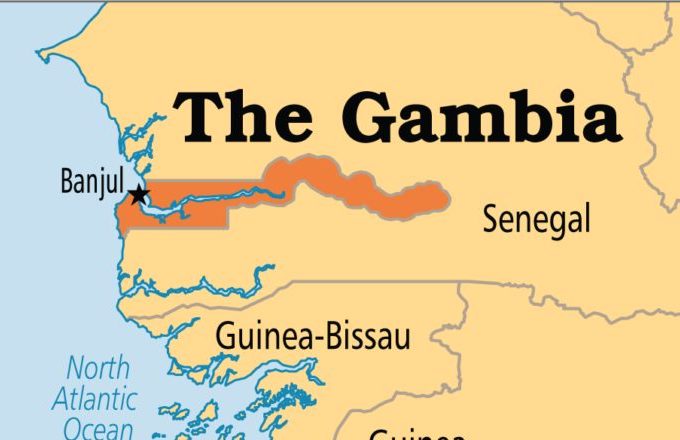
Gambia Bans Protests Without Permits After Blackout Unrest Erupts Ahead of December Election
Gambia’s police chief has banned all public protests without official permits after...


Sanwo-Olu Blames Cranes and ‘Iconic Cane’ as Ojota-Opebi Bridge Misses Another Deadline
Lagos State Governor Babajide Sanwo-Olu has offered yet another explanation for why...
Gambia Protests Turn Chaotic as Power Outages Worsen Ahead of December Elections
Thousands of Gambians took to the streets overnight in Banjul and surrounding...
Leave a comment