

EU Seeks New Strategy Amid Strained Relations With Burkina Faso’s Traoré
 West Africa WeeklyJune 24, 20262 Mins read1k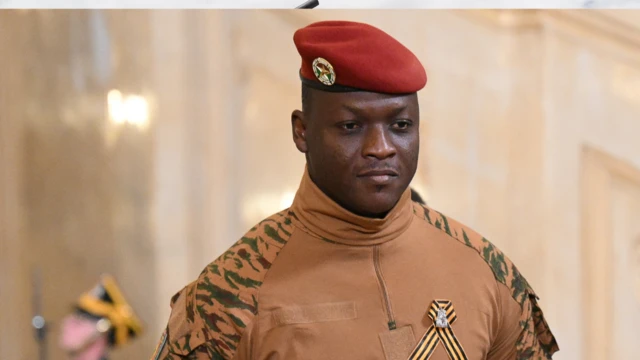
Relations between the European Union and Burkina Faso’s military junta led by Captain Ibrahim Traoré have deteriorated sharply since the 2022 coup, marked by suspended aid, diplomatic tensions and a growing influence rivalry in the Sahel.
Traoré seized power on 30 September 2022, deposing Paul-Henri Damiba in Burkina Faso’s second coup in eight months. The EU responded swiftly. The European Commission suspended aid provided under the NDICI-Global Europe instrument, citing interruptions to the constitutional order as the basis for the decision. The European Parliament adopted a resolution on 20 October 2022 condemning the military takeover. High Representative Josep Borrell issued a statement noting Traoré’s commitment to return to constitutional order by July 2024, a promise that was never fulfilled.
Instead, Traoré consolidated his authority. In May 2024, the National Assembly extended the transition period by five years, meaning no elections will take place until at least July 2029. Political parties have been banned from operating, and civil society organisations face growing repression. In February 2026, the government scrapped laws regulating political parties, effectively suspending political life. Press freedom has significantly declined, with numerous international and local media outlets banned.
Traoré’s regime has ditched former colonial power France in favour of a strong alliance with Russia. Russian paramilitary brigades have been deployed, and Burkina Faso has strengthened ties with Moscow, Beijing and other non-Western powers. The junta has nationalised gold mines, forced foreign firms to give the state a 15 per cent stake in local operations, and built a state-owned gold refinery. Western-owned firms have faced difficulties, with Australia-headquartered Sarama Resources launching arbitration proceedings against Burkina Faso following the withdrawal of an exploration licence.
READ MORE: Borno Government’s N4 Billion Rail Project Was No Administrative Error, Nigerians Say
The EU has scrambled to adapt. In March 2026, EU High Representative Kaja Kallas signed a security partnership with Ghana, including delivery of defence equipment such as drones and anti-drone systems, as part of a €50 million programme launched in 2023. The EU is focusing on development, employment and growth in Africa to address root causes of instability. However, the bloc’s influence has diminished. A study by the German Institute for International and Security Affairs noted that the region is marked by jihadist violence and cross-border tensions, and Europe must find a new strategy despite its limited influence.
A parliamentary question submitted in June 2025 challenged the Commission’s different approach to Burkina Faso compared to Chad, Gabon and Guinea Conakry, warning that European absence risks compromising counter-terrorism efforts and leaving space for hostile powers. The EU has also faced accusations of double standards from African critics.
Meanwhile, Burkina Faso’s human rights situation has deteriorated considerably. An estimated 6,000 civilians died in conflict-related violence between January and August 2024 alone. Over 2.3 million people have been forced from their homes. Military forces and pro-government militias have committed abuses during counterinsurgency operations, and the junta has cracked down on the media, political opposition and dissent. In July 2024, the junta approved a revised family code criminalising homosexuality, and later announced plans to reinstate the death penalty, which had been abolished in 2018.
On 28 January 2024, Burkina Faso, along with Mali and Niger, announced its withdrawal from the Economic Community of West African States, further limiting opportunities for citizens to seek justice through regional courts. In July 2024, the three Sahel nations signed a treaty establishing the Confederation of the Sahel States, taking a mutual defence pact a step further.
Despite the ruptures, the EU has stated it will remain alongside the Burkinabe people, as it has in all Sahel countries, to accompany regional efforts toward peace and prosperity. But with Traoré telling citizens to forget about democracy and consolidating his authority, the path to restored relations appears distant.
About The Author

Related Articles
Niger Introduces Prior Declaration for Large Cash Transports in Anti-Terrorism Push
Niger’s government has announced new rules requiring a prior declaration for the...
Umahi Turns Rehabilitated Niger Bridge Into Tinubu Campaign Billboard, Campaigns for APC Votes as Commuters Count Losses
The First Niger Bridge is set to reopen next week after a...
World Bank Pledges $25m for Nigeria’s $300m Off-Grid Power Fund, Leaving $275m Unaccounted For
The World Bank has committed an initial $25 million to Nigeria’s newly...

From Yemen’s Khat Fields to Nigeria’s Gold Mines, Dehumanisation Fuels a Shared Drug Crisis
A social media post about Yemen’s khat addiction has sparked a conversation...
Leave a comment