





Nigeria and Canada Sign Direct Flight Agreement Amid Infrastructure, Safety Concerns
 West Africa WeeklyAugust 7, 20263 Mins read423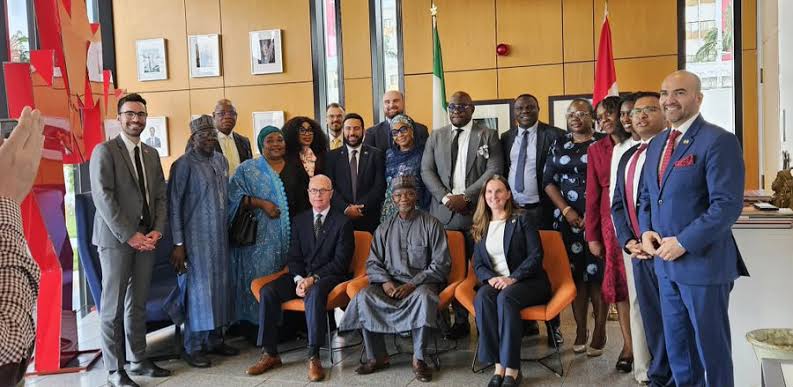
Nigeria and Canada have signed an expanded air transport agreement that will, for the first time, allow direct scheduled flights between both countries. The agreement was signed on Thursday in Abuja by Mohammed Ahmed Tijjani, director of air transport management at the Ministry of Aviation and Aerospace Development, who represented Minister Festus Keyamo, and Shendra Melia, Canada’s chief air negotiator for global affairs.
Under the new arrangement, both countries can designate multiple airlines to operate scheduled services, with each side entitled to 14 weekly passenger flights and 10 weekly all-cargo flights. The agreement also grants Fifth Freedom Traffic Rights for cargo operations, allowing cargo airlines to transport freight between two foreign countries, provided the service originates or terminates in the airline’s home country. The government says the move is aimed at boosting trade, tourism, investment, and educational exchanges. The ministry described the agreement as a “significant milestone” that would reduce travel time, improve passenger convenience, lower logistics costs, and strengthen commercial and cultural ties between both nations.
But for Nigerians who have watched the government celebrate aviation agreements that never materialise, this announcement carries a familiar and troubling pattern. The same government that promised to fix the aviation sector has presided over an industry plagued by infrastructure decay, safety concerns, and the collapse of the national carrier. The same government that celebrated the launch of Nigeria Air has watched the project stall. The same government that promised to revamp airports has left them in a state of disrepair.
The agreement allows multiple airlines to be designated, but Canada’s major carriers, Air Canada and WestJet, have shown little interest in launching direct flights to Nigeria. The Nigerian side has no flag carrier to speak of, with Nigeria Air still struggling to take off. The government has not announced which airlines have expressed interest, how they will be selected, or what incentives will be offered to attract them. Without a clear plan for implementation, the agreement is little more than a piece of paper.
The infrastructure question is even more pressing. Nigeria’s airports are among the worst in the world. The Murtala Muhammed International Airport in Lagos, the country’s busiest, has been described as a national embarrassment, with dilapidated facilities, poor lighting, broken toilets, and a general atmosphere of neglect. The Nnamdi Azikiwe International Airport in Abuja is not much better. Runway lighting is inadequate, navigational aids are outdated, and the terminals are overcrowded. International airlines have repeatedly complained about the state of Nigerian airports, and some have threatened to suspend operations if conditions do not improve.
The security question is equally troubling. Nigeria’s aviation sector has been plagued by safety concerns, with the Nigerian Civil Aviation Authority struggling to meet international standards. The country has been under a FAA Category 2 rating since 2022, meaning Nigerian airlines are prohibited from expanding their operations to the United States. The government has promised to address the issues, but progress has been slow. Canadian authorities will conduct their own safety assessments before allowing any Canadian airline to operate to Nigeria.
Operating direct flights between Nigeria and Canada is expensive. Fuel costs are high, airport charges are exorbitant, and the naira’s volatility makes financial planning difficult. The government has not explained how it will address these challenges or what incentives it will offer to attract airlines. The agreement grants Fifth Freedom rights for cargo operations, but passenger airlines may be deterred by the high costs and low demand. The government’s claim that the agreement will “lower logistics costs” is contradicted by the reality of Nigeria’s aviation sector, where costs have consistently been among the highest in the world.
The government has also pointed to the growing number of Nigerian students in Canada, with more than 25,000 Nigerians holding valid Canadian study permits as of March 31, 2026. But student traffic alone is not enough to sustain direct flights. The government has not provided data on projected passenger demand, cargo volumes, or the economic viability of the route. Without a clear business case, airlines will be reluctant to commit.
The pattern is unmistakable. The government signs agreements, issues press releases, and celebrates milestones, but the promises are never kept. In 2024, Nigeria and Canada began talks over direct flights. In July 2026, both countries announced they would resume talks on August 6 to resolve outstanding issues. Now they have signed an agreement. But Nigerians have heard this before. They have watched agreements gather dust while the aviation sector crumbles. They have watched ministers take credit for deals that never materialise. They have watched the government celebrate while airlines stay away.
The Nigeria-Canada air transport agreement may be a step forward, but the government must address the infrastructure deficits, safety concerns, and cost challenges that have deterred airlines for decades. It must provide a clear plan for implementation, identify which airlines will operate the routes, and explain how it will make the economics work. Until then, the agreement is just another promise from a government that has broken too many of them.
About The Author



Related Articles

Awoniyi Replaces Injured Osimhen in Super Eagles Squad for AFCON Qualifiers
Victor Osimhen has been ruled out of Nigeria’s opening 2027 Africa Cup...
Tinubu and Umahi Threaten to Shut Down Coastal Highway They Can’t Protect
The Federal Government has threatened to shut down the Lagos section of...
Tinubu Extends European Vacation as Nigerians Continue to Suffer at Home
President Bola Tinubu has extended his working vacation in Europe, meaning he...

Uganda Suspends All Military Cooperation With Turkey Over Refusal to Extradite Government Critic
Uganda’s army has suspended all defence and military cooperation with Turkey with...
Leave a comment