


Borno Government’s N4 Billion Rail Project Was No Administrative Error, Nigerians Say
 West Africa WeeklyJune 24, 20262 Mins read454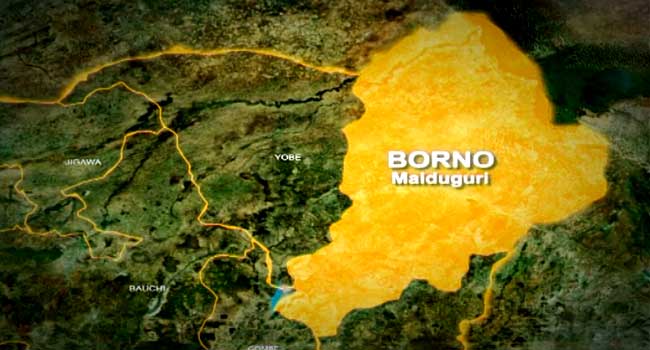
Borno State Government’s claim that the inclusion of a N4 billion rail project in its 2025 Budget Implementation Report was an administrative error has been met with widespread disbelief, with Nigerians accusing the administration of attempting to cover up what they describe as a blatant case of budget padding or diversion of public funds.
The government, through Commissioner for Information and Internal Security Usman Tar, said no rail project was awarded, funded or executed during the 2025 fiscal year, and that the entry indicating 100 per cent completion was simply a mistake. But many Nigerians are not buying that explanation.
Tracka, the civil society organisation that first exposed the discrepancy, conducted field visits in May 2026 and found no evidence of rail construction or rehabilitation in Maiduguri Metropolitan Council and Jere Local Government Area, where the budget report claimed N2 billion was spent in each location. The organisation observed only old and deteriorating rail infrastructure at the Maiduguri Railway Terminus and along rail corridors, with no active construction sites, contractor presence or project signage.
Nigerians argue that budget documents do not write themselves. The inclusion of a specific N4 billion rail project, broken down into two separate N2 billion entries and marked 100 per cent completed, requires deliberate action by multiple officials across various government departments. The budget process involves proposal, review, approval and documentation at several levels. To dismiss such a detailed entry as a mere administrative error stretches credulity.
Tracka noted that the 2024 budget had also listed a similar N2.95 billion rail project that was said to be 100 per cent completed, raising questions about why such errors would recur across multiple fiscal years.
The Borno Government stated that no Executive Council approval was sought, no budget clearance was requested, no contract was awarded, and no funds were released for any rail project. If that is true, then the government has admitted that its own budget implementation report, which is supposed to be a reliable document for public accountability, contained fabricated information. If no funds were released, what exactly was the N4 billion meant to represent? And how did a fictitious project find its way into an official government publication?
READ MORE: Niger Formally Leaves International Criminal Court, Citing Selective Justice
Civil society groups and citizens have demanded a full independent audit of the state’s budget implementation records to determine whether the N4 billion was ever budgeted for, and if so, where those funds actually went. Many see the government’s explanation as an insult to the intelligence of Borno residents who have endured years of insurgency and are desperate for tangible development.
This is not an isolated incident. Across Nigeria, state governments routinely face accusations of padding budgets with ghost projects, inflating contract sums and failing to deliver visible infrastructure. But in a state like Borno, where the government frequently points to security challenges as a reason for slow development, the discovery of a phantom N4 billion project raises serious concerns about priorities and accountability.
The government’s willingness to blame a faceless administrative error without naming any official responsible or taking disciplinary action suggests a culture of impunity. Until those responsible are identified and held to account, citizens and civil society organisations have every reason to remain sceptical of official explanations. Budget documents are not casual memos. They are legal instruments that guide public spending. If they can be so casually falsified, what else is being hidden?
About The Author

Related Articles
Niger Introduces Prior Declaration for Large Cash Transports in Anti-Terrorism Push
Niger’s government has announced new rules requiring a prior declaration for the...
Umahi Turns Rehabilitated Niger Bridge Into Tinubu Campaign Billboard, Campaigns for APC Votes as Commuters Count Losses
The First Niger Bridge is set to reopen next week after a...
World Bank Pledges $25m for Nigeria’s $300m Off-Grid Power Fund, Leaving $275m Unaccounted For
The World Bank has committed an initial $25 million to Nigeria’s newly...


Awoniyi Replaces Injured Osimhen in Super Eagles Squad for AFCON Qualifiers
Victor Osimhen has been ruled out of Nigeria’s opening 2027 Africa Cup...
Leave a comment