



World Bank and IMF face accusations of hypocrisy over opposition to Dangote’s East African refinery plan
 West Africa WeeklyApril 29, 20263 Mins read2.5k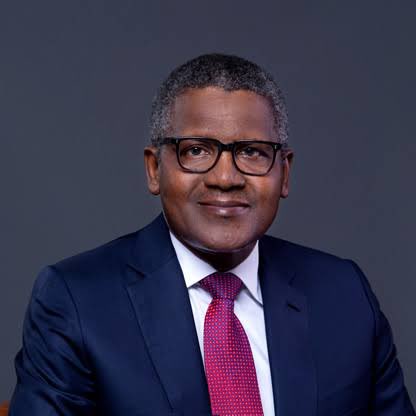
A fierce debate is brewing across African energy and economic circles after claims emerged that the World Bank and the International Monetary Fund are quietly opposing a proposal by Nigerian billionaire Aliko Dangote to build a massive 1.2 million barrel per day oil refinery in East Africa, potentially in Tanzania, Kenya or the Republic of Congo.
The alleged opposition has ignited a firestorm of criticism, with commentators pointing to what they describe as a blatant double standard. The argument attributed to the Bretton Woods institutions, according to online reports and social media posts, is that such a facility would give one company a monopoly over regional energy supplies.
But critics are not buying that explanation. They have laid out a series of counterpoints that they say reveal a pattern of structural sabotage against African industrialisation.
First, they note that French oil giants like TotalEnergies operate refineries in nearly every oil producing country in Africa. From Gabon to Cameroon to Senegal, French affiliated refining capacity has long been present without the World Bank or IMF raising monopoly concerns. The difference, critics argue, is ownership. When African capital seeks to build at scale, the rules suddenly change.
Second, data shows that no African country has been able to secure a loan from international financial institutions to build a refinery larger than 400,000 barrels per day. This is not for lack of demand. Large scale refineries are among the most profitable industrial ventures in the world. Yet African nations are consistently steered toward small, inefficient refineries that struggle to break even. The result is a continent that exports crude and imports refined products at a massive markup.
Third, Nigeria itself offers a textbook case. For decades, Nigerian crude was exported to European refineries, including those in France and the Netherlands, processed into petrol and diesel, and then sold back to Nigeria and neighbouring ECOWAS countries. Companies like Shell and Total benefited handsomely from this arrangement. African consumers paid the price.
Fourth, it took a billionaire financing the project entirely outside the traditional Western lending system to break that cycle. The Dangote refinery in Nigeria, built with personal and syndicated private capital, is now operational. And in a twist of geopolitical irony, following the recent Hormuz Strait disruptions, European Union countries have begun buying refined products from Dangote instead of their traditional Middle Eastern or Russian suppliers. The very same Europe that once sold back Nigeria its own oil is now relying on African refining capacity.
This brings the conversation back to the World Bank and IMF. Why would they oppose a similar project in East Africa? The institutions have not issued an official statement on the alleged proposal, leading many to believe that the opposition is being communicated through informal channels or as a precondition for future lending to host countries.
Sceptics point to a deeper pattern. The same institutions that dictate economic policy to Nigeria in exchange for loans, pushing for fuel subsidy removal and currency devaluation, are now reportedly standing in the way of the one solution that could make African fuel affordable and reliable. They argue that keeping Africa dependent on refined imports from Europe and Asia serves a geopolitical interest far removed from the continent’s development.
Dangote himself has not publicly commented on the East African proposal in recent days. But his track record in Nigeria suggests he is no stranger to fighting entrenched global interests. When the Nigerian government, often under IMF backed advice, maintained fuel import licenses for foreign trading companies, Dangote fought for years to protect his local market.
The controversy raises uncomfortable questions. Is the World Bank genuinely concerned about monopolies, or is it protecting existing refining cartels dominated by non African firms? And why is it that when Africa tries to build at scale, it is met with warnings, while French and American companies have operated similar scale facilities across the continent for decades without objection?
For now, the alleged opposition remains just that, alleged. No formal document has been released. But the absence of denial from the World Bank and IMF has only deepened suspicion. As East African nations struggle with fuel prices and import dependency, the prospect of a home grown solution backed by Africa’s most successful industrialist may be too politically powerful to stop. Whether the global lenders can block the financing routes, however, remains an open and deeply troubling question for the continent’s economic future.
READ MORE: Former Nigeria Striker Michael Eneramo Dies After Collapsing During Local Friendly Match
About The Author



Related Articles

Algeria Severs Diplomatic Ties With UAE, Closes Airspace to Emirati Aircraft
Algeria announced on Thursday that it was cutting diplomatic ties with the...
Gambia Bans Protests Without Permits After Blackout Unrest Erupts Ahead of December Election
Gambia’s police chief has banned all public protests without official permits after...


Sanwo-Olu Blames Cranes and ‘Iconic Cane’ as Ojota-Opebi Bridge Misses Another Deadline
Lagos State Governor Babajide Sanwo-Olu has offered yet another explanation for why...
Gambia Protests Turn Chaotic as Power Outages Worsen Ahead of December Elections
Thousands of Gambians took to the streets overnight in Banjul and surrounding...
Leave a comment