






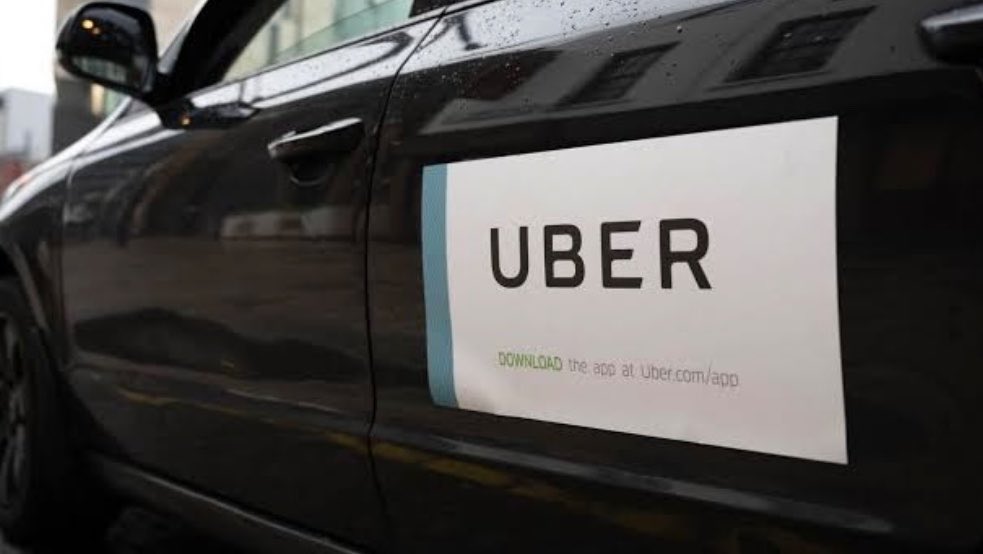
Uber has announced it will exit Nigeria after 12 years of operation, effective September 2, 2026, sparking a wave of reactions across the country, from sarcastic government defenders to opposition politicians who see the departure as a warning sign of economic collapse.
The ride-hailing company confirmed the decision in a statement on Wednesday, saying it would also end operations in Uganda, following a review of its business priorities and investment focus across Africa. The company noted it will focus its investments on markets where it believes it can add the most value for drivers and enable riders to go anywhere seamlessly. Uber said the decision was unrelated to the recent controversy over e-hailing operations at Nigerian airports, where the Federal Airports Authority of Nigeria had directed airport managers to stop Uber and Bolt from operating commercially pending licence agreements. The company said the move does not affect its operations in other African markets.
But it was the response to the exit that drew the most attention. In a sarcastic tweet that quickly went viral, an X user wrote: “Evil company conspiring to put our president’s good work in bad light 😶🌫️ Didn’t they see the GDP numbers and our Moody’s Rating 🙃” The tweet mocked the government’s tendency to blame foreign companies and external forces for every failure, instead of asking why Uber was leaving.
Evil company conspiring to put our president’s good work in bad light 😶🌫️
Didn’t they see the GDP numbers and our Moody’s Rating 🙃 https://t.co/fZ8hBiYv91— Yusuf (@YusufTahirAdamu) September 2, 2026
Another user also pointed out the contradiction in the government’s position, writing: “They must have missed the part where our foreign reserves have hit $53B!! Haba!! Then again, foreign reserves don’t book Uber’s, only people with plenty of spending money can do that. For most, along, bike, buses, and keke is the was to go, and what they can afford.” The comment inadvertently confirmed that the economic gains the government celebrates are not felt by ordinary citizens.
Opposition figures have blamed the government for Uber’s departure. Paul Ibe, media adviser to former Vice President Atiku Abubakar, said Uber’s exit is a warning sign that Nigeria’s economic policies are failing. He cited high inflation, currency instability, rising operating costs, and reduced consumer purchasing power as factors driving businesses away, describing Nigeria as a “business graveyard” where companies prefer to leave rather than invest and expand. “An administration that promised to attract investment cannot continue celebrating economic statistics while companies shut down, scale back or redirect investments elsewhere,” he said.
The Organised Private Sector has also expressed displeasure, describing the exit as unfortunate and warning that it sends a bad signal to international investors. Dr Obiora Madu, Director General of the African Centre for Supply Chain, said high energy costs and other macroeconomic challenges were responsible for Uber’s exit, adding: “This is going to send a wrong signal to us on the international scene that Nigeria’s operating environment is not yet conducive despite all the foreign trips our Mr. President is touring abroad looking for investors to come and invest in Nigeria.”
The Federal Airports Authority of Nigeria has rejected claims that its recent directive contributed to Uber’s departure. The company itself stated that its decision to exit Nigeria was made following a review of its business priorities and investment focus and was unrelated to the FAAN directive. “FAAN did not drive Uber out of Nigeria. Uber says so,” FAAN’s Director of Public Affairs, Henry Agbebire, said.
Uber had been operating in Nigeria since 2014, launching in Lagos as one of the pioneers of app-based ride-hailing in the country. Its departure after 12 years marks the end of a long and often difficult attempt to build a sustainable mobility business in one of Africa’s largest markets. The company had previously exited Tanzania, where regulatory restrictions made the market difficult to sustain.
But for many Nigerians, the real story is not Uber’s exit, but the government’s refusal to confront the economic reality that makes it impossible for companies like Uber to survive in Nigeria. Rising fuel costs, inflation, currency volatility and pressure from drivers over fares made it difficult for Uber to balance affordable prices for riders with sustainable earnings for drivers and the platform. The government’s claims of economic progress are contradicted by the daily experience of Nigerians who cannot afford Uber, as the sarcastic tweet itself acknowledged. The departure of a company that has been in Nigeria for 12 years is not a conspiracy. It is a sign that the economy is not working for businesses or for ordinary Nigerians.
About The Author






Leave a comment