






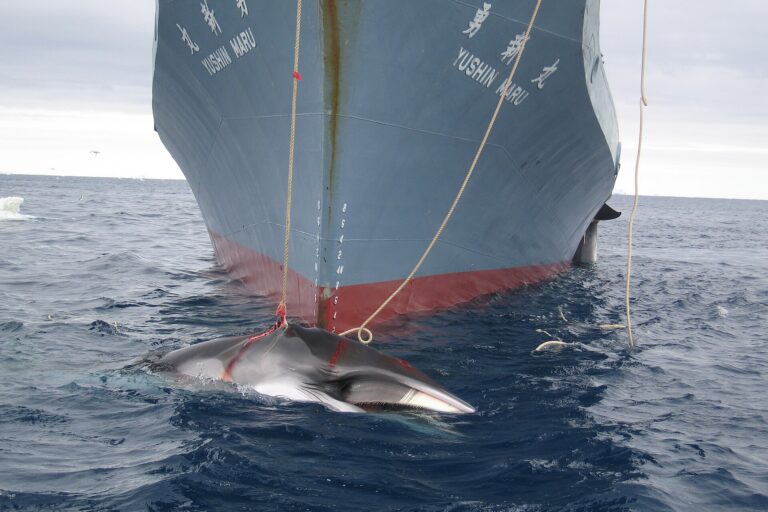
Togo has cosponsored a proposal to review commercial whaling quotas, a move that has drawn sharp criticism from whale conservation groups and raised questions about the country’s commitment to marine protection. The draft resolution was submitted for discussion at the upcoming 70th meeting of the International Whaling Commission, which will be held from September 27 to October 2 in Hobart, Australia.
The proposal was spearheaded by Antigua and Barbuda, a Caribbean nation that has never conducted commercial whaling. Togo was the only African nation to support the proposal. Other cosponsors include Palau, St Kitts and Nevis, St Lucia, and a group described as “the group that support the sustainable use of marine living resources.” This is the third such proposal from Antigua and Barbuda in four years, following similar attempts in 2022 and 2024.
The resolution does not directly call for an end to the commercial whaling moratorium that has been in place since 1986. Instead, it proposes the creation of a special task force to assess reviving the mechanism the IWC uses to calculate commercial whaling quotas. Supporters argue that whale populations have recovered in some regions and that modern scientific tools could make carefully regulated harvesting possible.
READ MORE: Oyedele Claims Nigeria Is on Track for $1 Trillion Economy While Millions Cannot Afford Food
But conservation groups have strongly opposed the proposal, warning that it represents an attack on the moratorium and could eventually reopen the door to commercial whaling. The West and Central African Coalition for Whales has issued a public statement calling on governments to remove support for initiatives that weaken international whale protections or revive commercial whaling. Colonel Abba Sonko, a Senegalese wildlife conservation expert and representative of Senegal’s CITES Management Authority, told Mongabay that the resolution “is hard to reconcile with West and Central African priorities, where no country conducts commercial whaling and where the urgent issues are bycatch, habitat degradation and the protection of marine ecosystems.” He noted that West African countries do not hunt whales, nor do their populations rely on whale meat for food security. “On the contrary, whales are increasingly valuable alive: they support marine tourism and associated coastal livelihoods, while also playing important ecological roles that contribute to the productivity and resilience of healthy ocean ecosystems,” he said.
Togo’s support for the proposal is not an isolated incident. A review of IWC voting records shows that at least eleven West African nations, including Benin, Côte d’Ivoire, The Gambia, Ghana, Guinea, Guinea-Bissau, Liberia, Mauritania, Senegal, Mali and Togo, have repeatedly aligned with Japan’s pro-whaling agenda. They have opposed measures designed to protect whales, including the creation of a South Atlantic Whale Sanctuary. The Coalition has called on the Togolese government to clarify its position and withdraw its cosponsorship before the IWC meeting opens.
About The Author



Leave a comment