






Police Deploy Tear Gas to Block Civilians From Searching Bush for Terrorists and Kidnappers
 West Africa WeeklyOctober 14, 20263 Mins read15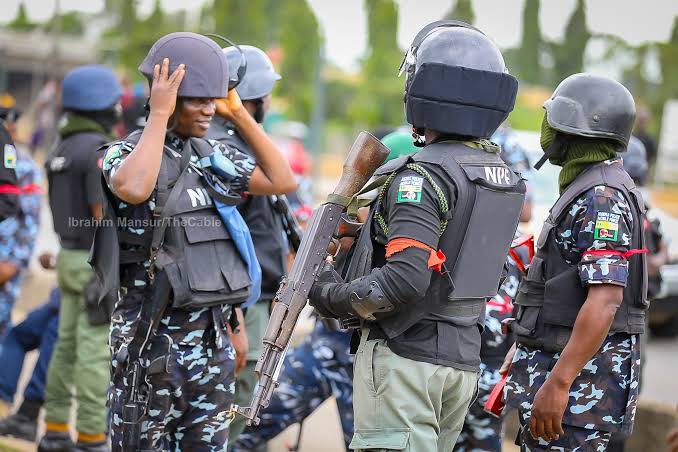
The Nigerian Police Force has deployed tear gas to stop civilians from searching the bush to flush out terrorists and kidnappers, according to a local youth leader, as communities across the country grow increasingly frustrated with the security forces’ failure to protect them.
A large crowd mobilised to pursue terrorists raiding their communities, but was heavily confronted by police. Rather than facilitating a coordinated sweep, police used tear gas to block the civilian search party from entering the bushes, sparking frustration among locals who feel abandoned to face ongoing violence without official protection. The incident adds to a growing pattern of police action against citizens attempting to defend themselves while failing to confront the criminals who terrorise them.
The pattern is not new. In December 2025, police opened fire on youths in Irunda Ile, Yagba East Local Government Area of Kogi State, killing two and hospitalising several others with tear gas after the community demanded that security operatives pursue bandits into the bush. The youths had confronted the police for delaying action after bandits killed two vigilantes in an early morning raid. According to a community leader, Bobagunwa of Irunda Isanlu, the police were reluctant to chase the bandits, which led to the confrontation. “From there, they mistakenly killed two youths, while others were also hospitalised following the tear gas they received from the police,” he said. “In all, four people were killed in our village this morning. Two vigilantes were killed by the bandits and two other persons mistakenly killed by the police.”
In Kwara State, residents of Eruku accused police of firing tear gas at local vigilantes who had run out of ammunition during a terrorist attack on a Christ Apostolic Church in November 2025. The attackers stormed the church mid-service, killing at least two worshippers and abducting the pastor and dozens of members. A survivor told the BBC that police fired tear gas outside the church but never confronted the heavily armed attackers. “The police were just shooting tear gas, they didn’t come,” he said. “When we left to go home, we couldn’t see because of the tear gas. Even the vigilantes who wanted to help were affected.” A community representative later told the visiting Commissioner of Police that the vigilantes had advanced towards the attackers but ran out of ammunition. “In that critical moment, instead of receiving assistance from the police, they fired teargas at us. That disrupted all our efforts to protect ourselves and the town.”
In Kebbi State, residents who blocked the Jega-Kontagora highway in October 2026 to protest relentless attacks by the Lakurawa terrorist group were met with tear gas from police officers attempting to disperse the crowd. The protesters defied the tear gas, standing their ground even as officers fired canisters at them. The attacks by the Lakurawa group have displaced entire communities, with residents reporting that multiple villages have been completely deserted and families are sleeping in the open.
The pattern extends beyond these three incidents. In Kogi State, police fired tear gas at Kabba-Bunu youths in January 2026 as they protested worsening insecurity and the abandonment of several communities. The protesters had barricaded a major road to demand action after dozens of communities were left deserted by persistent attacks. In Kano State in May 2026, residents protesting bandit attacks were tear-gassed by police after the protesters pelted police vehicles with stones. One person was killed. In a separate incident in 2025, residents pursuing bandits who had attacked their community were tear-gassed at the police station, allowing the attackers to escape. A victim, Adesuyi Joshua, said: “When we got to the station, they tear-gassed us and allowed the bandits to escape.” A youth leader, Shola Peters, described the police conduct as a betrayal of trust, saying: “They are supposed to safeguard our lives, yet they acted against us when we tried to ensure justice.”
Rights groups and analysts have repeatedly warned about the growing reliance on tear gas and other heavy-handed tactics against civilians, even as security forces fail to confront the armed groups that operate with increasing impunity. A Premium Times investigation published in September 2026 documented the history of excessive force and unprofessional practices within the Nigerian police, noting that tear gas incidents have become a recurring feature of the force’s response to public frustration. Protesters across the country have said that those same police officers who fail to confront bandits and kidnappers are quick to attack citizens exercising their fundamental rights.
The consequence of this dynamic is a widening gap between the security forces and the communities they are meant to protect. In many rural areas, vigilantes and local hunters have taken on the responsibility of defending their communities because the police either cannot or will not. When these community defence efforts are met with tear gas and live ammunition from the police, the message is unmistakable. The state is more interested in preserving its monopoly on violence than in protecting the lives of the people it governs. And the criminals, for whom the tear gas is never intended, continue to operate unchecked.
READ MORE: Davido Submits Oriade and B4 B4 for 2027 Grammy Awards
About The Author



Related Articles
Akpabio Wants Suicide Survivors Jailed While Tinubu Government Rehabilitates Bandits and Kidnappers
Senate President Godswill Akpabio has insisted that Nigerians who survive suicide attempts...
ABU Student Remanded in Prison Over Alleged Forged Letter Linking Tinubu to US Drug Case After Two Weeks in DSS Custody
Mubarak Abdullahi, a Criminology student in the Department of Sociology at Ahmadu...

Kenya, Uganda and Tanzania Plan Joint Visa for 2027 AFCON to Ease Fan Travel Across Borders
Kenya, Uganda and Tanzania are developing a joint visa arrangement to facilitate...

Rwanda Signs 10-Year Deal to Bring F1 Back to Africa for First Time Since 1993
Rwanda has signed a 10-year agreement with Formula 1 to host the...
Leave a comment