




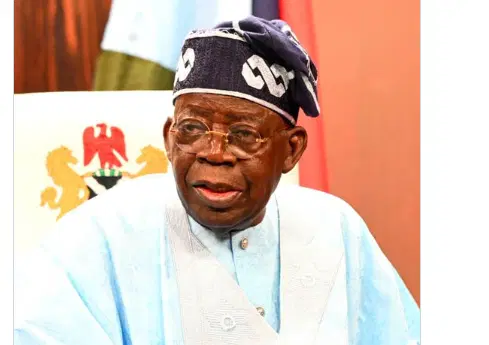
President Bola Tinubu has defended his administration’s aggressive borrowing plans, arguing that the focus should not be on the amount of money Nigeria is borrowing but on what the loans are used to build. The President made the remark in an essay titled “From reforms to delivery: Our infrastructure investment and growth strategy,” published on Friday, October 30, 2026, as he sought to counter mounting criticism from opposition leaders, labour unions and economists over his request for another $20.5 billion and €1.045 billion in fresh external loans.
“The real question is not how much we borrow, but what we build, what value we create and what future we leave behind,” Tinubu wrote, according to a statement by his Special Adviser on Information and Strategy, Bayo Onanuga. He identified the Lagos-Calabar Coastal Highway, the Sokoto-Badagry Superhighway, the Trans-Sahara Superhighway, electricity grid upgrades and the modernisation of key commercial ports in Lagos as the projects that would justify the new borrowing. He said these projects would connect economic regions, reduce logistics costs, unlock agricultural and industrial potential and attract private investment, adding that his ambition to build a $1 trillion economy by 2030 required sustained infrastructure spending. “We cannot build a $1 trillion economy with infrastructure designed for an economy a fraction of that size,” he said.
The President also cited what he described as improving economic indicators, including real GDP growth of 4.43 per cent in the second quarter of 2026, a decline in headline inflation to 14.63 per cent in September from 20.98 per cent a year earlier, and gross external reserves of $55.1 billion as of October 9, 2026.
But the numbers behind the borrowing tell a different story. Tinubu is seeking legislative approval for $20.52 billion and €1.045 billion under the 2026–2027 Supplementary External Borrowing Plan, a request conveyed to the Senate on October 27, 2026. Nigeria’s total public debt stood at N166.79 trillion as of June 30, 2026, up from N87.37 trillion in June 2023, an increase of about 91 per cent under Tinubu’s watch. If the new loans are fully approved and drawn down, the debt burden could approach N200 trillion.
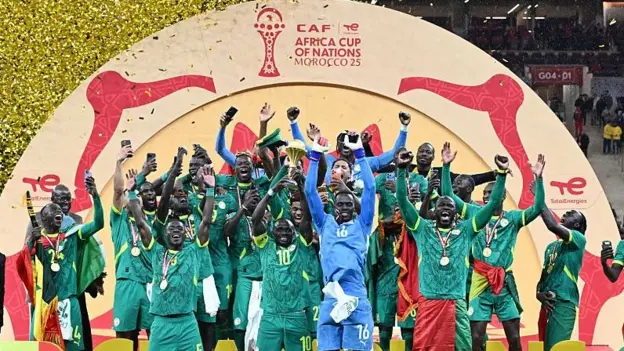
READ MORE: Afcon Returns to Two-Year Cycle After Caf Reverses Four-Year Plan
The Nigeria Labour Congress has faulted the loan request, questioning the justification for continued borrowing despite claims of increased government revenue. The Nigerian Democratic Congress has also criticised the request, noting that public debt climbed from N87.38 trillion to N166.79 trillion between June 2023 and June 2026, a jump of about 90.9 per cent. The opposition has repeatedly accused the administration of borrowing to fund consumption and political contracts rather than productive investment.
The President’s defence of borrowing is also complicated by the government’s own record. A BusinessDay investigation published on October 30, 2026, found that nearly $857 million committed to four federal-backed projects financed through external loans has been associated with abandoned infrastructure, incomplete programmes and underperforming public services. The projects include a $399.5 million loan for the National Public Security Communications System, a $7.5 million rural electrification project, $250 million for the Third National Urban Water Sector Reform Project and a $200 million loan for the first phase of the National Rural Telephony Programme. The security communications network, designed to strengthen policing, has been abandoned, vandalised and left to deteriorate.
The report also noted that the proposed $21.7 billion borrowing lacks a detailed public breakdown of the individual projects to be financed, including their locations, costs, contractors and expected returns, making it difficult to assess how the funds would be deployed and the benefits they are expected to deliver. The absence of project-level information complicates an assessment of the economic justification for the loans, particularly which investments could attract private capital rather than require additional government borrowing.
Tinubu’s essay insists that the loans will finance critical infrastructure and expand opportunities for future generations. But for a government that has already added N79.41 trillion to the national debt, that has spent N37.64 billion on presidential travel, and that is now asking for another $20.5 billion while its previous loan-funded projects lie abandoned, the question Nigerians are asking is not what the President intends to build. It is what he has actually built with the money he has already borrowed. And the answer, so far, is a trail of incomplete projects, rising debt and a people still waiting for the prosperity he promised.
About The Author



Leave a comment