







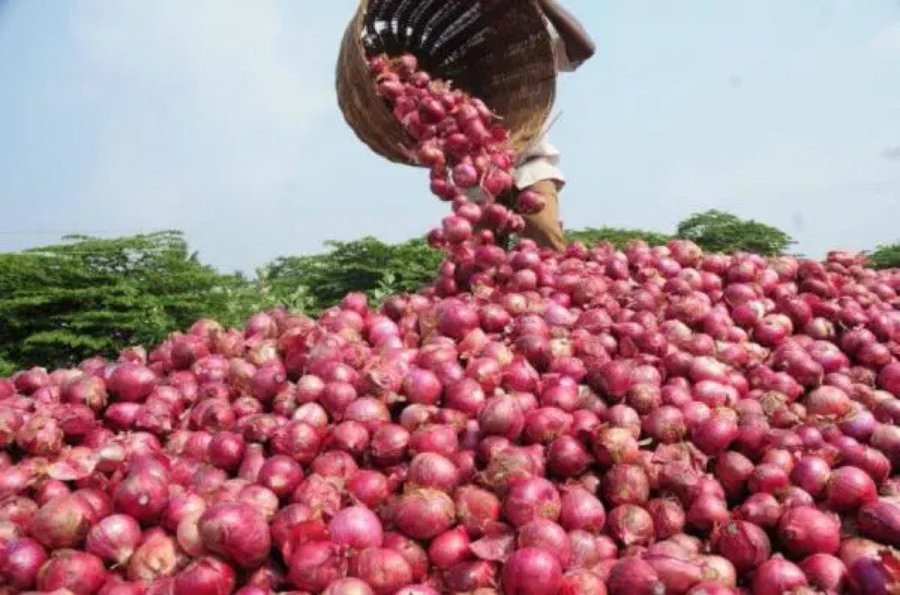
The price of a 120kg bag of onions has skyrocketed from ₦30,000 in April 2026 to approximately ₦300,000 in October 2026, representing a staggering 900 per cent increase in just six months. To put this into brutal perspective, a single bag of this essential staple now costs more than four times the national minimum wage of ₦70,000. No Nigerian earning the minimum wage can afford to buy a full bag of onions.
The National Onion Producers, Processors and Marketers Association of Nigeria attributed the increase to inadequate storage facilities and fire outbreaks in warehouses in the North, which contributed to post-harvest losses of more than 51 per cent within the period. The association’s National President, Aliyu Isah, said the problem was not inadequate national production, but the loss of a significant proportion of harvested onions before the next production season. “It’s not that we did not produce enough for the country, but we lost more than 51% from April to October,” he said. He also blamed unsuitable seeds introduced into Nigeria during the 2024 to 2025 growing season, reportedly brought in from Algeria, which caused substantial losses to farmers’ investments. The seed crisis alone resulted in losses estimated at nearly ₦100 billion.
A Vanguard market survey showed that the price of a big sack of fresh onions at Mile 12 Lagos International Market is ₦300,000, while the dried one is between ₦350,000 and ₦380,000 as of last week. In Enugu, a big bag of onions now sells for between ₦272,000 and ₦280,000, compared to ₦170,000 and ₦185,000 sold in September. A small bag costs between ₦137,000 and ₦140,000, while a paint bucket costs between ₦10,000 and ₦11,000, compared to ₦5,000 and ₦6,000 in previous months.
READ MORE: Algeria Sends Troops to Niger in First Foreign Military Deployment Since 1973
Traders also identified bad roads, increased transportation fares from the northern part of the country and insecurity as major drivers of the price surge. High diesel prices and the removal of petrol subsidies by the Tinubu administration have pushed cross-country haulage costs to unprecedented levels, with the cost of moving agricultural produce from northern farms to southern urban centres now accounting for the largest share of retail pricing. Modern climate-controlled storage facilities remain virtually nonexistent in rural farming districts, forcing growers to sell immediately or watch their produce rot. Early rain disruptions and destructive regional flooding further decimated harvests before crops could reach distribution trucks.
The price surge has forced small food businesses and household caterers to change their recipes or close shop, as onion costs eat away at their profit margins. Millions of low-income families have simply cut the bulb out of their daily meals entirely. Food sellers in commercial hubs like Lagos and Abuja warn that rising input costs make prepared dishes unaffordable for regular workers.
The association expects supplies from Sokoto to begin around November and December, followed by Aliero in Kebbi State from late December to January. The main harvest season is expected around March and April. Isah expressed optimism that the incoming harvest would ease prices, but said better storage facilities and timely government support were needed to reduce losses and prevent future shortages.
For a government that has spent months telling Nigerians to endure the pain of its economic reforms, the onion crisis is another indictment. The Tinubu administration has failed to provide the storage infrastructure, seed quality control and transport relief that farmers and traders need. It has allowed post-harvest losses to wipe out half the national harvest while families are forced to pay four times the minimum wage for a basic staple. The government’s agricultural interventions continue to favour raw production targets while neglecting the midstream processing and preservation infrastructure that would stabilise prices. Until that changes, Nigerians will keep paying more for less, and the onion will remain a luxury item that the average worker cannot afford.
About The Author





Leave a comment