



Tinubu’s 10.99 Million APC Primary Votes Raise Questions as Insecurity Persists, ‘Technical Glitches’ Vanish and Total Surpasses His Entire 2023 Election Victory
 West Africa WeeklyMay 24, 20262 Mins read761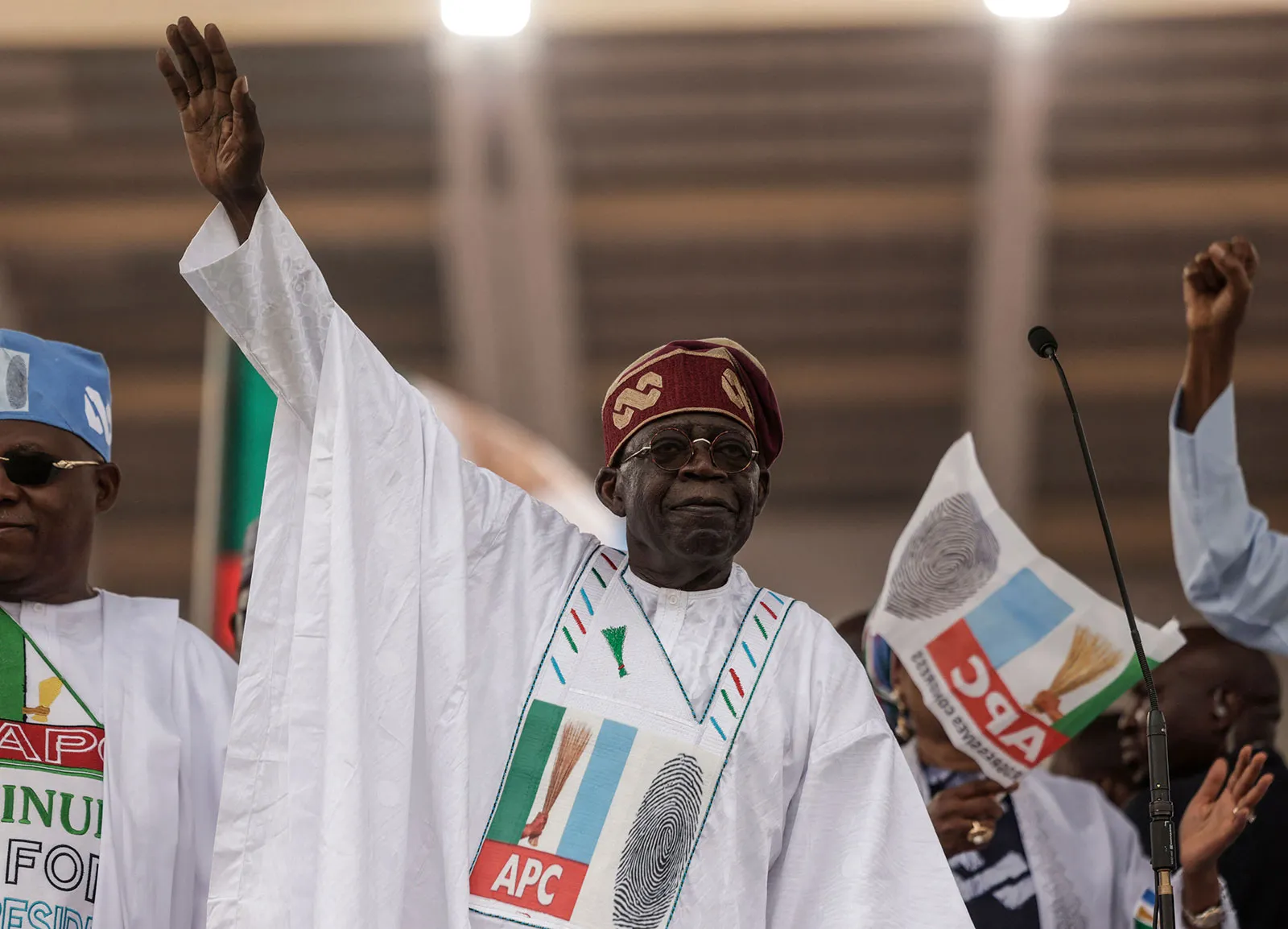
President Bola Ahmed Tinubu has emerged from the All Progressives Congress (APC) presidential primary with a staggering 10.99 million votes, a figure that has instantly thrown Nigeria’s political space into disbelief after surpassing the total votes that brought him to power in the 2023 general election.
The numbers are extraordinary.
In 2023, Tinubu won the Nigerian presidency with 8,794,726 votes after a bitterly contested national election involving more than 93 million registered voters. The election itself was overshadowed by the late arrival of materials, voter suppression claims, insecurity, technical failures, and the collapse of real-time electronic uploads promised by the electoral commission.
Three years later, in a party primary restricted only to APC members, Tinubu has somehow produced nearly 11 million votes, over 2 million more than his nationwide presidential tally.
And this time, suddenly, there were no glitches.
No collapsed systems.
No failed uploads.
No missing results.
No delayed accreditation.
No confusion.
The same Nigeria that struggled to transmit presidential election results in 2023 allegedly managed a smooth nationwide primary operation across 8,809 wards while insecurity, kidnappings and armed violence continue across large parts of the country.
The contrast is impossible to ignore.
Comparative Result Table (2023 vs. 2026)
|
State |
2023 Registered Voters |
2023 Tinubu Votes (General) |
2026 Tinubu Votes (Primary) |
2026 Osifo Votes (Primary) |
|
Lagos |
7,060,195 |
572,606 |
814,988 |
1,186 |
|
Adamawa |
2,196,566 |
182,881 |
644,149 |
195 |
|
Kaduna |
4,335,208 |
399,293 |
618,914 |
0 |
|
Gombe |
1,575,794 |
146,977 |
450,517 |
0 |
|
Delta |
3,221,697 |
90,183 |
407,646 |
0 |
|
Ogun |
2,688,305 |
341,554 |
322,485 |
minimal votes |
|
Zamfara |
1,926,870 |
298,396 |
321,579 |
42 |
|
Rivers |
3,537,190 |
231,591 |
280,468 |
0 |
|
Bayelsa |
1,056,862 |
42,572 |
over 227,000 |
5 |
|
Abia |
2,120,808 |
8,914 |
161,005 |
1,007 |
|
Bauchi |
2,749,268 |
316,694 |
156,541 |
2,650 |
|
Oyo |
3,276,675 |
449,884 |
142,754 |
929 |
|
Edo |
2,501,081 |
144,471 |
131,096 |
1 |
The figures become even more astonishing when examined state by state.
In Abia, Tinubu moved from fewer than 9,000 votes in the 2023 presidential election to more than 161,000 votes in an internal APC exercise.
In Bayelsa, his tally reportedly jumped from 42,572 to over 227,000.
In Delta, a state where the APC struggled badly during the general election, Tinubu’s numbers exploded from 90,183 to more than 407,000.
Then there is Adamawa.
Tinubu scored 182,881 votes there during the actual presidential election in 2023. But during the APC primary, held amid the same economic crisis and insecurity that continue to plague Nigeria, he secured 644,149 votes.
The numbers suggest that APC members alone suddenly outperformed the broader national electorate that voted during a full presidential election.
Even more striking is the near-total collapse of opposition within the primary itself.
Tinubu’s challenger, Stanley Osifo, recorded zero votes in several states including Kaduna, Gombe and Delta. In other states, his totals barely crossed single digits.
The exercise resembled less a competitive primary than a national endorsement parade.
The APC has celebrated the outcome as proof of Tinubu’s dominance and expanding grassroots machinery ahead of the 2027 election.
But the arithmetic hanging over the result remains politically explosive.
Nigeria’s 2023 election was defined by low turnout, frustration and public distrust after the Independent National Electoral Commission failed to deliver on promises of seamless electronic transmission.
Millions stayed home.
Many polling units opened late.
Result uploads stalled nationwide.
Yet in 2026, a ruling party primary appears to have generated more votes for one man than the entire national election that made him president.
The numbers now sit at the centre of a question far beyond Abuja:
How did a country unable to conduct a glitch-free general election suddenly deliver a near-perfect party primary with almost 11 million votes for a single candidate?
About The Author



Related Articles
Cameroon Commits to Stronger Bilateral Ties with Nigeria
Cameroon has reaffirmed its commitment to strengthening bilateral relations with Nigeria, pledging...
Ghana Borrows $288 Million at 11% to Pay Cocoa Farmers After Delayed Purchases
Ghana’s cocoa regulator has been forced to borrow 3.39 billion cedis, about...
Burkina Faso President Ibrahim Traoré Defies FIFA, Vows to Intervene in Football Federation After 7-0 Argentina Humiliation
Burkina Faso’s military leader, Captain Ibrahim Traoré, has vowed to intervene directly...

INEC Turns to AI for Election Verification While Nigerians Still Queue for PVCs and Results Vanish on IReV
The Independent National Electoral Commission has announced plans to deploy artificial intelligence...
Leave a comment