




Nigeria’s New SS3 Ban Punishes Students for a Broken Education System
 West Africa WeeklyDecember 15, 20252 Mins read775
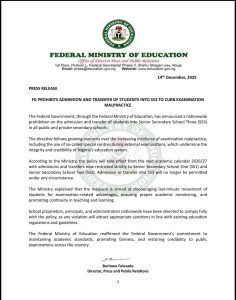
The Federal Government has announced a ban on the admission and transfer of students into Senior Secondary School Three, saying the decision is meant to curb examination malpractice. The directive, issued by the Federal Ministry of Education, applies to all public and private secondary schools across the country and takes effect from the next academic session.
According to the ministry, stopping students from entering SS3 late will help prevent abuse of the system and reduce cheating in final examinations. In simple terms, Nigeria has decided that if a student did not start SS3 in a school from the beginning, that student should not be allowed to complete secondary education there.
What the policy fails to acknowledge is reality.
Students change schools for many reasons that have nothing to do with cheating. Families relocate. Parents lose jobs and regain stability later. Children flee insecurity in one state and seek safety in another. Some leave abusive or poorly run schools. Others return after prolonged illness. Under this policy, all of them are treated the same way as exam cheats.
The message is blunt. Life happened, so your future is cancelled.
Examination malpractice in Nigeria did not begin because students enter SS3 late. It thrives because supervision is weak, exam officials are compromised, teachers are poorly paid, exam centres are poorly monitored and teaching quality has been eroded for years. These are known problems. They have been discussed endlessly. They have simply not been fixed.
Instead of confronting any of these failures, the government has chosen to block access to education for students who are already at the most fragile stage of their academic lives. The system that allows cheating to flourish remains untouched. Only the students are punished.
This approach does not close the door to malpractice. It opens new ones. Students shut out of formal schools will look for illegal arrangements. Parents will be forced into desperate deals. Unregistered “SS3 classes” will emerge quietly. Racketeering around examinations will grow stronger, not weaker.
Every serious attempt to reduce exam fraud elsewhere has focused on monitoring, accountability, technology, teacher welfare and firm punishment for those who actually cheat or facilitate cheating. Nigeria has chosen none of these. It has chosen the easiest option, one that requires no investment, no reform and no courage.
This is not education reform. It is administrative laziness packaged as policy.
A system that is broken does not get fixed by locking students out. It gets fixed by fixing the system. If the solution to malpractice is denying children access to school, then malpractice is not the real concern. Control is.
This policy should be reversed. It solves nothing and damages everything.
READ MORE: Mali Returns Seized Gold to Mining Firm After $400 Million Settlement
About The Author


Related Articles

Algeria Severs Diplomatic Ties With UAE, Closes Airspace to Emirati Aircraft
Algeria announced on Thursday that it was cutting diplomatic ties with the...
Gambia Bans Protests Without Permits After Blackout Unrest Erupts Ahead of December Election
Gambia’s police chief has banned all public protests without official permits after...


Sanwo-Olu Blames Cranes and ‘Iconic Cane’ as Ojota-Opebi Bridge Misses Another Deadline
Lagos State Governor Babajide Sanwo-Olu has offered yet another explanation for why...
Gambia Protests Turn Chaotic as Power Outages Worsen Ahead of December Elections
Thousands of Gambians took to the streets overnight in Banjul and surrounding...
Leave a comment