





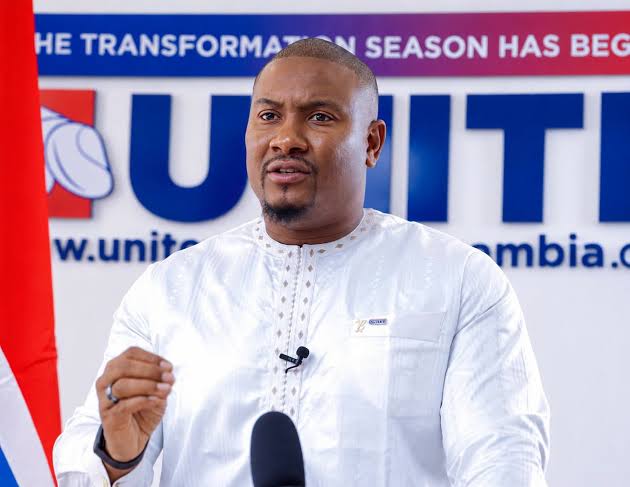
Gambian opposition leader Talib Ahmed Bensouda officially submitted his candidacy papers for the December 5 presidential election on Saturday, November 7, 2026, defiantly dismissing a government report that accused him of financial impropriety and abuse of office as a politically motivated attempt to derail his campaign.
Bensouda, the 40-year-old former mayor of the Kanifing Municipality and leader of the UNITE party, filed his nomination at the Independent Electoral Commission (IEC) offices in Kanifing, submitting his national identity card, educational certificates, voter’s card, asset declaration, and tax clearance, along with the required D1 million nomination deposit and proof of his resignation from his mayoral post. The move was met with celebrations from supporters of his UNITE-led coalition, who have rallied behind his advocacy for term limits and his record of improving local services during his eight years as mayor.
The nomination came just days after the government released a White Paper on the Local Government Commission of Inquiry, which recommended actions against Bensouda over allegations of financial irregularities, including improperly authorizing spending and abuse of office. The report’s timing, released on the eve of the nomination period, has fueled accusations of political interference. Bensouda’s party has rejected the allegations, describing them as a “witch hunt” designed by President Adama Barrow’s National People’s Party (NPP) to weaken the opposition and block his candidature. The allegations have not been established as proven wrongdoing in a court of law.
READ MORE: Tinubu Never Attended Chicago State University, Says Former Lecturer Adedeji Doherty
“My candidacy is not attacked at all by the government white paper. I am in no way disqualified, and am sure the IEC would do the right thing,” Bensouda said after submitting his papers. He defended his record at the Kanifing Municipal Council, rejecting suggestions of personal misconduct and framing the inquiry’s concerns as reflections of structural weaknesses in local government that require legislative reform.
The political stakes are high. A constitutional provision, Section 62(3)(c), disqualifies anyone found liable for misconduct or improper behavior by a commission of inquiry, and legal analysts note that the White Paper could provide a basis for an objection to his candidacy. The IEC has said it will conduct due diligence and verify the endorsements on his nomination before making a final decision, which is expected within two to three days.
The controversy unfolds against a backdrop of growing public frustration with President Barrow, who is seeking a controversial third term. Prolonged electricity shortages since June have triggered protests and demands for Barrow’s resignation, and the rising cost of living and insecurity have become central issues in the campaign. Bensouda is one of several challengers, including veteran opposition leader Ousainou Darboe of the United Democratic Party (UDP), who are seeking to unseat the incumbent. For now, Bensouda’s candidacy remains subject to the IEC’s final approval, but his defiant filing has ensured that the allegations against him will be a defining issue in the lead-up to the December 5 vote.
About The Author




Leave a comment