

How America Uses Drug Charges to Control Oil and Allies — Jailing Maduro, Burying Tinubu’s Files
 West Africa WeeklyJanuary 4, 20263 Mins read730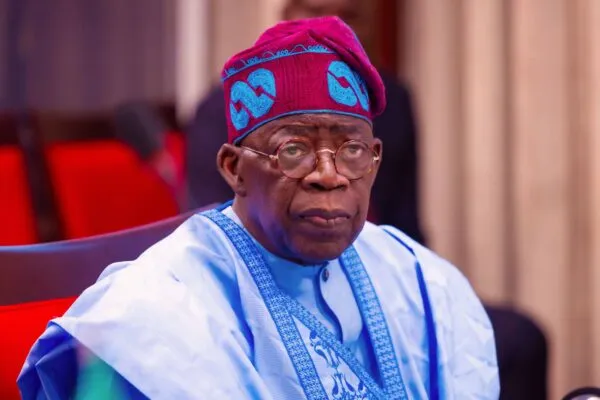
The image could not be starker. Venezuelan President Nicolás Maduro, flown into New York under heavy guard, now sits in a federal cell facing long-standing U.S. drug and terrorism charges. At the same time, across the Atlantic, decades-old U.S. law-enforcement records tied to Nigerian President Bola Ahmed Tinubu remain sealed, despite court orders, expired deadlines, and growing public pressure.
Together, the two cases expose a transactional U.S. foreign policy: drug enforcement when a leader resists American interests, silence when cooperation is more valuable.
As of early 2026, the FBI and the Drug Enforcement Administration have still not released records tied to a 1990s Chicago narcotics investigation involving Bola Ahmed Tinubu. In May 2025, both agencies asked a U.S. District Court for a 90-day extension to process the documents. That deadline passed more than six months ago. Nothing has been released.
What makes the silence striking is that the case itself is not speculative. Court filings from 1993 already establish that Tinubu forfeited $460,000 to the U.S. government after authorities linked the funds to the “proceeds of narcotics trafficking.” Investigators at the time identified Tinubu as a financial courier and money launderer (“bagman”) for a Chicago-based heroin network tied to Nigerian organised crime. The organisation was implicated in the distribution of high-grade Southeast Asian heroin during a period when overdose deaths were spiking in the city.
Aaron Greenspan argues that the continued suppression of the files is deliberate. The documents, they say, would clarify the scope of Tinubu’s role, the identities of his associates, and why he was never criminally charged despite the forfeiture. Critics note that U.S. intelligence agencies have shielded Tinubu since the 1990s, when he was viewed as a valuable political ally during Nigeria’s military dictatorship under Sani Abacha. Three decades later, they argue, that protection remains intact, now for geopolitical rather than ideological reasons.
The treatment of Nicolás Maduro offers a sharp contrast. In January 2026, U.S. forces executed “Operation Absolute Resolve,” capturing Maduro and his wife, Cilia Flores, on charges of narco-terrorism and cocaine importation. But even before the dust settled, President Donald Trump openly reframed the operation.
We’re in the oil business, Trump said, declaring that the United States intended to run Venezuela to restore production and extract wealth from the ground. He went further, stating that the U.S. would take a tremendous amount of wealth from Venezuela’s oil reserves, estimated at 300 billion barrels, the largest in the world, to ensure Americans were reimbursed for everything we’ve spent” on the military campaign.
Former Vice President Kamala Harris and other critics labelled the intervention unlawful, calling it a regime-change war dressed up as drug enforcement. In that framing, the drug charges serve less as the cause of action than as a legal pretext for seizing strategic resources.
Nigeria’s own position in this arrangement came into sharper focus on Christmas Day 2025, when a U.S. strike hit what Washington described as a “Lakurawa terrorist enclave” in Sokoto State. The strike was publicly announced not by Nigeria, but by Donald Trump on social media, before Abuja issued any formal statement. Debris recovered at the site—including fueled boosters from Tomahawk missiles, confirmed the use of high-grade U.S. weaponry on Nigerian soil.
Although the operation was later described as “joint,” the optics were hard to ignore. Tinubu publicly tagged Trump in a social media post following the strike, a gesture many interpreted as more deference than partnership. Nigeria had quietly outsourced its national defence, and what it had given up in return.
Taken together, the pattern is too intricate to dismiss. In Venezuela, drug allegations justify military force and direct control over oil. In Nigeria, similar allegations, backed by documented asset forfeiture, are neutralised through silence. By withholding FBI and DEA records, the U.S. retains leverage over Africa’s largest economy and most populous nation. The unresolved past of its president becomes a pressure point: never invoked, never resolved, always available.
The same “war on drugs” that dismantles one government is selectively paused for another. The United States is acting like a debt collector with two clients: one whose property is violently seized under the banner of law enforcement, and another whose incriminating paperwork is quietly shredded, as long as he keeps the doors open and the lights on.
In 2026, justice is not deferred equally. Resources are seized where resistance exists. Secrets are protected where compliance pays.
About The Author


Related Articles
Ghana, Nigeria and South Korea Deepen Energy and Agricultural Cooperation
A growing partnership between Ghana, Nigeria and South Korea is highlighting the...
Ivory Coast Considers Reforming Cocoa Marketing System as Global Supply Increases
The government of Ivory Coast is considering major reforms to its cocoa...
FIFA Considers Replacement Teams Following Iran World Cup Uncertainty
Global football governing body FIFA is reviewing contingency plans for the upcoming...

Nigeria Faces Risk of Worsening Electricity Shortages as Gas Supply Declines
Nigeria may face more severe electricity shortages in the coming weeks as...
Leave a comment