



Dozens of 2027 Senate Candidates Carry EFCC Cases as Former Governors with Poor Records Seek Return to Power
 West Africa WeeklySeptember 15, 20264 Mins read21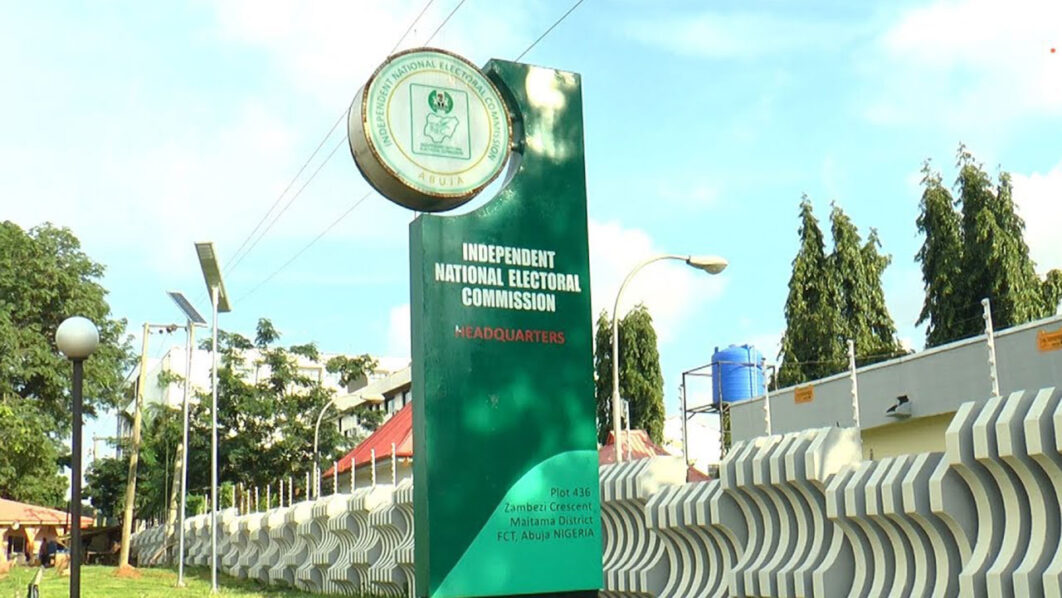
The publication of the final list of 1,303 senatorial candidates by the Independent National Electoral Commission has exposed a troubling reality in Nigeria’s electoral system: a significant number of those cleared to contest the 2027 elections are either facing active corruption investigations or presided over governments marked by poor performance and unfinished business.
At least six high-profile candidates are currently entangled with the Economic and Financial Crimes Commission while seeking seats in the upper chamber. Former Kogi State Governor Yahaya Bello, cleared by the APC for the Kogi Central senatorial district, is being prosecuted over an alleged N80.2 billion money laundering case. The EFCC has accused Bello of diverting funds from Kogi State Government accounts and local government accounts during his tenure between January 2016 and January 2024, through a network of shell companies and proxies. The commission filed 19 counts against him and, in April 2024, declared him wanted before later arraigning him before the Federal High Court in Abuja. Bello has consistently denied the allegations, describing them as politically motivated. The EFCC itself has emphasised that Bello remains innocent until proven guilty, with its Director of Public Affairs, Wilson Uwuajeren, stating: “Whatever is happening to him within his party, that is the party’s affairs. It has nothing to do with the EFCC”.
Former Delta State Governor Ifeanyi Okowa, now the APC candidate for Delta North, is under active EFCC investigation over the alleged diversion of N1.3 trillion in 13 per cent derivation funds that accrued to Delta State between 2015 and 2023. The APC’s Delta State chapter had initially praised the EFCC for interrogating Okowa, describing his arrest as “the right step in the right direction.” Months later, the same party rewarded him with a senatorial ticket. Okowa has visited the EFCC’s Lagos office multiple times in connection with the probe and has denied any wrongdoing.
Former Aviation Minister Hadi Sirika, who declared his intention to contest the Katsina North senatorial seat, is being prosecuted by the EFCC over allegations of abuse of office and the awarding of contracts worth billions of naira to family members during his time as minister. The EFCC has filed an amended six-count charge against Sirika and three others, alleging contract-related offences involving Al-Buraq Global Investment Limited, a company the prosecution alleges is linked to the former minister’s daughter. The trial has featured leaked audio recordings of Sirika discussing a controversial consultancy arrangement. Sirika has defended the failed Nigeria Air project, attributing its collapse to resistance from domestic airline operators, and has rejected claims that approximately N100 billion was spent on the venture, insisting the approved budget was N5 billion with only N3 billion released.
Senate President Godswill Akpabio, seeking a return to the Senate for Akwa Ibom North-West, was probed by the EFCC over an alleged N108.1 billion fraud during his tenure as governor of Akwa Ibom State. The EFCC began investigating Akpabio in June 2015 following a petition alleging that between January and December 2014, the former governor colluded with two top aides to siphon N108.1 billion from the state treasury. Akpabio was quizzed for two days at the EFCC headquarters and has consistently denied the allegations.
Imo State Governor Hope Uzodimma, who is seeking the Imo West senatorial seat, is at the centre of an EFCC probe into the alleged mismanagement of over N700 billion linked to the Progressive Governors’ Forum. Uzodimma, who chairs the PGF, allegedly failed to properly account for the funds, causing tension among APC governors. The EFCC arrested the Director-General of the Energy Commission of Nigeria in connection with the probe. The case relates to the alleged mismanagement of campaign funds pooled through structures associated with “Renewed Hope Ambassadors” and later “Renewed Hope Network.” The EFCC is tracing the movement of the funds.
Former Edo State Governor Adams Oshiomhole, seeking a return to the Senate for Edo North, has faced a string of corruption allegations stemming from his time as governor. The EFCC admitted receiving petitions accusing him of misappropriating public funds, though a court declined to compel an investigation in 2019. Groups have also called for probes into alleged fraud in hospital and contract projects from his tenure. Oshiomhole has consistently denied the allegations.
Former Aviation Minister Stella Oduah, who is contesting for a Senate seat in Anambra, recently entered a plea bargain arrangement with the Federal Government over allegations of N2.4 billion fraud. She was discharged by a Federal Capital Territory High Court in March 2026 after reaching a settlement with the Nigerian government. The discharge followed a deal struck between Oduah and her co-defendant and the Nigerian government. Anambra leaders and the APGA have questioned her Senate bid over the fraud allegations and certificate discrepancies.
Former Attorney-General of the Federation Abubakar Malami, now the ADC candidate for Kebbi, has had 48 properties linked to him permanently forfeited to the Federal Government. The Federal High Court in Abuja ordered the final forfeiture of the assets, valued at more than N212 billion, after the EFCC traced 57 properties to the former minister and secured final forfeiture of 48. Justice Joyce Abdulmalik granted the forfeiture application, holding that Malami and others laying claim to the assets failed to prove they lawfully acquired them. Malami is also facing a 16-count charge connected to the assets. The EFCC has said it will appeal a ruling that dismissed its bid to forfeit nine additional properties linked to him.
The prevalence of candidates facing active corruption cases is not limited to these high-profile figures. The Network Against Corruption and Trafficking has criticised the clearance of politicians under serious EFCC and ICPC investigation for the 2027 elections, describing it as “a reckless descent into political moral bankruptcy” that “poses an existential threat to Nigeria’s democracy and the anti-corruption crusade.”
Beyond the corruption cases, a significant number of former governors seeking Senate seats left behind unresolved problems in healthcare, education, roads, jobs and industrial growth. Across the country, no fewer than 22 current and former governors are positioning for senatorial seats in 2027. The Guardian has noted that the Senate increasingly appears to serve as a “retirement destination” for former governors, rather than a chamber renewed by fresh thinking and broad representation. The pattern raises fundamental questions about whether public office is becoming a closed cycle in which governors complete eight years in office, often leaving unresolved problems, and then proceed to the Senate with the same political structure, limiting competition and crowding out younger aspirants with new ideas but less access to party machinery.
Legal experts have pointed out that under Nigerian law, a politician standing trial for corruption can contest an election, be sworn in, and have the criminal case suspended until he leaves office. This constitutional provision has enabled candidates facing serious corruption allegations to continue seeking public office while their cases remain before the courts. For the EFCC, the coming months will test whether its investigations can proceed without political interference as the campaign season intensifies, and for Nigerian voters, the 2027 elections will present a stark choice between candidates with unresolved corruption cases and those promising a break from the cycle of impunity.
About The Author

Related Articles
Peter Obi Denies Leaving Anambra Debts, Vows to End 2027 Campaign If Proven Wrong
Presidential candidate of the Nigeria Democratic Congress (NDC), Peter Obi, has strongly...
China Tightens Travel Restrictions for Citizens Over Tech and Security Concerns
China has tightened travel restrictions for its citizens under new exit-and-entry rules...
Traore Launches $30 Million Textile Complex to Cut Burkina Faso’s Reliance on Clothing Imports
Burkina Faso’s military leader, Captain Ibrahim Traore, has inaugurated a $30 million...

Guinea and Ivory Coast Presidents Agree to Strengthen Security, Trade and Political Ties
Guinea’s President Mamady Doumbouya arrived in Abidjan on Friday for talks with...
Leave a comment