







Mali has taken a bold step onto the international legal stage, launching a high-stakes arbitration case against Canadian mining giant Barrick Gold at the International Centre for Settlement of Investment Disputes (ICSID).
At the centre of this dispute over the Loulo-Gounkoto gold complex is not only a multi-million-dollar tax controversy, but also a broader assertion of national sovereignty over natural resources.
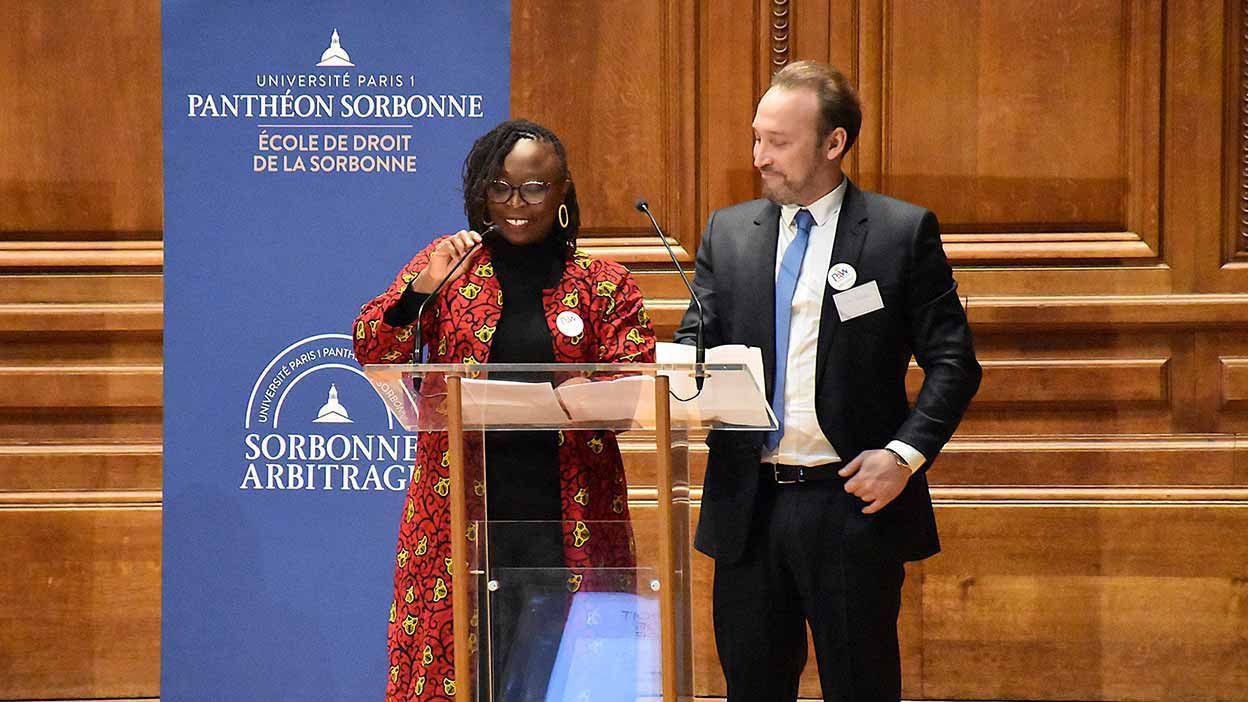
In a move that signals a decisive shift in Mali’s legal and diplomatic strategy, the government has appointed Diamana Diawara, one of Africa’s most respected legal minds, to lead its defense. Her appointment reflects a growing confidence among African states in confronting multinational corporations within the framework of international law—on their own terms.
Diawara, currently the Africa Director at the International Court of Arbitration of the ICC (International Chamber of Commerce) in Paris, is no stranger to the complexities of transnational legal disputes.
She’s a dual graduate of Paris 1 – Panthéon-Sorbonne and Golden Gate University in San Francisco, Diawara has spent over a decade at the forefront of arbitration cases involving African states and powerful multinational interests.
Beyond her courtroom credentials, she is a co-founder of AfricArb, a network that promotes African voices and perspectives in international arbitration. She is also an educator, mentor, and a leading figure in shaping a pan-African approach to economic justice and legal sovereignty.
Her leadership in the Barrick case is seen as a symbol of a new era, one in which African countries assert their rights through rigorous legal advocacy, rooted in international norms and African legitimacy.
At stake in the arbitration are hundreds of millions of dollars in tax claims related to Barrick’s operations at Loulo-Gounkoto. But for Mali’s government, this case is far more than money. It is part of a broader strategy to reclaim control over strategic resources, end decades of extractive imbalance, and reset the terms of engagement with foreign investors.
Sources close to the government describe the arbitration as a “test case”—a potential precedent for other African nations seeking fairer terms in their mining and natural resource contracts. It follows a wave of assertive state action, including the nationalisation of key mines like Morila and Yatela, and a stated ambition to redefine resource governance in the public interest.
The case has sparked growing interest across the continent, as legal scholars and policymakers view Mali’s stance as part of a broader trend: the rise of African legal professionals who are no longer content with the status quo of biased deals and passive compliance.
Read Also: FCTA Land Administration Issues Query To Official Over Wike Family Land Allocation Leak
Nigeria: NNPC Boss Snubs Senate Summons Again Over Missing ₦210tn Probe
About The Author






Leave a comment