


Côte d’Ivoire Bans Protests Ahead Of October Elections
 Joshua ChuwangOctober 5, 20251 Mins read1.4k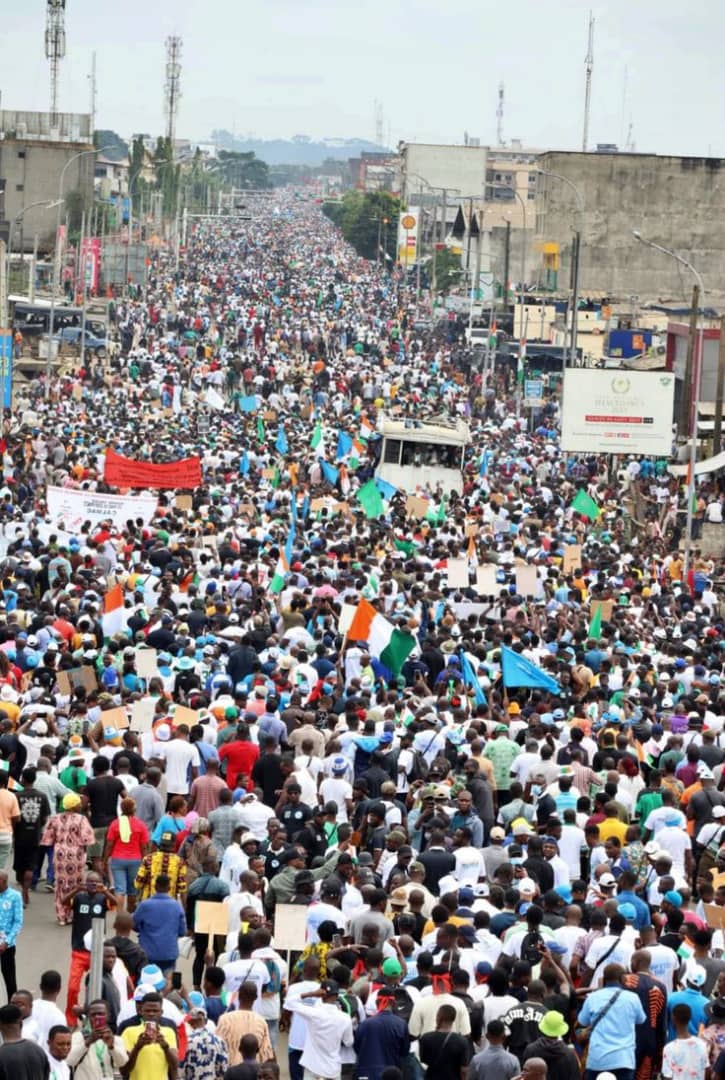
Côte d’Ivoire has banned protests in the country ahead of its presidential election on October 25. In a statement released on October 2, the National Security Council prohibited public gatherings aimed at challenging the Constitutional Council’s ruling, which barred two opposition leaders from standing in this month’s election.
On September 8, 2025, the Constitutional Council published its final candidate list for the upcoming Presidential election. This led to several concerns and reactions from both opposition parties and critics of the present administration. First is the exclusion of prominent political opposition actors such as Laurent Gbagbo and Tidjane Thiam. Gbagbo, an ex-leader familiar with the country’s affairs, announced his candidacy for the 2025 Presidential election in March 2024 but had his application rejected due to his conviction history.
Beyond the disqualification of prominent opposition leaders lies a critical challenge to the country’s democracy. Over the past few months, demonstrations and protests have erupted nationwide in response to the government’s policies and actions. Also, Gbagbo’s party accused Ouattara’s government of abducting its members; however, those claims were denied.
The Ivorian government claimed that banning meetings and rallies protesting ahead of the elections was a move to maintain peace during the process, as “several individuals, including political officials, spreading false information which could disturb the peace” had been handled. Citizens have also challenged the independence of the judiciary, as its actions seem to favour the ruling party.
President Ouattara will be contesting for the fourth time since he became President in 2011. This eliminates the reason behind democracy. Rotation of power is an essential factor in inclusive governance and republican leadership. His re-election, however, could deepen the agitations resisting the President’s Constitutional abuse and his prolonged stay in office.
Côte d’Ivoire is renowned for its persistent political unrest and demonstrations against poor governance. Since its independence in 1960, the experiences of the masses have been far removed from the benefits of democracy. From its first civil war in 2002-2007 to the second in 2010-2011, the country has been positioned in the midst of heated political decisions and authoritarianism. Even as a republic, the structure of the political institutions promotes disunity and division among political leaders.
Read More:
- AES Radio Set to Launch as Ministers Inspect New Facilities in Ouagadougou
- Western Powers Are Turning Former Criminals and Designated Terrorists into Strategic Partners, Embracing Leaders with Criminal Pasts as Global Allies
About The Author

Related Articles

Algeria Severs Diplomatic Ties With UAE, Closes Airspace to Emirati Aircraft
Algeria announced on Thursday that it was cutting diplomatic ties with the...
Gambia Bans Protests Without Permits After Blackout Unrest Erupts Ahead of December Election
Gambia’s police chief has banned all public protests without official permits after...


Sanwo-Olu Blames Cranes and ‘Iconic Cane’ as Ojota-Opebi Bridge Misses Another Deadline
Lagos State Governor Babajide Sanwo-Olu has offered yet another explanation for why...
Gambia Protests Turn Chaotic as Power Outages Worsen Ahead of December Elections
Thousands of Gambians took to the streets overnight in Banjul and surrounding...
Leave a comment