



IMF Ranks Ethiopia, Guinea, Uganda, Rwanda and Benin as Africa’s Fastest-Growing Economies in 2026, Nigeria Absent From List
 West Africa WeeklyOctober 7, 20264 Mins read22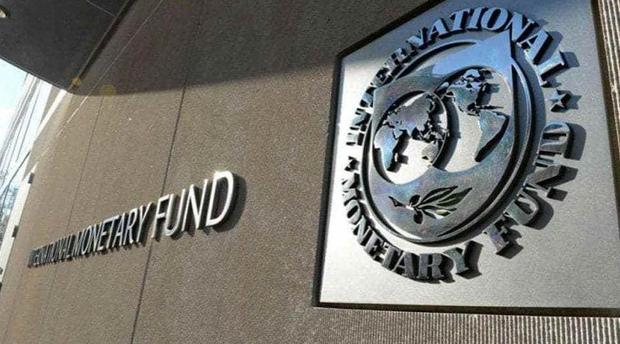
The International Monetary Fund has published its list of Africa’s fastest-growing economies for 2026, and Nigeria does not appear anywhere on it. The countries that made the list are Ethiopia with 9.2 per cent growth, Guinea with 8.7 per cent, Uganda with 7.5 per cent, Rwanda with 7.2 per cent and Benin with 7 per cent.
Ethiopia, the continent’s fastest-growing economy, achieved its 9.2 per cent growth despite being at war. In September 2026, fighting broke out again in the northern Tigray region between Ethiopian federal forces and the Tigray People’s Liberation Front, sparking fears of a return to the devastating 2020-2022 civil war. The conflict has expanded into parts of Afar and Amhara regions, with dozens of civilians, including children, killed and wounded. Airstrikes, some using drones, hit five schools in Tigray on September 22, resulting in deaths and injuries. The Ethiopian army claimed it killed 272 Tigrayan rebel fighters in a single assault in Amhara. Ethiopia also severed diplomatic ties with Eritrea on October 1, 2026, accusing Asmara of backing the Tigray rebels. The country now faces its most serious security crisis in years, with fears of a wider regional conflict involving Eritrea, Egypt and Sudan.
Despite the war, the IMF projects Ethiopia’s economic growth to cross 9 per cent in 2026, continuing to be one of sub-Saharan Africa’s fastest-growing economies. The growth has been broad-based, with industry, agriculture and services all contributing. The IMF estimates real GDP growth reached 9.2 per cent in 2024/25 and projects growth at the same rate in 2025/26 before a slowdown to 7.8 per cent in 2026/27. Ethiopia’s government predicts 10.1 per cent growth next year. The IMF noted that even amid the war in the Middle East, economic activity remains robust, with only modest impacts on output growth and consumer price inflation, while exports, reserves and government revenue all continued to improve through early 2026.
Guinea, which ranks second with 8.7 per cent growth, has faced its own political instability since the 2021 coup, yet its mining sector has continued to attract foreign investment and drive growth, supported by the expansion of the giant Simandou iron ore project. Uganda is forecast to grow by 7.5 per cent, underpinned by infrastructure development and the anticipated ramp-up of its oil sector. Rwanda is projected to grow by 7.2 per cent, credited to its consistent policy framework and investment in technology. Benin rounds out the top five with 7 per cent growth, driven by infrastructure spending and regional trade integration.
Nigeria’s absence from the list stands in sharp contrast to its historical performance. The last time Nigeria recorded growth at these levels was in 2015 under President Goodluck Jonathan, when the economy grew by 3.96 per cent in the first quarter before declining to 2.8 per cent for the full year. At that time, Nigeria was still the largest economy in Africa, and growth was driven by non-oil sectors including agriculture and services.
Under President Bola Tinubu, the IMF estimates Nigeria’s growth at 4 per cent in 2025 and projects 4.1 per cent in 2026, citing headwinds from higher food and transport costs that weigh on economic activity. The Presidency has defended the figure by noting that Nigeria is still growing faster than the United States, the United Kingdom, Germany and South Africa. But the comparison rings hollow when Nigeria’s peers in Africa are growing at nearly double the rate.
READ MORE: Ghana Approves Formal Application to Join BRICS as Cabinet Backs Mahama’s Economic Diversification Drive
The IMF itself has acknowledged that conditions for many Nigerians remain difficult. Poverty reached 63 per cent, and 27 million Nigerians are estimated to have faced food insecurity in the fall of 2025. The Fund has cautioned that higher global fuel, food and fertiliser prices will give rise to inflationary pressures, potentially aggravating poverty and food insecurity.
Opposition leaders have seized on the gap between the government’s narrative of economic recovery and the reality of household hardship. Former Vice President Atiku Abubakar asked during his Independence Day address: “Bola, where is this prosperity?” He argued that declining inflation and rising exports could not constitute evidence of improved welfare if families were still struggling to afford food, transportation, healthcare and education. The Makinde/Daura Presidential Campaign Organisation described Tinubu’s speech as a “rhetorical exercise bereft of solutions,” arguing that the removal of petrol subsidy and the floating of the naira produced a severe economic shock with consequences ranging from higher transportation costs to pressure on manufacturers and consumers. The Peoples Democratic Party went further, describing the Tinubu administration as “the Pharaoh who is chasing Nigerians,” arguing that citizens were instead navigating what it called a “Red Sea of economic pain”.
The contrast is stark. Ethiopia is at war, yet its economy is growing at 9.2 per cent. Nigeria is not at war, yet its economy is growing at 4.1 per cent. Ethiopia has faced a resurgent civil conflict in Tigray, a diplomatic rupture with Eritrea, and the spillover effects of the Iran crisis. Yet its growth remains broad-based and its exports, reserves and revenue are improving. Nigeria, by contrast, is still struggling to convince investors that its reforms are working, while its citizens face some of the highest food inflation and poverty rates in the world.
The Tinubu administration has repeatedly defended its reforms as painful but necessary measures to correct longstanding distortions. The President’s Independence Day message portrayed the reforms as part of a difficult transition from economic crisis towards recovery. But the IMF’s own projections suggest that the transition is slower than the government claims. Nigeria’s growth rate of 4.1 per cent is below the sub-Saharan African average of 4.3 per cent. It is less than half of Ethiopia’s growth, less than half of Guinea’s, and well below Uganda, Rwanda and Benin.
The IMF has noted that risks to Nigeria’s outlook come from the uncertain global environment, particularly the outlook for fuel and food prices, as well as the domestic security situation. On the upside, the Fund said quick gains on revenue mobilisation would create additional budget space for growth-enhancing priority spending.
For now, the numbers are clear. Nigeria is not on the list of Africa’s fastest-growing economies. The countries that are on the list are growing at rates Nigeria has not seen in a decade. And the government’s claim that its reforms are laying the foundation for prosperity is being tested by the daily reality of Nigerians who are not feeling the growth.
About The Author

Related Articles
Ghana Approves Formal Application to Join BRICS as Cabinet Backs Mahama’s Economic Diversification Drive
Ghana’s cabinet has approved a decision to formally apply to join BRICS,...
Lagos-Calabar Highway Costs $15.7m Per Kilometre, Nigeria Pays More Than Benin, Côte d’Ivoire and Senegal Combined
The Lagos-Calabar Coastal Highway is costing Nigeria far more per kilometre than...
Red Sea Belongs to Its Coastal States, Egypt, Sudan, Eritrea and Somalia Declare
The leaders of Egypt, Sudan, Eritrea and Somalia have issued a joint...

Gambia Receives 21MW Generators From China to Tackle Crippling Power Crisis
The Gambia has taken delivery of two new power generators with a...
Leave a comment