


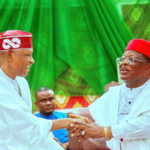

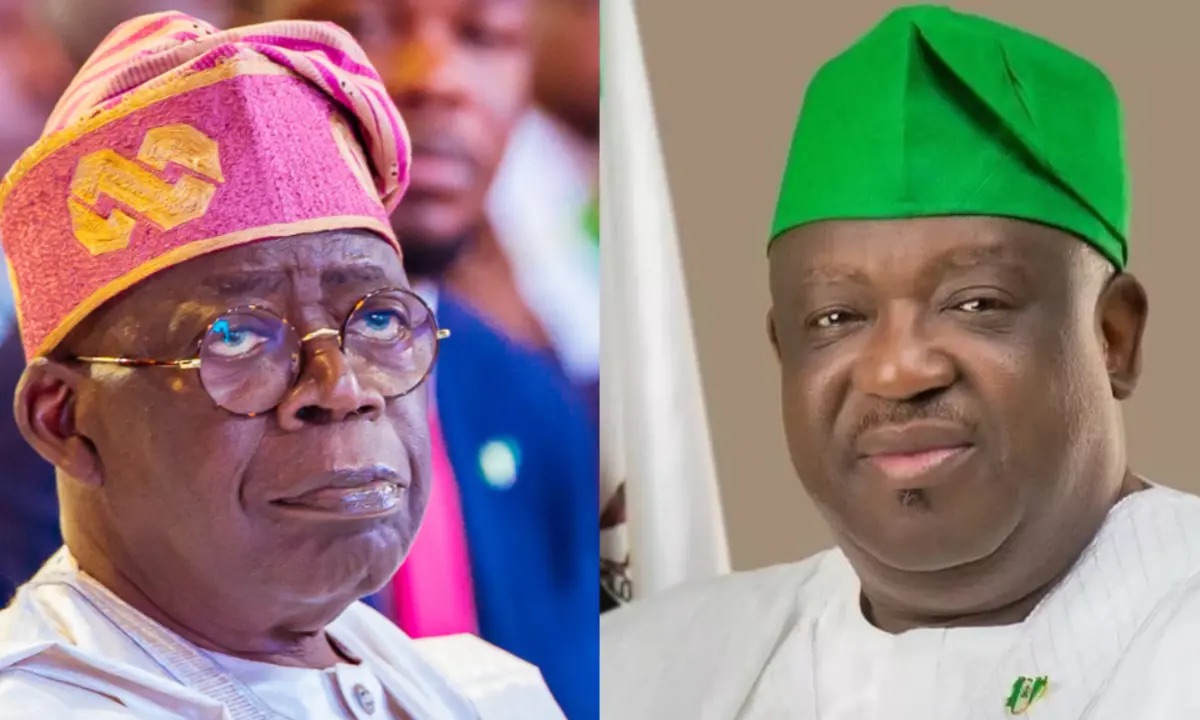
Plateau State Governor Caleb Mutfwang has commended President Bola Tinubu for approving the dualisation and construction of the Mararaban Jama’a–Pankshin–Langtang–Shendam–River Ibi Road, describing it as a major economic corridor connecting Plateau and Taraba states. In a statement issued on Sunday by his Director of Press and Public Affairs, Gyang Bere, Mutfwang said the approval represents a historic intervention that will unlock the economic potential of Plateau State, strengthen regional integration, and improve the quality of life of millions of Plateau people and Nigerians.
The governor noted that the approval of the strategic federal highway is a clear demonstration of Tinubu’s commitment to inclusive national development and his determination to bridge infrastructure gaps across the country. According to him, the project will deliver wide-ranging benefits to the North-Central and North-East regions. Mutfwang stated that the approval is not just about the construction of a road; it is about restoring hope, expanding economic opportunities, creating jobs, opening up rural communities, and accelerating the development of the North-Central and North-East corridors. He explained that the road will facilitate the movement of people and goods, reduce transportation costs, boost agricultural production and commerce, attract investments, promote tourism, and enhance social and economic interactions across the region.
The governor expressed heartfelt gratitude to President Tinubu for listening to the aspirations of the people of Plateau and responding with decisive action, describing the President as a dependable ally and partner whose administration has continued to demonstrate genuine concern for the welfare, peace and development of Plateau State. Mutfwang also acknowledged the role of the National Chairman of the All Progressives Congress, Prof. Nentawe Yilwatda, in facilitating the project, thanking him for conveying the yearnings of the people to the President. He equally commended the Minister of Works, Senator David Umahi, for his dedication, professionalism and determination in driving the Renewed Hope infrastructure agenda.
But for Nigerians who have watched the Tinubu administration’s infrastructure promises unfold, this announcement carries a familiar and troubling pattern. The Plateau-Taraba highway is part of a broader N3.9 trillion infrastructure package approved by the Federal Executive Council for 27 road projects across 15 states. The approvals include N276 billion for the dualisation of the Ilorin-Ogbomoso Road, N265 billion for the reconstruction of the Iseyin-Eruwa-Agbesi Road, and N217 billion for the dualisation of the old alignment from Ijaye through the Federal Government College to Ilorin Road.
Nigerians need only look at the Lagos-Calabar Coastal Highway to understand how these grand infrastructure promises often end. That 700-kilometre super-highway is being built at an estimated cost of $11 billion, with a per-kilometre cost of $15.7 to $17.9 million that dwarfs the $1.65 billion budget for the 10,228-kilometre Cairo-Cape Town Highway, Africa’s longest road, stretching across 10 nations at just $156,000 per kilometre. The project has been plagued by controversy over its cost, procurement process, environmental impact, and allegations of aggravating flooding in adjoining communities. The Human Rights Writers Association has called for a forensic audit of the project, condemning what it described as a reckless, opaque and dangerously inflated spending regime being executed under the administration of Bola Ahmed Tinubu while millions of Nigerians grapple with poverty, unemployment, rising inflation, insecurity and declining purchasing power.
The Pan Niger Delta Forum has also accused the Federal Government of shortchanging the South-South in the recently approved N3.94 trillion road infrastructure programme, stating that out of 26 major projects covering 10 states, the only one nearest to the South-South is the road connecting Benue State with Cross River State. The group described the situation as troubling and shocking, warning that the continued neglect of the oil-rich region could deepen feelings of marginalisation and undermine national cohesion.
The government’s track record on infrastructure offers little reason for optimism. In July 2026, FCT Minister Nyesom Wike disclosed that about 70 percent of the projects completed by the FCT Administration under President Tinubu were abandoned contracts originally awarded 15 to 16 years ago. Reports indicate that at least N136.93 billion worth of federal road and infrastructure projects have been abandoned or left incomplete in various zones. The Independent Corrupt Practices and Other Related Offences Commission has uncovered corruption schemes including contract splitting, over-invoicing inflated by up to 300 percent, phantom contracts, and substandard execution.
Mutfwang’s effusive praise for Tinubu is not surprising. The Plateau governor defected to the APC in January 2026, and Tinubu formally welcomed him into the party at that time. The highway approval is a political reward, not a development strategy. It is the same pattern that has seen billions of naira wasted on roads that collapse within months, contracts awarded to unqualified contractors, and funds diverted to private pockets. The governor expressed confidence that upon completion and commissioning of the road, President Tinubu’s name would be permanently engraved in the hearts of the people of Plateau and Taraba states for delivering one of the most significant infrastructure projects in the history of the region. But for millions of Nigerians watching from the margins, it is a reminder of how far they remain from the prosperity the President keeps promising. Until the Tinubu administration demonstrates a genuine commitment to transparency, accountability, and fiscal responsibility, every new road project announcement will be met with the skepticism it deserves.
About The Author


Leave a comment