





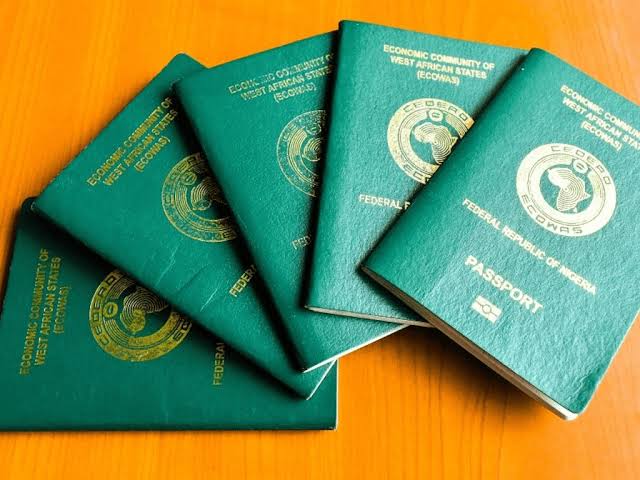
Nigeria’s passport has plunged to 181st out of 196 countries in the latest IziVisa Passport Ranking Index, a sharp fall from 90th position in July 2026, with visa-free access shrinking from 44 destinations to just 24. The Federal Government has not responded to requests for comment on the collapse.
According to data published on IziVisa.com, Nigerian passport holders can now travel to 24 countries without a visa, obtain visas on arrival in 16 countries, and access 43 countries through electronic visas. The country has lost access to 20 destinations that were previously visa-free but have now been reclassified as visa-on-arrival or electronic travel authorisation territories. These include Burundi, Comoro Islands, Djibouti, Madagascar, Mozambique, Rwanda, Seychelles, Tanzania, Uganda, Cambodia, Iran, Lebanon, Maldives and Timor-Leste. Kenya, Suriname, Kiribati and the Cook Islands now require electronic authorisations or special clearance.
The decline is not just a ranking issue. It is a direct measure of how far Nigeria has fallen in the eyes of the world. The United Arab Emirates leads the 2026 IziVisa ranking with access to 185 destinations. Switzerland is second, with 120 visa-free destinations, 26 visa-on-arrival and 37 electronic visa destinations. Luxembourg, Malta, Denmark, Spain and Finland also rank at the top. Nigeria, Africa’s most populous country and one of its largest economies, is now ranked alongside the Democratic Republic of the Congo and Turkmenistan in the separate Henley Passport Index, with each offering visa-free access to just 44 destinations in that assessment.
The comparison with Nigeria’s African peers is damning. South Africa ranks 49th globally with access to 101 destinations. Botswana follows in 61st with 81 destinations. Morocco ranks 67th with 71 destinations. Kenya occupies 68th with 70 destinations. Ghana ranks 70th with 67 destinations. Nigeria, which likes to call itself the giant of Africa, is nowhere near these countries. Its citizens face visa requirements for almost every major destination in the world, including the United States, the United Kingdom, Canada, the European Union and most of Asia.
READ MORE: Ghana’s Economy to Hit $128.64 Billion in 2026, Retains Position as Africa’s 8th Largest
The Ministry of Foreign Affairs has remained silent. Leadership newspaper reported that its spokesman, Oluwafemi Adeniyi, had yet to respond to calls and messages regarding the development. A foreign affairs analyst who spoke anonymously described the situation as sad and said it demonstrated how low the country had sunk among the comity of nations. The government’s silence is itself a statement. It suggests that the Tinubu administration either does not understand the gravity of the collapse or does not care.
The economic cost of a weak passport is not abstract. Unhindered movement is a critical driver of cross-border trade, foreign direct investment, corporate expansion and academic collaboration. When business leaders, investors and technical experts face heightened visa friction, market entry costs escalate, transaction timelines stretch and local enterprises face competitive disadvantages against regional counterparts. Nigerian entrepreneurs, students and professionals are forced to spend time, money and energy on visa applications that their peers in Ghana, Kenya or South Africa do not face. The green passport has become a badge of inconvenience and suspicion at every international checkpoint.
The decline also reflects deeper problems. Passport strength is a proxy for perceived economic stability, internal security, global reputation and diplomatic leverage. A country whose currency has lost more than 70 per cent of its value, whose inflation has pushed millions into poverty, whose security forces cannot protect schoolchildren from abduction and whose government is embroiled in corruption scandals will not be welcomed with open borders. The world is watching Nigeria, and it is closing its doors.
President Bola Tinubu came to power promising to renew hope and restore Nigeria’s standing in the world. Three years later, the country’s passport has sunk to 181st, its citizens are less welcome abroad than they were before, and the government cannot even be bothered to explain why. The Tinubu administration has spent 261 days abroad on foreign trips, signed multibillion-dollar deals with convicted money launderers and focused on decorating bridges with the President’s picture. It has not focused on the one thing that would make Nigerians welcome anywhere in the world: a country that works. Until that changes, the green passport will continue to sink, and Nigerians will continue to pay the price at every border.
About The Author



Leave a comment