





Ghana’s Cocoa Crown Under Threat as Nigeria, Ecuador and Indonesia Close In
 West Africa WeeklyFebruary 12, 20261 Mins read842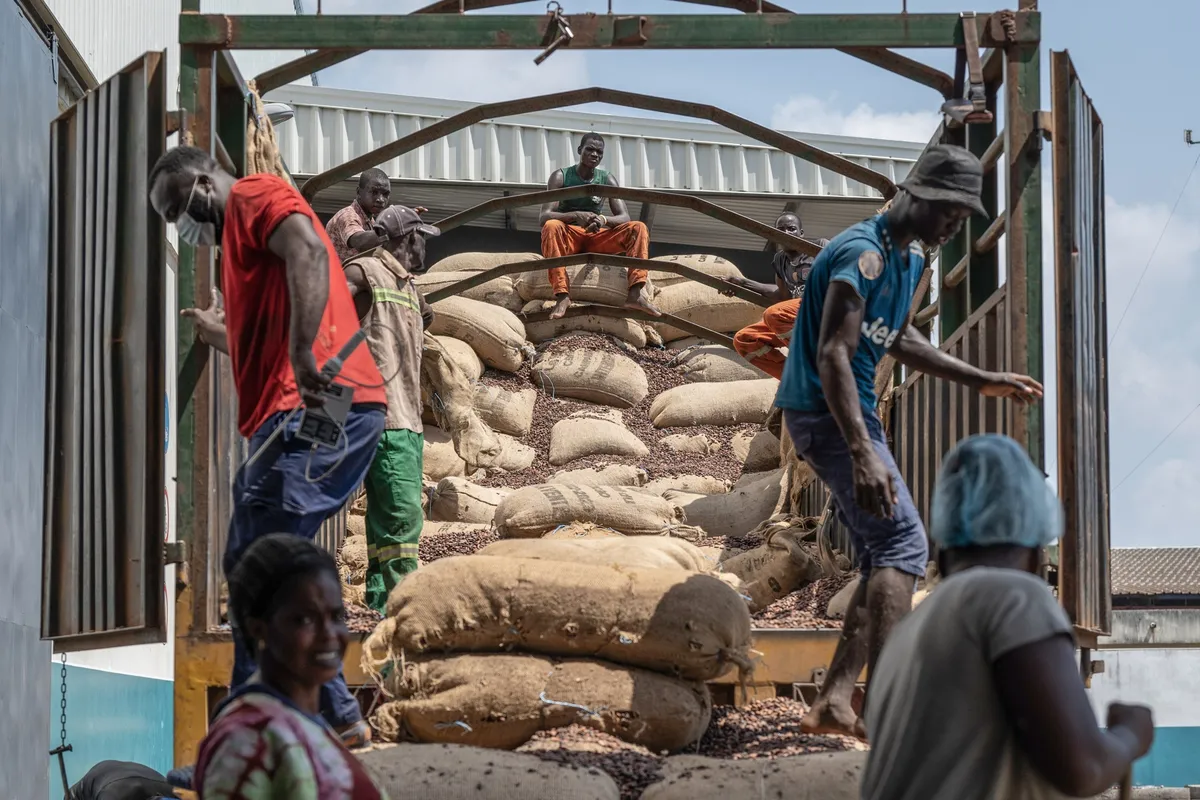
Ghana’s position in the global cocoa industry is facing mounting pressure as falling prices, supply shifts and policy debates reshape the market across West Africa and beyond.
For decades, Ghana has held its place as the world’s second-largest cocoa producer after neighbouring Ivory Coast. But that ranking is now under threat. Analysts say Indonesia, Ecuador and Nigeria are all poised to challenge Ghana’s position, with stronger output forecasts and improving export capacity.
The shift is coming at a time when the cocoa market itself is undergoing sharp swings. After record highs driven by poor harvests in West Africa, futures prices have begun to drop, creating uncertainty for producing countries that rely heavily on the crop for foreign exchange.
Ghana is now considering a major overhaul of its domestic cocoa pricing. Authorities are weighing a move away from the long-standing fixed-pricing system toward a model more closely tied to global market movements. The proposal comes as futures slide, and the government seeks ways to stabilise the industry while keeping farmers competitive.
At the same time, the regional market is showing signs of tension. In the Ivory Coast, traders have reportedly slowed or halted purchases as they push for lower prices, reflecting the sharp shifts in global futures markets. The standoff highlights the fragile balance between buyers and producers after months of extreme price volatility.
These developments are reshaping the global cocoa map. Ecuador has steadily increased production over the past decade, becoming a major supplier to international markets. Indonesia has also boosted output, while Nigeria is seeing renewed interest in cocoa farming as higher prices encourage farmers to expand cultivation.
If current trends continue, Ghana could slip from its long-held second place, marking a significant shift in the industry. Such a change would not only affect export earnings but also alter the balance of influence among the world’s major cocoa-producing nations.
With prices fluctuating, policies under review, and new competitors emerging, the global cocoa trade appears to be entering a new phase, one in which dominance is no longer guaranteed and long-standing hierarchies may soon be redrawn.
About The Author

Related Articles

How the Multi-Trillion Naira Coastal Road Became an APC Cash Cow Just Like the Notorious Nigeria Air Aviation Scandal
The ruling All Progressives Congress is facing an intense wave of public...
Ethiopia Opens Its First Gold Refinery With $50 Million Investment
Ethiopia has inaugurated its first national precious metals refinery, a $50 million...

Gunmen Kill Worshippers in Kaduna Churches as Intersociety Says 3,083 Christians Killed in Eight Months
At least seven worshippers were killed and several others abducted when armed...


Ghana and US Crack Down on $10m Cyber Scam Network as Credit Dispute Erupts
Ghanaian and United States authorities have dismantled a major cybercrime operation in...
Leave a comment