






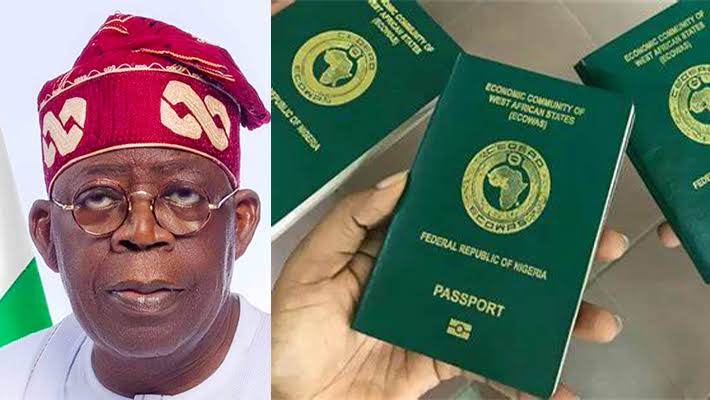
The cost of obtaining a Nigerian passport has soared to N200,000 for the 64-page ten-year validity booklet under President Bola Tinubu’s administration, nearly three times the country’s minimum wage of N70,000 which the President himself signed into law in July 2024.
The Nigeria Immigration Service implemented the fee increase on September 1, 2025, raising the 32-page five-year passport to N100,000 and the 64-page ten-year version to N200,000. This marked the second major fee hike in just over a year. In September 2024, the 32-page passport had already risen from N35,000 to N50,000, while the 64-page version jumped from N70,000 to N100,000. The latest increase effectively doubled those already elevated charges.
A worker earning the minimum wage of N70,000 would need to set aside nearly three months’ salary to save for a 64-page passport. A 32-page passport at N100,000 still exceeds a worker’s monthly salary. BusinessDay noted that obtaining a passport in Nigeria now costs nearly triple the country’s minimum wage. Peter Obi, former presidential candidate, condemned the increase, stating: “In a country where the new minimum wage is only N70,000, the cost of a single passport now exceeds a worker’s monthly salary, probably the only country in the world to achieve this feat”.
The Tinubu administration defended the hike as necessary to eliminate corruption and delays. Interior Minister Olubunmi Tunji-Ojo said the target was for every Nigerian to receive their passport within one week of enrolment, claiming that under the previous system applicants sometimes waited up to seven months or paid bribes as high as N200,000. A presidential aide argued that “Nigerians have always paid more than N100,000, N200,000 to get passport” through bribes. However, critics argue that the increase punishes ordinary citizens for a system the government itself failed to manage.
READ MORE: Algeria Beat Senegal 2-0 in WAFCON Opener After Controversial Penalty and Late Goalkeeper Error
The Socio-Economic Rights and Accountability Project (SERAP) wrote to President Tinubu arguing that the increases were “arbitrary, unlawful, unjustified, and excessive” and amounted to discriminatory denial of access to millions of economically vulnerable Nigerians. A public issues analyst, Justice Osai Ahiakwo, described the increase as an “economic summersault” and argued that the Immigration Act does not empower the NIS or the Minister of Interior to unilaterally raise fees, insisting that such decisions should be a matter for the National Assembly.
The fee structure applies only to applications processed within Nigeria. Nigerians in the diaspora continue to pay $150 for the 32-page passport and $230 for the 64-page version, unchanged by the September 2025 review. The disparity has drawn criticism, with many questioning why citizens living abroad pay less than those at home.
Critics also note that not all states have implemented the minimum wage, making the burden even heavier for workers in states still paying below the national minimum. For millions of Nigerians, the passport has become a luxury reserved for those with higher incomes. President Tinubu, who signed the N70,000 minimum wage into law in July 2024 promising that “no Nigerian worker will offer services and be paid anything less than N70,000,” now presides over a government that charges nearly three times that amount for a travel document.
About The Author



Leave a comment