

Ukraine Woos Ghana to Help Return Children Abducted by Russia as War Rages On
 West Africa WeeklyOctober 13, 20263 Mins read4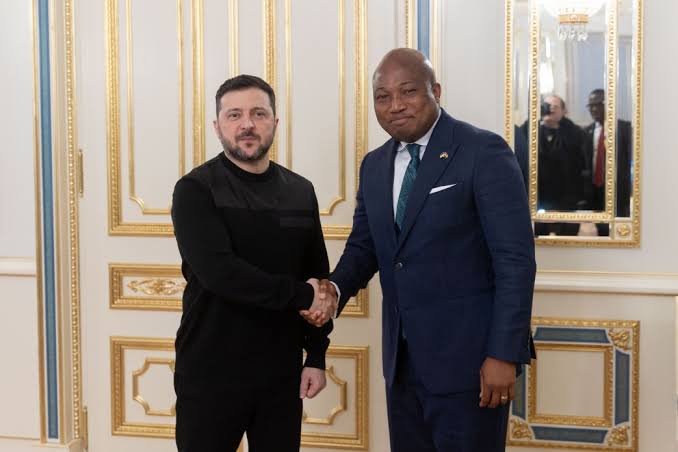
Ukraine is pressing Ghana to join its international campaign to reunite children separated from their families by the war with Russia, using cultural diplomacy and appeals to African solidarity to expand support beyond Europe.
The Ukrainian Embassy in Accra organised an event this week to highlight the Bring Kids Back UA initiative and the plight of Ukrainian children who Kyiv says have been deported to Russia since the full-scale invasion began in 2022. The event, held in collaboration with Svitanok LBG and the Association of Ukrainians in Ghana, was supported by the European Union, the Netherlands and other international partners. It combined art, photography and testimony to draw attention to the children’s experiences.
Ivan Lukachuk, Ukraine’s chargé d’affaires in Ghana, said protecting children affected by armed conflict should be a shared responsibility of the international community and called for stronger engagement from African countries, particularly Ghana. Liubov Abravitova, director of the Africa and Regional African Organisations Department at Ukraine’s Ministry of Foreign Affairs, said the children’s welfare must come before political differences. “These children are not numbers. They are sons and daughters. They have families waiting for them. They have homes to return to. They have the right to grow up in safety and to decide their own future,” Abravitova said. “One does not have to choose a political side to help a child return to his or her family. A child should be with their family. And the protection of children should unite us regardless of geography, nationality or political differences.”
The programme featured the Lost Childhood art and photography exhibition, showcasing works by Ukrainian and Ghanaian artists alongside drawings by children from the Ukrainian community in Ghana. The exhibition aimed to bring a human perspective to the issue and illustrate the experiences of children affected by the war.
Ukraine is now urging more African countries to participate in international efforts to facilitate the children’s return. Kyiv has specifically called on Ghana to join the International Coalition for the Return of Ukrainian Children, which would strengthen Ghana’s involvement in the initiative. The outreach reflects Ukraine’s efforts to use diplomatic engagement and partnerships with communities abroad to expand support for the humanitarian campaign beyond Europe.
The Bring Kids Back UA initiative seeks to locate affected children and facilitate their return to their families. Ukraine has accused Russia of deporting thousands of Ukrainian children since the war began, a charge Moscow denies. The International Criminal Court issued an arrest warrant for Russian President Vladimir Putin in 2023 over the deportation of children, a move the Kremlin dismissed as legally void.
Ghana has not yet responded publicly to Ukraine’s request. The country has maintained a neutral position on the war, abstaining from votes at the United Nations that would condemn Russia’s invasion. Ghana’s foreign ministry has not issued a statement on the coalition or the embassy’s appeal.
For Ukraine, the push in Ghana is part of a broader strategy to win hearts and minds across Africa, where Russia has deepened its influence in recent years through security partnerships, disinformation campaigns and diplomatic outreach. The cultural event in Accra is a soft-power play designed to put a human face on the war and pressure African governments to take a side on an issue that Ukraine believes should transcend politics.
But the initiative also faces obstacles. Russia has strong ties with several African governments, including military-led states in the Sahel that have turned to Moscow for security support. Ghana has historically balanced its relations between Western partners and Russia, and any decision to join the coalition would be a significant shift in its foreign policy.
For now, the children remain separated from their families. Ukraine says time is running out to find them. Russia says the allegations are fabricated. And Ghana, like many African countries, is being asked to choose a side in a conflict that it has so far tried to stay out of. The question is whether the plight of children will be enough to change that calculus.
About The Author



Related Articles
Congo’s Former President Kabila Forms New Rebel Coalition With M23 to Oust Government
Former Congolese President Joseph Kabila has launched a new political-military coalition with...

EKEDC Slams N181,000 Back Charge on Customers After Billing Error, Operations Manager Tells Residents to Do Their Worst
An Eko Electricity Distribution Company customer has accused the company of imposing...
Traoré’s Two Books Raise CFA 125 Million for Burkina Faso’s Patriotic Support Fund
Two books centred on the actions and vision of Burkina Faso’s military...

Tinubu Flags Off Another Trillion-Naira Highway in Niger After Quietly Killing the Coastal Road
President Bola Tinubu will on Tuesday, October 13, 2026, flag off the...
Leave a comment