





Tinubu’s Rush to Deploy Fighter Jets for the Benin Coup Shows a President More Responsive to France’s Priorities Than His Own Citizens’ Cries
 West Africa WeeklyDecember 7, 20252 Mins read708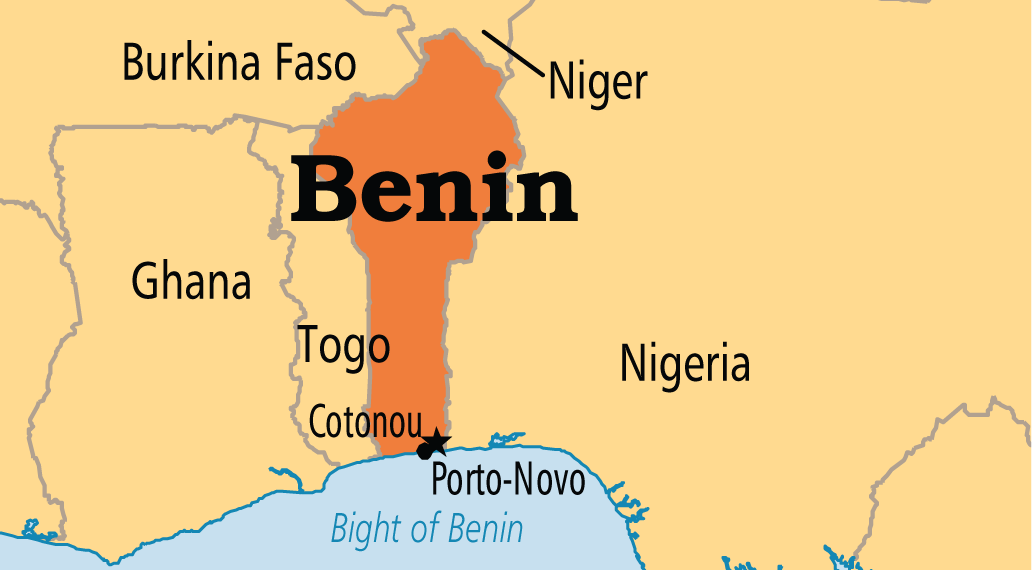
Benin’s government says it has foiled an attempted coup after a group of soldiers briefly seized the national broadcaster early Sunday and announced they had removed President Patrice Talon from office. The soldiers appeared on state television before dawn, claiming to dissolve state institutions and install a military committee led by Lieutenant Colonel Pascal Tigri. The broadcast set off confusion in Cotonou and Porto-Novo, with gunfire reported near key military sites and residents urged to stay indoors.
By mid-morning, the presidency said Talon was safe and that loyal forces had retaken central installations. Calm gradually returned as traffic resumed and soldiers loyal to the government tightened security around state buildings. Authorities later confirmed that a dozen soldiers had been arrested in connection with the attempted takeover, describing the uprising as limited in scale and quickly contained.
Guinea-Bissau’s leadership change in November had already shifted attention toward the fragility of political systems in the region. The events in Benin now follow that moment, adding to a West African landscape unsettled by rapid changes in power and uneasy transitions. Mali, Burkina Faso, and Niger are also navigating their own political trajectories under military authorities after withdrawing from ECOWAS earlier in the year, a decision that reshaped regional alliances and disrupted security cooperation. With Benin now confronting its own internal shock, the region’s political balance continues to shift.
The tension deepened further when Nigeria deployed fighter jets toward its western border in response to the attempted coup. Abuja framed the move as support for Benin’s constitutional order, a position reinforced by ECOWAS, which warned it could activate a standby force if needed. However, the decision sparked debate among Nigerians, who questioned why such swift military mobilisation was possible for a neighbouring state when domestic security threats at home had persisted for years without similar urgency.
That debate intensified after the French president publicly announced that he had spoken with President Bola Tinubu, praising Nigeria’s swift response and stating that France would “strengthen its partnership” with regional authorities at Nigeria’s request. He added that no country could “remain a spectator.” The message was understood by many in West Africa as a signal from Paris that it intends to hold on to remaining influence in a region where it has already lost considerable ground, especially in Mali, Burkina Faso and Niger, all of which have expelled French troops and distanced themselves from Paris.
The timing of the French statement, combined with Nigeria’s rapid deployment, fuelled a wave of speculation and criticism online. Many argued that the pressure to act in Benin appeared sharper than Nigeria’s responses to attacks and insecurity within its own borders. Others viewed the moment as evidence of a new diplomatic alignment, with Nigeria increasingly positioned as the key state defending French-friendly territory in the Gulf of Guinea as France seeks to retain strategic footholds after major setbacks elsewhere.
For now, Benin’s presidency insists the situation is entirely under control, and there is no indication that the attempted takeover has gained additional supporters. However, the episode has sparked broader discussions about shifting power dynamics in West Africa, external interests in the region, and the rapid response of neighbouring governments to any sign of instability. It also highlights the extent to which domestic political tremors in one country can quickly ripple across borders, shaping decisions in Abuja, Paris, and within ECOWAS.
As the streets of Cotonou return to normal, the failed coup leaves behind a trail of unanswered questions. The government claims the threat has been neutralised. Yet, the incident reveals deeper tensions surrounding loyalty within the armed forces, regional strategic pressures, and the growing contest for influence in West Africa. Whether it signals a one-day rebellion or the start of a more complicated chapter for Benin will become clearer in the days ahead.
About The Author



Related Articles

MultiChoice Pumps GH¢200 Million Into Ghana’s Creative Industry
MultiChoice Ghana has invested more than GH¢200 million into the country’s creative...
FIFA Confirms DR Congo Playoff Spot, Ending Nigeria’s World Cup Dream
Nigeria’s hopes of qualifying for the 2026 FIFA World Cup have come...

Ghanaians to Travel to St Kitts and Nevis Without Visa
Ghanaian citizens will soon be able to travel to the Caribbean nation...
Ghana Records Sharp Drop in Inflation, Lowest Since 2021
Ghana’s inflation rate dropped to 3.3 percent in February 2026, marking the...
Leave a comment