




Tinubu’s Government Demands New Tax ID for Every Nigerian While Bandits Keep Kidnapping, Hunger Bites, and Electricity Dies
 West Africa WeeklyMay 20, 20263 Mins read635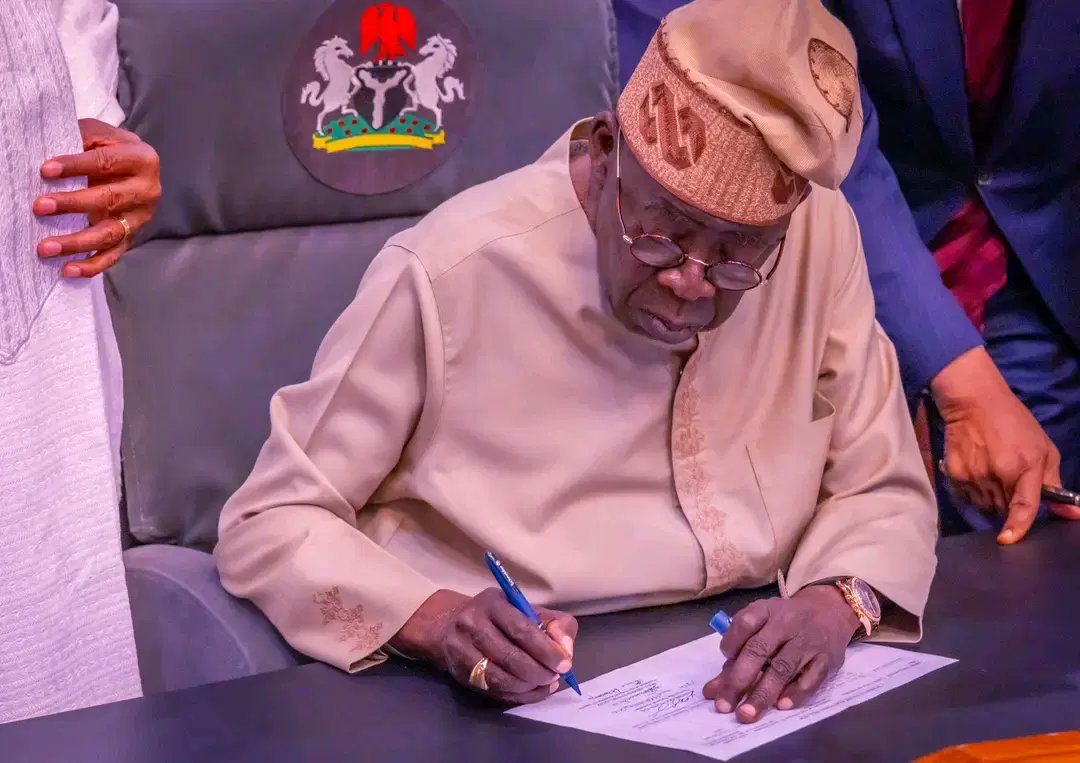
Just as families across Nigeria are burying loved ones killed by bandits and counting ransom payments that have drained generational savings, the administration of President Bola Ahmed Tinubu has quietly unveiled a sweeping new tax policy that will require every taxable person in the country to obtain a single unified Tax Identification Number.
The directive, jointly issued by the Nigeria Revenue Service and the Joint Revenue Board, cites Sections 6, 7 and 8 of the Nigeria Tax Administration Act, 2025, which the President signed into law last year. Under the new regime, all individuals, enterprises, and business names must register for a Tax ID that will replace existing taxpayer identification systems. Financial institutions, government agencies, and private organisations will be required to integrate with a new Tax ID Application Programming Interface, effectively making the number a precondition for everything from opening bank accounts to securing government services.
A New Burden on a Broken Population
The government has framed the policy as a transparency and efficiency drive. According to the official notice, the Tax ID will deliver a “single unified identity for all taxpayers,” simplify compliance, reduce tax leakages, and harmonise data across federal and state levels. But to millions of Nigerians who cannot afford three square meals a day, who have been displaced from their villages by terrorists, or who are still waiting for the government to rescue abducted schoolchildren, the announcement has landed like a cruel joke.
“They want to identify every single Nigerian for tax purposes, but they cannot identify the bandits who block the Kaduna-Aburi highway every week,” said human rights lawyer Festus Ogun, speaking from the capital. “The state knows where to find you when it wants your money. It does not know where to find you when you are screaming for help.”
Timing Raises Eyebrows
The rollout comes at a moment when public trust in the Tinubu administration is at an all time low. Security analysts have recorded at least 1,100 kidnappings since January, with many victims paying ransoms equivalent to several years of income. The government has repeatedly promised to crush banditry and terrorism, but the only numbers that appear to be rising are those on tax forms and the death toll.
IMPLEMENTATION OF TAXPAYER IDENTIFICATION (Tax ID)@NigeriaRevenue pic.twitter.com/M0mG6Un714
— Presidency Nigeria (@NGRPresident) May 19, 2026
Opposition figures were quick to pounce. Labour Party’s Peter Obi, who has been sharply critical of the government’s priorities, said in a post on X: “You cannot build a robust tax system on the back of a terrified and starving population. First secure the lives and property of Nigerians, then talk about identifying them for revenue. This is putting the cart before the horse, and it is cruelty dressed as reform.”
Former Vice President Atiku Abubakar similarly questioned the administration’s sense of urgency. “When was the last time the President addressed the nation on the escalating wave of abductions? Yet he finds time to sign tax Acts and commission new API portals. Leadership is about priorities. And these priorities are backwards.”
What the Tax ID Actually Means for Ordinary Nigerians
For the average citizen, the new Tax ID will effectively replace the old Tax Identification Number system. Any adult with an income, including informal sector workers like market traders, artisans, and farmers, will be expected to register. Financial institutions will likely freeze accounts or block transactions for those without the new ID, a tactic previously used to drive compliance with Bank Verification Numbers.
The notice directs individuals and small business owners to contact the Joint Revenue Board’s Standardisation and Modernisation Department, while corporate entities must liaise with the Nigeria Revenue Service’s Tax Automation Department for API integration. The language of the document, filled with terms like “data harmonisation” and “enhanced revenue assurance,” betrays a bureaucratic mindset far removed from the daily struggles of ordinary Nigerians.
A Pattern of Punishing the Poor
Nigerians argue that the Tinubu government has consistently chosen to squeeze citizens rather than go after the wealthy elites and criminal networks that bleed the nation dry. Fuel subsidies were removed, sending transport prices through the roof. The naira was floated, triggering record inflation. And now, a new tax dragnet is being cast over a population that has already been asked to endure too much.
“What about the billions of naira lost to oil theft every month?” asked political analyst Fatima Bello. “What about the unexplained wealth of public officials? Why is the government always looking for new ways to tax the poor instead of auditing the rich and arresting the bandits who collect ‘taxes’ of their own on our highways?”
The notice ends with the signature of the management of the Nigeria Revenue Service and the Joint Revenue Board. But no signature can hide the reality that for most Nigerians, this is yet another demand from a government that has failed to provide the most basic service of all: the safety to live, work, and earn without fear.
As one viral post on X put it last week, “If bandits like, let them kidnap the whole Nigerians, we will still vote for Asiwaju Bola Ahmed Tinubu.” With this new Tax ID policy, many are now asking: does the government actually believe that?
About The Author


Related Articles
Cameroon Commits to Stronger Bilateral Ties with Nigeria
Cameroon has reaffirmed its commitment to strengthening bilateral relations with Nigeria, pledging...

Ghana Borrows $288 Million at 11% to Pay Cocoa Farmers After Delayed Purchases
Ghana’s cocoa regulator has been forced to borrow 3.39 billion cedis, about...

Burkina Faso President Ibrahim Traoré Defies FIFA, Vows to Intervene in Football Federation After 7-0 Argentina Humiliation
Burkina Faso’s military leader, Captain Ibrahim Traoré, has vowed to intervene directly...

INEC Turns to AI for Election Verification While Nigerians Still Queue for PVCs and Results Vanish on IReV
The Independent National Electoral Commission has announced plans to deploy artificial intelligence...
Leave a comment