

What Nigeria’s World Cup Failure Reveals About African Football’s Real Divide
 West Africa WeeklyJuly 10, 20265 Mins read826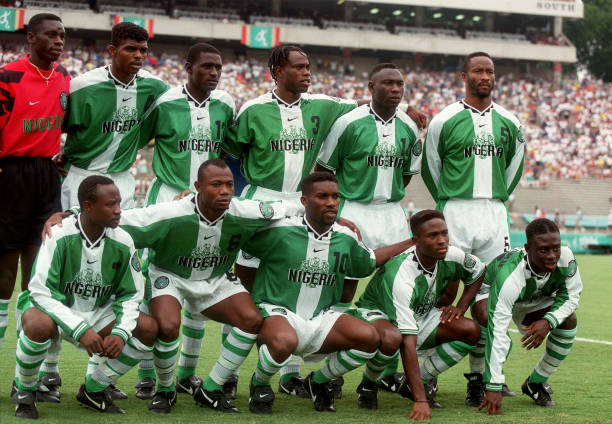
Somewhere in a hotel in Rabat last November, Alex Iwobi filmed the view from his window and posted it without a caption strong enough to survive the internet. Two days before a World Cup playoff against Gabon, the clip went round Nigerian Twitter as proof of shoddy federation planning, even after the NFF clarified that what Iwobi filmed was an old building next door, not the team’s actual hotel. The conversation curdled into something it didn’t need to be: a referendum on one player’s judgment, on whether he should have kept his phone in his pocket.
The more useful argument got lost in that pile-on. Two days before the video surfaced, the entire Super Eagles squad, players and technical staff together, boycotted a training session in Rabat over bonuses and allowances the federation had allegedly owed them since 2019, some tied to the 2025 Africa Cup of Nations. Reports later put the unpaid figure north of $130,000, with sources telling SaharaReporters the funds had already been released to the NFF by the federal government and diverted elsewhere before the team left for Morocco. Nigeria beat Gabon anyway. Then they lost the playoff final on penalties, 4-3, to DR Congo, a country that hadn’t reached a World Cup since 1974. A second consecutive absence from the tournament, for a squad that included Victor Osimhen, Ademola Lookman, and Wilfred Ndidi.
Eight months on, with Nigeria’s last-ditch FIFA petition against DR Congo rejected and the door to the tournament fully shut, it reads less like a scandal than a pattern that finally ran out of road.
Strip away the social media pile-on and the underlying complaint was structural, not aesthetic. Nigeria’s federation has spent years being reactive rather than institutional, settling crises the week they erupt rather than building systems that prevent them. NFF president Ibrahim Musa Gusau initially denied the federation owed the team anything at all, before the money was reportedly sourced privately by the National Sports Commission and paid to the squad in cash, in Rabat, less than 48 hours before kickoff. That is not the kind of detail that gets fixed by a strongly worded statement.
None of this is new. Thirty years before Rabat, in the buildup to the 1996 Atlanta Olympics, Jay-Jay Okocha and his teammates woke up one morning to find their training bus gone, taken back by the rental company because the NFF hadn’t paid for it. Their coach walked out over the same unpaid bills. The hotel kept the squad on the same rice and stew for a week and warned them they should be grateful to still have a room, since the federation hadn’t settled that bill either. Okocha and a few senior players ended up paying for the team’s own accommodation on their personal cards and renting minivans out of pocket just to keep camp running. Nigeria won Olympic gold anyway, becoming the first African team to do it, beating Brazil in the semi-final and Argentina in the final. The NFF’s dysfunction didn’t stop that generation. It just meant the players had to build their own workaround, on their own dime, on the way to making history.
It took until March, once FIFA had dismissed Nigeria’s petition against DR Congo over an eligibility complaint and the elimination became final, for John Obi Mikel to say what needed saying. Speaking on talkSPORT, he called for NFF president Ibrahim Musa Gusau and the entire board to resign, calling the miss a “hammer blow” and “a disaster” for a country of over 300 million people. He didn’t stop at Nigeria’s own dysfunction. “African football is growing so much, and we are being left behind,” he said, pointing specifically to Morocco’s continental rise as proof of what a country can build when it decides to. Coming from a two-time Champions League winner with 89 caps who has mostly kept his post-retirement commentary safe, it was a notably pointed thing to say in public.
The instinct to reach for Senegal in this conversation is correct, but it’s usually reached for lazily, as a stick to beat the NFF with rather than an actual model worth examining. On population and raw talent density alone, this shouldn’t be a fair fight, and for most of the twentieth century, it wasn’t: Senegal lived in the shadow of Nigeria, the Ivory Coast, and Ghana. What changed wasn’t talent. It was infrastructure, and specifically who built it.
Génération Foot, founded in Dakar in 2000 by former footballer Mady Touré, has run a direct pipeline into French football since partnering with FC Metz in 2003. Idrissa Gana Gueye, now a fixture at PSG, came through it. So did Ahmadou Bamba Dieng and a stream of younger academy graduates were promoted straight into the senior Génération Foot side before moving on to Europe. The Diambars Academy, founded in 2003 by a group that included former World Player of the Year Patrick Vieira, has its own list of national team exports. Neither institution is federal property. They’re privately built, privately run, and the Senegalese federation’s role has mostly been to not get in the way, plugging graduates into the national setup once European clubs have already validated them.
That’s a meaningfully different model from a federation trying to build and run everything itself, and it explains why Senegal, a country of roughly 18 million next to Nigeria’s 232 million, now travels to a World Cup as a matter of course while Nigeria doesn’t. It also isn’t a complete explanation, and the comparison shouldn’t be dressed up as a clean success story with no caveats of its own. But the core difference holds: Nigeria’s dysfunction sits upstream, at the point where a promising teenager gets discovered, trained, and protected long before he’s good enough for anyone outside the country to notice.
It would be convenient to file this under Nigerian exceptionalism, another entry in the long ledger of NFF mismanagement. But the same structural gap shows up anywhere a federation has treated youth development as a public relations line item rather than infrastructure. Ghana has cycled through similar complaints about its own federation for a decade. Cameroon’s youth pipeline runs almost entirely through European academies scouting locally rather than anything built at home. The countries currently punching above their population weight, Senegal now, Morocco before it with a 2022 World Cup semi-final run, share a trait that has nothing to do with talent supply: a federation that functions as scaffolding instead of a bottleneck.
That’s the real argument buried under the Iwobi video and every other individual embarrassment that surfaces every World Cup cycle. Nigeria isn’t short on players. Ademola Lookman and Iwobi himself are proof enough of what the talent pool can produce when it reaches a European system on its own. What’s missing is the domestic architecture to develop, protect, and fund those players before they need to escape the system to become good. Fix that, and the bonus disputes and hotel complaints stop being the story, because there won’t be a hotel like the Rive in Rabat left to complain about.
Mikel said it plainly enough to get quoted and simply enough to get ignored. Nigeria has one of the best squads on the continent, and it isn’t going to the World Cup. Not because of a hotel video, not because of unpaid bonuses, though both are real enough. Those were never the whole story. They were the visible surface of a much older, much less telegenic failure to build anything underneath.
About The Author


Related Articles
Cameroon Commits to Stronger Bilateral Ties with Nigeria
Cameroon has reaffirmed its commitment to strengthening bilateral relations with Nigeria, pledging...
Ghana Borrows $288 Million at 11% to Pay Cocoa Farmers After Delayed Purchases
Ghana’s cocoa regulator has been forced to borrow 3.39 billion cedis, about...
Burkina Faso President Ibrahim Traoré Defies FIFA, Vows to Intervene in Football Federation After 7-0 Argentina Humiliation
Burkina Faso’s military leader, Captain Ibrahim Traoré, has vowed to intervene directly...

INEC Turns to AI for Election Verification While Nigerians Still Queue for PVCs and Results Vanish on IReV
The Independent National Electoral Commission has announced plans to deploy artificial intelligence...
Leave a comment