


Nigeria’s Supreme Court Ruling Affirms Tinubu’s Power to Declare Emergency Rule and Suspend Elected Officials
 West Africa WeeklyDecember 15, 20252 Mins read453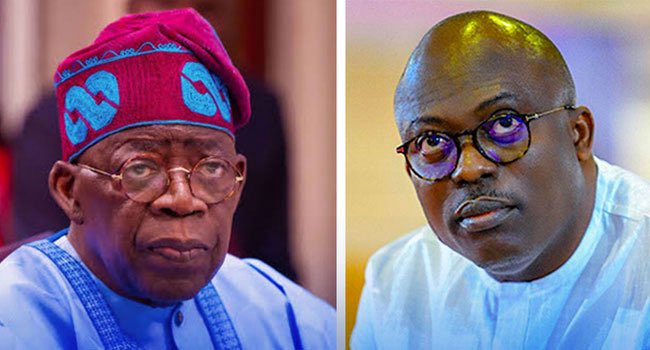
Nigeria’s democracy faced a defining test today after the Supreme Court affirmed the President’s authority to declare a state of emergency and to temporarily suspend elected state officials. In a six to one judgment delivered on Monday, the court ruled that the Constitution grants the President wide discretion to act when a state faces a potential breakdown of law and order.
The decision followed a suit filed by Adamawa State and ten other states governed by the Peoples Democratic Party, challenging President Bola Tinubu’s declaration of emergency rule in Rivers State. That declaration included the suspension of the governor, deputy governor, and the state House of Assembly for six months, a move that has sparked intense national debate.
Although the Supreme Court upheld preliminary objections on jurisdiction, it went further to address the substance of the case. In doing so, the court effectively endorsed the President’s actions. The majority opinion held that Section 305 of the 1999 Constitution empowers the President to take extraordinary measures during an emergency, even though the section does not expressly list what those measures may be.
According to the court, the absence of specific limitations gives the executive room to act decisively to restore order, so long as such actions are temporary and tied to the emergency itself. In practical terms, this means that the suspension of democratically elected officials can fall within the President’s emergency powers.
Only one justice disagreed. In a dissenting opinion, Justice Obande Ogbuinya drew a sharp line between declaring an emergency and dismantling democratic institutions. He argued that while the President may proclaim a state of emergency, the Constitution does not give him the authority to suspend governors, deputy governors, or legislators who were elected by the people. Removing such officials, he warned, can only be done through constitutionally prescribed processes, not executive fiat.
READ MORE: CJN Clarification Highlights Gaps in Tinubu’s Police Withdrawal Plan
Today’s ruling raises uncomfortable questions about the meaning of democracy in Nigeria. At its core, democracy rests on the idea that power flows from the people through elections. When that power can be set aside by executive action, even temporarily, the balance between security and democratic governance becomes fragile.
Supporters of the ruling argue that the state must have the ability to act swiftly in moments of crisis. They insist that law, order, and stability are prerequisites for democracy, and that elections lose their meaning when violence or institutional paralysis takes over. From this perspective, emergency powers are a necessary safeguard.
But critics see a dangerous precedent. They warn that allowing the suspension of elected officials under emergency rule opens the door to political abuse. If a president can determine when a state is unstable and then remove its elected leadership, the line between constitutional authority and authoritarian control becomes dangerously thin.
The Supreme Court’s decision today does more than resolve a legal dispute. It reshapes the relationship between the executive, the states, and the electorate. It places immense trust in the judgment and restraint of the presidency, while leaving voters to wonder how secure their mandate truly is.
Nigeria has spent decades emerging from military rule and entrenching civilian governance. Each democratic gain has been hard won. Today’s ruling now stands as a powerful reminder that democracy is not only defined by elections, but by how power is limited, checked, and exercised in moments of crisis.
Whether this judgment strengthens the Republic or weakens its democratic foundations will depend not on the court’s words, but on how this power is used next.
About The Author

Related Articles
Ghana, Nigeria and South Korea Deepen Energy and Agricultural Cooperation
A growing partnership between Ghana, Nigeria and South Korea is highlighting the...
FIFA Considers Replacement Teams Following Iran World Cup Uncertainty
Global football governing body FIFA is reviewing contingency plans for the upcoming...
Nigeria Faces Risk of Worsening Electricity Shortages as Gas Supply Declines
Nigeria may face more severe electricity shortages in the coming weeks as...

Ghana Moves Forward With Regulated Cannabis Sector
Authorities in Ghana have officially opened applications for licences allowing businesses and...
Leave a comment