





Nigeria’s Hungry Population More Than Doubles to 34.7 Million Under Tinubu’s Watch
 West Africa WeeklyJuly 31, 20263 Mins read436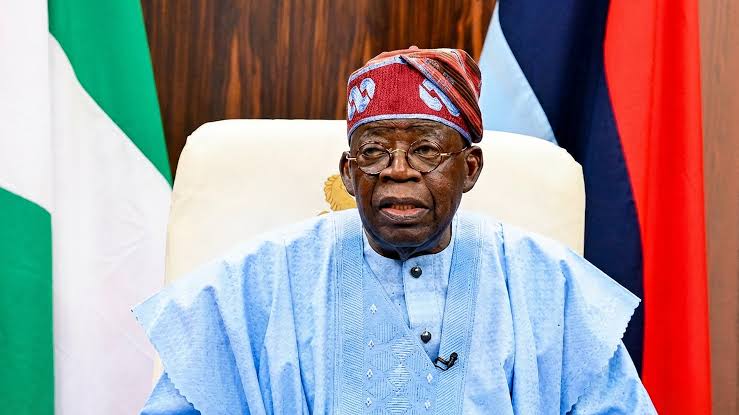
The number of hungry people in Nigeria has risen from 18.6 million to 34.7 million in just three years, an increase of 16.1 million, according to data from the United Nations Food and Agriculture Organisation, the World Food Programme and the Cadre Harmonisé food security analysis. The projection, covering 27 states and the Federal Capital Territory, warns that the situation could worsen during the 2026 lean season from June to August if urgent interventions are not implemented.
But for the millions of Nigerians who cannot afford three meals a day, the numbers are not just statistics. They are the reality of a country where food inflation peaked at 40.9 per cent in June 2024 and where the naira has lost more than 70 per cent of its value against the dollar since the unification of exchange rates. They are the reality of farmers who cannot access their fields because bandits have turned farming communities into graveyards. They are the reality of mothers who watch their children go to bed hungry because the price of rice has tripled.
The drivers of this crisis are multiple and interlinked. Persistent inflation has eroded purchasing power. Insecurity has displaced thousands of farmers and disrupted agricultural production across the north. High input costs have made fertiliser and seeds unaffordable for smallholder farmers. Climate shocks have reduced yields. The World Food Programme has confirmed that insecurity, compounded by economic challenges and extreme climate events, is the key driver of food insecurity in Nigeria. The northeast, particularly Borno, Adamawa and Yobe states, remains the epicentre of the crisis, with nearly 5.8 million people facing severe food insecurity in 2026, including 15,000 people in Borno State expected to face catastrophic hunger and famine-like conditions.
Under President Bola Tinubu, the removal of the fuel subsidy triggered a 463 per cent increase in petrol prices. The floating of the naira has seen the currency weaken to roughly N1,640 to the dollar. Transportation costs multiplied. Food prices surged. Wages, frozen in nominal terms while inflation ravaged purchasing power, simply could not keep up. The African Democratic Congress has accused the Tinubu administration of pushing over 17 million Nigerians into acute hunger, describing the situation as the self-creation of a humanitarian disaster. The party criticised the government for repeatedly assuring Nigerians that the economic hardship would be temporary, saying the latest WFP assessment had confirmed that insecurity, declining agricultural production and soaring food inflation had continued to worsen.
Former Vice President Atiku Abubakar has also weighed in, telling Tinubu to channel his energy towards tackling inflation, food insecurity, unemployment and insecurity rather than threatening political opponents. “The President should wrestle with the millions of Nigerians who now skip meals because food has become a luxury,” Atiku said. “He should wrestle with the insecurity that has turned farming communities into graveyards.”
The government’s response has been a mix of initiatives and dismissals. President Tinubu declared a state of emergency to tackle rising food prices and shortages, pledging to use money saved from the fuel subsidy removal to provide fertiliser and grain to farmers. The First Lady launched a National Community Food Bank Programme to tackle malnutrition and food insecurity. But these gestures have been undermined by the President’s own aides. Bayo Onanuga, Special Adviser to the President on Information and Strategy, has dismissed widespread claims of severe hunger, arguing that while economic difficulties exist, the government has made efforts aimed at cushioning the effects of recent reforms. Tope Fasua, Special Adviser on Economic Affairs, has claimed that a modest Nigerian family can still feed for several days with N10,000 despite rising food prices. These statements have drawn sharp criticism from Nigerians who struggle daily to afford basic meals.
The numbers are clear. Eighteen point six million hungry Nigerians in 2023. Thirty-four point seven million hungry Nigerians in 2026. Sixteen point one million more people unable to afford food. This is not an accident of history. This is the direct result of policies that have concentrated wealth at the top while crushing the masses at the bottom. This is the Nigeria of Bola Tinubu. This is the Nigeria his government has built. And this is the Nigeria that Nigerians must demand be changed.
About The Author



Related Articles

Traore Launches $30 Million Textile Complex to Cut Burkina Faso’s Reliance on Clothing Imports
Burkina Faso’s military leader, Captain Ibrahim Traore, has inaugurated a $30 million...

Guinea and Ivory Coast Presidents Agree to Strengthen Security, Trade and Political Ties
Guinea’s President Mamady Doumbouya arrived in Abidjan on Friday for talks with...

Niger Replaces Military Chief After Russian Drones Help Crush Deadly Mutiny
Niger’s military ruler, General Abdourahamane Tiani, has replaced the country’s armed forces...

BudgIT Exposes Taraba’s Rot: ₦5.55bn for Wukari, Patients Sleep on Mats at Jibu Hospital
A civic technology organisation, BudgIT, has exposed a stark contradiction in Taraba...
Leave a comment