
Nigeria Launches FreeTV Amid Concerns Over Government’s Media Control Agenda
 West Africa WeeklyJune 17, 20262 Mins read578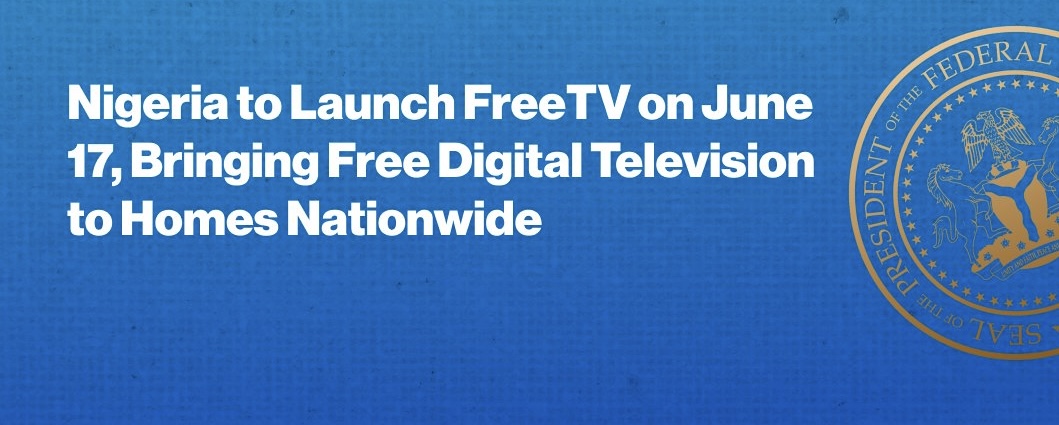
The federal government launched FreeTV on Wednesday, a national digital television platform offering over 100 free channels as part of Nigeria’s Digital Switch-Over programme. The announcement was made via the official Presidency X account, describing the initiative as part of President Bola Tinubu’s Renewed Hope Agenda, prioritising digital inclusion, job creation, and access to opportunities. The service, accessible via satellite, terrestrial transmission, and a mobile application, offers news, sports, movies, and dedicated Yoruba, Hausa, and Igbo language channels without monthly subscription fees.
NBC Director-General Charles Ebuebu described FreeTV as aligning with the administration’s digital inclusion strategy, stating that the platform speaks directly to President Tinubu’s vision of Renewed Hope towards expanding access, creating opportunity and ensuring that every Nigerian, regardless of location or income, can benefit from the digital economy. However, beneath the promise of free television lies a growing controversy that critics say reveals a more troubling agenda: government control over the media landscape.
The Broadcasting Organisations of Nigeria, the umbrella body for broadcasters, has raised serious concerns over the National Broadcasting Commission’s dual role as both regulator and content aggregator on the FreeTV platform. BON queried whether the referee is now playing the match, pointing to the conflict of interest created when the same body that regulates broadcasters also competes with them. The organisation warned that this arrangement violates the law establishing the commission and contradicts the spirit of Nigeria’s 2012 Digital Switchover White Paper.
BON further argued that the satellite-led FreeTV platform does not qualify as a true Digital Switchover but rather amounts to a Direct-To-Home satellite television distribution service. Both the International Telecommunication Union’s GE06 Agreement and Nigeria’s 2012 White Paper define digital migration as the transition from analogue terrestrial television to Digital Terrestrial Television, not satellite broadcasting. BON contends that the current model departs fundamentally from the legal and technical framework governing Nigeria’s digital migration and risks wasting public funds.
Nigeria to Launch FreeTV on June 17, Bringing Free Digital Television to Homes Nationwide.@nbcgovng pic.twitter.com/QXzv45bOes
— Presidency Nigeria (@NGRPresident) June 17, 2026
While the government insists the service is free, stakeholders have questioned whether FreeTV is truly free. Satellite delivery requires dishes, decoders, and professional installation costs that many low-income Nigerians cannot afford, with ordinary antennas used for Digital Terrestrial Television being far cheaper. The Independent Television Producers Association of Nigeria and other stakeholders have called for clearer information on who will operate multiplexes, who controls viewer data, and who will collect advertising revenues. Additionally, a broadcast stakeholder petitioned the Socio-Economic Rights and Accountability Project, demanding public disclosure over the ownership, governance, funding, and operational structure of FreeTV.
The FreeTV launch follows a series of actions that have raised alarms about the government’s broader efforts to tighten control over the media. In April 2026, the NBC issued a formal notice to broadcasters citing unprofessional conduct and warning of strict enforcement of the Nigeria Broadcasting Code. The directive sparked condemnation from Amnesty International and the Nigerian Guild of Editors, who accused authorities of using the commission to suppress independent journalism. A proposed New Media Bill currently before the National Assembly seeks to regulate social and online media, giving the government sweeping powers over digital platforms. Additionally, eight people have been arrested for spreading misinformation under Nigeria’s Cybercrimes Act, which criminalises sharing false information and prescribes a three-year jail term or a fine of seven million naira.
As Nigeria approaches the 2027 general elections, the tension between government regulation and press freedom continues to intensify. The FreeTV initiative, while presented as a public service, fits a pattern of actions that critics view as a systematic effort to extend government influence over broadcast media, raising questions about whether Nigerians are gaining free television at the cost of free expression.
READ MORE: Equatorial Guinea Government Resigns After Achieving Just 10 Percent of Targets
About The Author

Related Articles
Veteran Actor Olu Jacobs Dies at 84, Nollywood Mourns the Lion of Lufodo
Veteran Nigerian actor and film executive Oludotun Baiyewu Jacobs, popularly known as...
Lagos Government and Tinubu Cause More Pain as Commuters Sleep in Traffic While Repairs Make Everything Worse
Lagos has become a city where going to work means sleeping on...

Ghana Reaffirms Withdrawal of Recognition of Polisario, Backs Morocco’s Autonomy Plan
Ghana has reaffirmed its decision to withdraw recognition of the Polisario Front’s...

Peter Obi Denies Leaving Anambra Debts, Vows to End 2027 Campaign If Proven Wrong
Presidential candidate of the Nigeria Democratic Congress (NDC), Peter Obi, has strongly...
Leave a comment