





More Debts for Nigeria as Senate Approves Tinubu’s ₦1.77 Trillion Loan Request
 Oluwasegun SanusiNovember 21, 20241 Mins read1.9k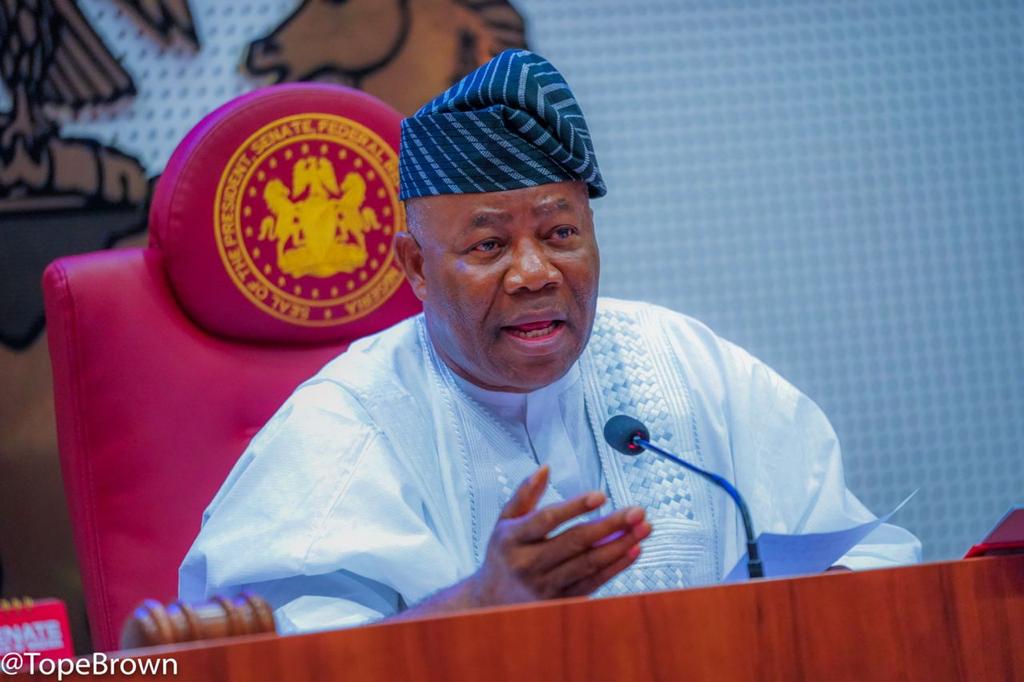
The Nigerian Senate has approved President Bola Tinubu’s ₦1.77 trillion ($2.2 billion) loan request to partially fund the country’s ₦9.7 trillion budget deficit for the 2024 fiscal year.
The approval came after a voice vote during a session presided over by Deputy Senate President Barau Jibrin, following the presentation of the Senate Committee on Local and Foreign Debts’ report by Senator Wammako Magatarkada (APC, Sokoto North).
The loan forms part of a fresh external borrowing plan to bridge Nigeria’s widening fiscal gap, but it raises concerns over the growing burden of debt servicing on the government.
In August, a report from investment management company Afrinvest predicted that Nigeria’s public debt would rise to ₦130 trillion by December 2024.
This means an increase from ₦121.67 trillion in the first quarter of this year. The “Bank Recapitalisation, Catalyst for a $1tn Economy” report shows growing concerns about the country’s debt-to-GDP ratio.
Also, recent reports from the Central Bank of Nigeria (CBN) reveal that the federal government spent $3.58 billion servicing foreign debts in the first nine months of 2024, a 39.77% increase from the $2.56 billion recorded during the same period in 2023.
The CBN’s statistics highlight a sharp rise in debt servicing costs. In January 2024 alone, a 398.89% surge in payments was recorded, amounting to $560.52 million compared to $112.35 million in January 2023.
Although February saw a slight dip of 1.84%, with payments dropping to $283.22 million from $288.54 million in the previous year, April recorded a significant 131.77% spike, rising to $215.20 million from $92.85 million in 2023.
May 2024 marked the highest monthly payment, with $854.37 million spent on foreign debt servicing—a staggering 286.52% increase from $221.05 million in May 2023.
Read Also: Nigeria Becomes Third-Largest Debtor to World Bank’s IDA, Overtakes India
Rema and Seun Kuti to Shine at Coachella 2025
Conversely, some months recorded declines: June saw a 6.51% drop, and July recorded a 15.48% decrease compared to their respective periods in 2023. However, September 2024 saw an uptick, with payments climbing 17.49% to $515.81 million, up from $439.06 million in September 2023.
These rising debt servicing costs have fueled concerns about Nigeria’s fiscal sustainability despite the increase in inflation and the cost of living.
About The Author


Related Articles

Algeria Severs Diplomatic Ties With UAE, Closes Airspace to Emirati Aircraft
Algeria announced on Thursday that it was cutting diplomatic ties with the...
Gambia Bans Protests Without Permits After Blackout Unrest Erupts Ahead of December Election
Gambia’s police chief has banned all public protests without official permits after...


Sanwo-Olu Blames Cranes and ‘Iconic Cane’ as Ojota-Opebi Bridge Misses Another Deadline
Lagos State Governor Babajide Sanwo-Olu has offered yet another explanation for why...
Gambia Protests Turn Chaotic as Power Outages Worsen Ahead of December Elections
Thousands of Gambians took to the streets overnight in Banjul and surrounding...
Leave a comment