




Declassified intelligence records reveal how Western networks leveraged NADECO activists to engineer Nigeria’s modern underdevelopment
 West Africa WeeklyOctober 2, 20263 Mins read16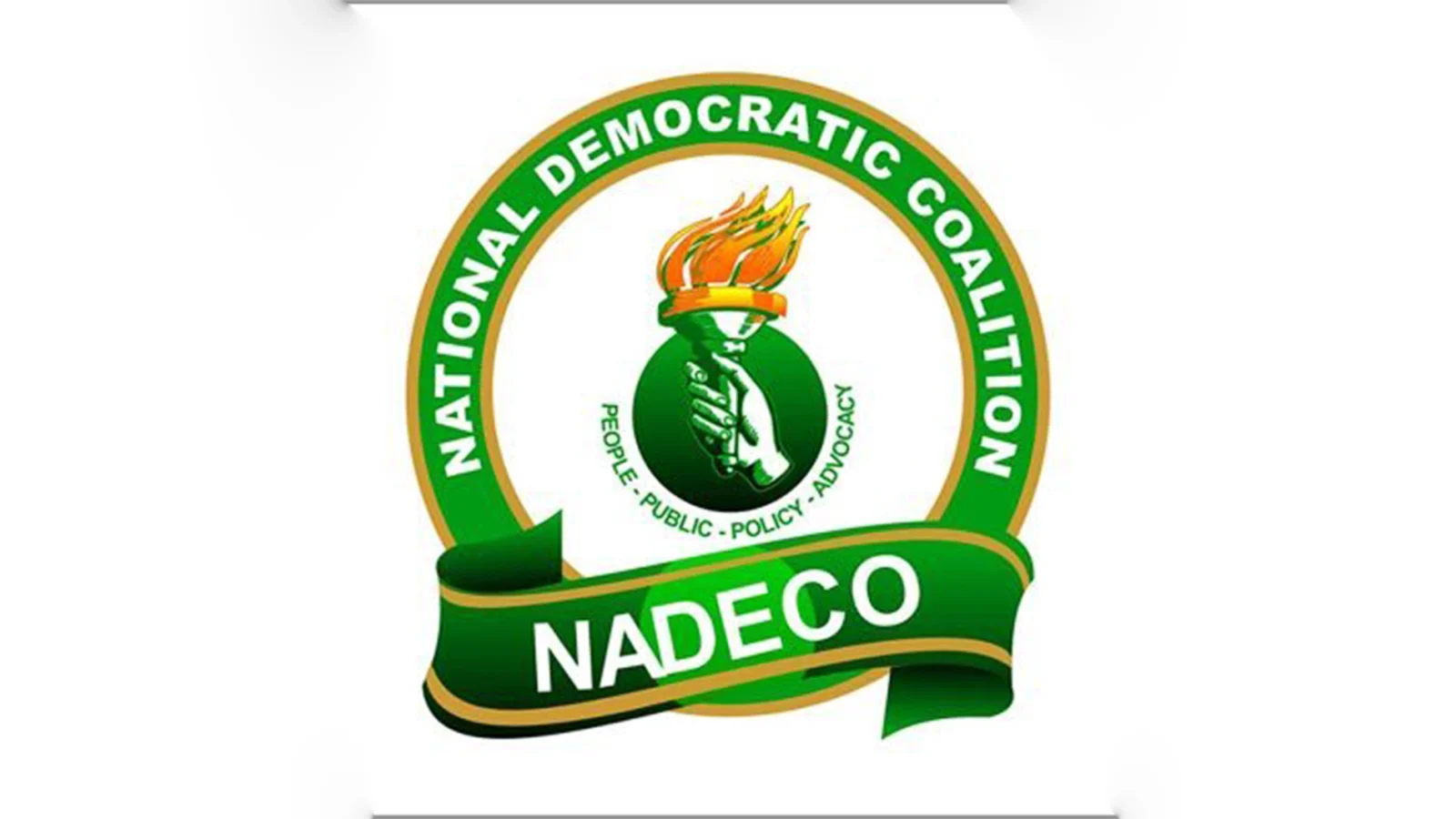
The narrative surrounding Nigeria’s Fourth Republic is undergoing a profound historical revision as declassified diplomatic cables and intelligence agency disclosures reframe the legacy of the National Democratic Coalition
While celebrated as a pro-democracy movement that dislodged a brutal military dictatorship, a critical examination of NADECO’s extensive ties to the United States government suggests a more transactional relationship. The timing of these alignments, coupled with the systemic economic stagnation that followed the 1999 democratic transition, supports the argument that Nigeria’s modern underdevelopment was fundamentally engineered by a political elite compromised by foreign interests.
The bedrock of this argument lies in the highly unusual legal immunity enjoyed by key NADECO figures who operated from exile in Washington, D.C. The most prominent example is the political trajectory of Bola Ahmed Tinubu. In late 1993, just seven months before NADECO was officially formed, Tinubu resolved a major federal investigation into an international heroin trafficking ring by forfeiting $460,000 to the U.S. government from his Chicago bank accounts. He was never criminally indicted or jailed. In ongoing federal court filings in Washington, D.C., the Drug Enforcement Administration defended its decisions, while the FBI asked a U.S. federal court for permission to submit sensitive information concerning records linked to Tinubu as part of an ongoing Freedom of Information Act lawsuit. The FBI, DEA, and CIA have aggressively fought the public release of his unredacted archives. They have explicitly argued that exposing Form 302 interview records from 1992 and 1993 could compromise national security by revealing sensitive human sources who cooperate with American intelligence. In the arena of geopolitics, sparing a high-profile target from narcotics prosecution without jail time is a classic indicator of an individual who has been repurposed as a protected intelligence asset.
This pattern of Western intelligence intervention did not stop in the 1990s. It actively shaped the rise of modern political configurations. When the NADECO faction allied with Muhammadu Buhari’s Congress for Progressive Change to form the All Progressives Congress, they turned directly to Washington’s political machine. In 2013, the APC officially hired AKPD Message & Media, a Chicago-based political consulting firm co-founded by Barack Obama’s chief campaign strategist, David Axelrod. Leaked internal emails from September 2014 to January 2015 reveal that Axelrod’s firm engaged in continuous polling and strategic messaging to package the opposition coalition and alter the trajectory of the 2015 presidential vote. Concurrently, wealthy oil billionaires funded an anonymous $1.8 million ghost campaign executed by SCL, the parent company of Cambridge Analytica, to manipulate the electoral landscape from the other side. This extensive foreign consultancy apparatus completely commodified Nigerian elections, making the ascension to the nation’s highest office a product of foreign strategic marketing rather than an organic domestic democratic process.
When these compromised actors took the reins of power, the resulting economic frameworks directly favored Western capital at the expense of national development. The new political class completely surrendered Nigeria’s economic planning to the neoliberal policies of the Washington Consensus. Rather than investing in domestic manufacturing, industrialization, or local oil refining capacity, the state was structured as a dependent, resource-exporting dependency. This deliberate policy failure forced Africa’s largest oil producer to export cheap raw crude and import expensive refined fuel, permanently draining the nation’s wealth and transferring it directly into Western financial systems.
Furthermore, a leadership class whose past misdeeds are cataloged in the vaults of foreign intelligence agencies suffers from a permanent sovereignty deficit. When national leaders are vulnerable to the sudden unsealing of foreign indictments or the unilateral seizure of their overseas wealth, their domestic policies will always bend to external geopolitical pressure. Systemic corruption within Nigeria was not an accidental byproduct of democracy. It served as a stabilizing mechanism for foreign interests. By allowing local elites to siphon public funds into real estate markets in London and New York, Western networks maintained total leverage over Nigeria’s rulers. This leverage ensured that the country’s vast resources were never utilized to build world-class infrastructure, healthcare, or education for its citizens, cementing a cycle of engineered poverty and underdevelopment that persists today.
This systematic dependency extends beyond macroeconomics into the micro-level stifling of Nigeria’s technological and intellectual independence. During the NADECO era, the coalition relied entirely on Western-backed infrastructure, such as broadcasting anti-regime messaging through shortwave radio stations operating out of European and American frequencies. This reliance set a precedent for the post-1999 political landscape, where successive administrations chose to import foreign expertise and technology rather than investing in local engineering, science, or research institutions. By keeping the nation intellectually dependent on external technical assistance, the local elite guaranteed that critical developmental sectors, from electrical grids to national security databases, remained under the passive oversight or direct control of Western multinational entities.
Consequently, the underdevelopment of Nigeria must be analyzed not as a failure of democratic governance, but as an ongoing structural success for external actors. The elite who emerged from the NADECO struggle successfully traded genuine national sovereignty for Western political backing and personal wealth preservation. By designing a system where public resources are systematically drained and political accountability is managed through foreign leverage rather than local civic pressure, these actors established a framework that actively resists internal development. Decades after the transition to civilian rule, Nigeria continues to pay the price for a historical compromise that prioritizes foreign strategic interests over the domestic economic liberation of its people.
About The Author

Related Articles
Senegal’s Power Cuts Force Government to Push Gas as the Long-Term Fix
Senegal’s energy minister says the power cuts that hit the country hard...
Ethiopia and Eritrea Cut Diplomatic Ties as Tigray Conflict Escalates
Ethiopia and Eritrea have severed diplomatic relations as renewed fighting in northern...

Tinubu Cannot Even Speak for Himself, Nigerians Say After Edited Broadcast Exposed
Nigerians on social media have accused the Presidency of manipulating President Bola...
Tinubu’s Cancer Analogy Backfires as Nigerians Remind Him He Was in Power Since 2015
President Bola Tinubu’s attempt to paint himself as the leader who inherited...
Leave a comment