







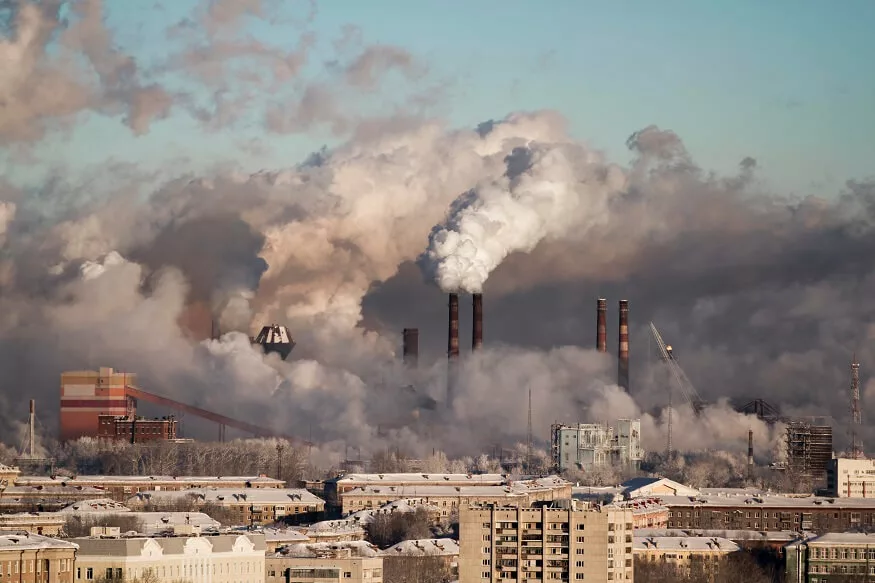
A study from Nanyang Technological University in Singapore found that pollution, whether from human activities or natural causes like wildfires, has led to about 135 million premature deaths worldwide between 1980 and 2020.
Published in the journal Environment International, the study highlighted that in years during which climatic events such as El Nino, the Indian Ocean Dipole, and the North Atlantic Oscillation occurred, the death toll spiked significantly, with a 14% rise equating to roughly 7,000 additional fatalities annually.
The report noted that the primary culprit behind these deaths is the particulate matter 2.5 (PM 2.5) pollutant, which consisted of tiny particles from sources like haze, power plant emissions, and wildfires. These particles infiltrate the lungs and bloodstream, leading to a range of health issues, including breathing difficulties, heart disease, and lung ailments.
These particles come from sources such as vehicle and industrial emissions and natural events such as fires and dust storms.
The research showed that weather phenomena like El Nino and the Indian Ocean Dipole worsened the impact of these pollutants by increasing their concentration in the air.
In examining data spanning four decades, researchers identified over 360 significant air pollution events globally. Asia bore the brunt of these fatalities, with China and India reporting the highest death tolls, totalling 49 million and 26.1 million, respectively.
Associate Professor Steve Yim, who led the study, emphasised Southeast Asia’s vulnerability to these climatic events, noting that the region experiences heightened mortality rates when all three weather patterns coincide.
Given the severity of the situation, Professor Yim stressed the importance of targeted interventions during adverse weather conditions to mitigate pollution-related health risks.
He also urged healthcare systems to allocate more resources to address the immediate and long-term impacts of air pollution, advocating for early warning systems and increased hospital capacity.
The study called for urgent measures such as changes to urban planning, traffic regulations, and transitioning to clean energy sources to combat air pollution.
Read more: Israel Visit: U.S. Secretary Urges Hamas To Accept Cease-Fire Proposal
About The Author