






Akpabio Wants Suicide Survivors Jailed While Tinubu Government Rehabilitates Bandits and Kidnappers
 West Africa WeeklyOctober 14, 20262 Mins read14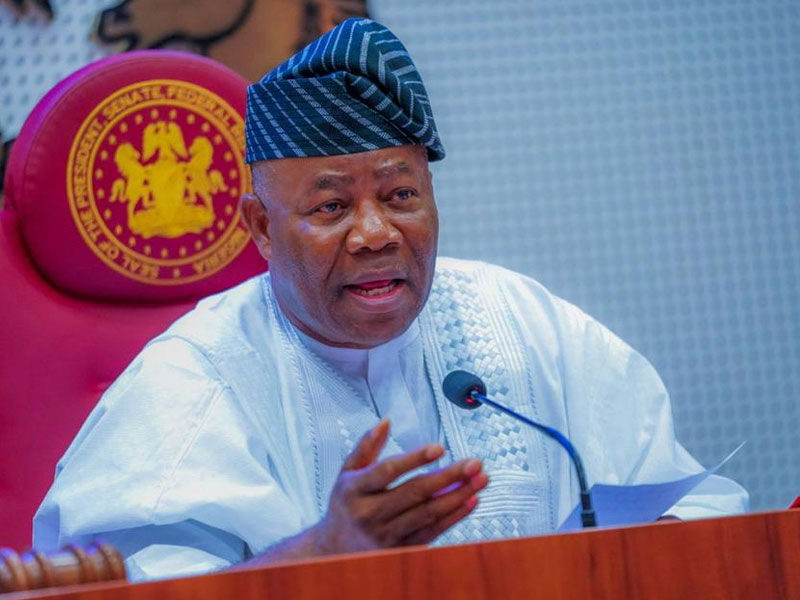
Senate President Godswill Akpabio has insisted that Nigerians who survive suicide attempts should be sent to prison, even as the same government under President Bola Tinubu has spent years funding programmes to rehabilitate and reintegrate bandits and kidnappers into society.
Akpabio made the remark on Tuesday during debate on the Suicide Prevention Bill 2026, sponsored by Senator Asuquo Ekpenyong of Cross River South. The bill seeks to replace criminal punishment for attempted suicide with medical treatment, rehabilitation and support services. It passed its second reading despite Akpabio’s opposition.
“As far as we are concerned, we are saying that suicide is a crime for now,” Akpabio said. “Therefore, if you attempt it, you better succeed. If you don’t succeed, we will send you to prison.” He repeated the point for emphasis: “If you attempt it and don’t succeed, we will jail you. So, if you attempt it, you better succeed.”
Ekpenyong argued that Nigeria’s legal framework is contradictory. The National Mental Health Act recognises attempted suicide as a psychiatric emergency requiring immediate intervention, while Section 327 of the Criminal Code and Section 231 of the Penal Code still criminalise the act. “Our law presently speaks with two voices,” he said. He warned that criminalisation discourages people from seeking help and leads families to conceal attempts for fear of prosecution or stigma. “At the heart of this bill is a simple question: When a Nigerian survives a suicide attempt, should the first response of the state be prosecution or protection?” he asked.
While Akpabio argues that mentally distressed Nigerians should be jailed, the Federal Government and several state governments have invested heavily in programmes to rehabilitate bandits and kidnappers.
READ MORE:
President Tinubu, in his Democracy Day address on June 12, 2026, declared that the government had opened a pathway for surrender and rehabilitation for insurgents and bandits. “To bandits, kidnappers, and sponsors of terror: Surrender or face the full force of the Nigerian State,” he said. He disclosed that over 124,000 fighters and their dependents had laid down their arms since 2023 through Operation Safe Corridor, a government-led initiative designed to de-radicalise and rehabilitate repentant fighters.
Operation Safe Corridor, originally used for Boko Haram defectors in the Northeast, was expanded to the Northwest in February 2025. The Zamfara State Government provided the facility for the Northwest headquarters, describing it as an opportunity for “disarmament, deradicalization, and integration of repentant bandits back into society.” In Katsina State, the government announced literacy classes for repentant bandits, blending Islamic and Western education to “reshape the mindset and future of ex-bandits who recently laid down their arms.” In Benue State, the government sought federal approval in February 2026 to establish a Disarmament, Demobilisation and Reintegration centre for 400 repentant local bandits.
The Senate itself voted on July 7, 2026, to reject the rehabilitation and reintegration of repentant Boko Haram fighters and other terrorists, following the death of Major General Rabe Abubakar in bandit custody. Lawmakers insisted that perpetrators of mass violence must face the full weight of the law rather than receive government-sponsored reintegration.
Human rights lawyer Pelumi Olajengbesi has faulted Akpabio’s position, noting that the Senate had already passed for second reading a bill seeking to replace criminal punishment with medical treatment and rehabilitation. He described Akpabio’s remarks as insensitive to the suffering of Nigerians in psychological crisis.
Nigeria records an estimated 7,000 suicide deaths and 300,000 attempts annually, according to World Health Organisation figures. Mental health professionals have warned that criminalising suicide attempts deepens stigma and prevents people from seeking help.
The Suicide Prevention Bill has been referred to the Senate Committees on Judiciary and Health for further legislative action. Akpabio’s opposition means the path to decriminalisation remains uncertain, even as mental health advocates continue to press for a system that treats suicide attempts as a medical emergency rather than a crime.
About The Author


Related Articles

ABU Student Remanded in Prison Over Alleged Forged Letter Linking Tinubu to US Drug Case After Two Weeks in DSS Custody
Mubarak Abdullahi, a Criminology student in the Department of Sociology at Ahmadu...
Police Deploy Tear Gas to Block Civilians From Searching Bush for Terrorists and Kidnappers
The Nigerian Police Force has deployed tear gas to stop civilians from...

Kenya, Uganda and Tanzania Plan Joint Visa for 2027 AFCON to Ease Fan Travel Across Borders
Kenya, Uganda and Tanzania are developing a joint visa arrangement to facilitate...


Rwanda Signs 10-Year Deal to Bring F1 Back to Africa for First Time Since 1993
Rwanda has signed a 10-year agreement with Formula 1 to host the...
Leave a comment