




Gambia’s FGM Ban Under Threat as Imam Abdoulie Fatty and MP Almameh Gibba Push to Make Cutting Girls Legal Again
 West Africa WeeklySeptember 25, 20262 Mins read12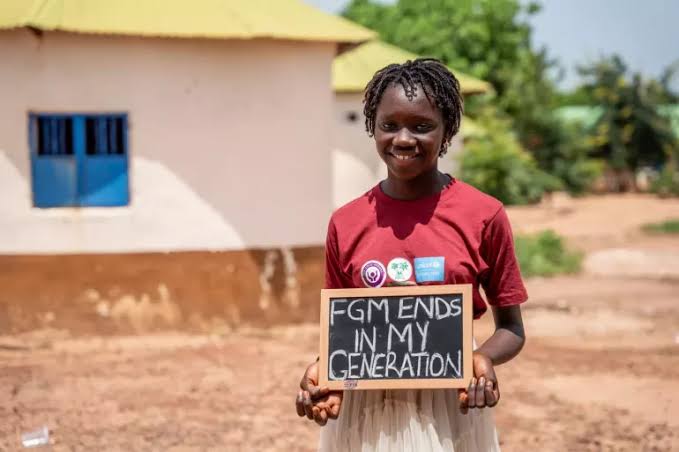
Two men are leading the charge to overturn The Gambia’s ban on female genital mutilation, and if they succeed, the practice that has been illegal since 2015 could become legal again. Imam Abdoulie Fatty, a prominent Muslim cleric, and Almameh Gibba, a member of parliament for Foni Kansala, have taken their fight all the way to the Supreme Court, arguing that the law banning FGM violates their constitutional rights to culture and religion.
Gibba first tried to repeal the ban through parliament in 2024. He tabled a private member’s bill seeking to decriminalise FGM, but lawmakers rejected it. Not deterred, Gibba and a coalition of religious leaders, including Imam Fatty, launched a case at the Supreme Court, claiming that the Women’s (Amendment) Act 2015 is unconstitutional. The case is ongoing, with the state opening its defence in July 2026.
Imam Fatty was the first witness to testify in December 2025. He told the court that female circumcision, not mutilation, is part of Islam. “We are here for female circumcision, not Female Genital Mutilation and if it is about FGM, we will not be here because that’s haram,” he said. He insisted the practice is not harmful and that he has been performing it for years without problems. He argued it should be medicalised instead of criminalised. When asked about the risks, he said, “If done properly, there is no harm.” He also agreed that he knew of two people who died from the practice, but said, “We are Muslims and if someone dies, it’s God’s will.” He told the court the law was brought by non-Gambians.
Fatty has a history of defending FGM. In August 2023, three women were convicted of performing FGM on eight infants, some as young as four months old. Fatty paid the fines imposed on them, an act that helped galvanise the campaign to repeal the ban. He is a plaintiff with the Islamic Enlightenment Society and has accused organisations like the UN and Gamcotrap of promoting Western values and imposing their will on Gambian society.
READ MORE: Peter Obi Rejects $123m Anambra Debt Claim, Says He Left Over $150m in Funds
Gibba, for his part, has been a relentless advocate for overturning the ban. After the 2024 bill failed, he and his coalition argued that the law violates Gambians’ rights to cultural and religious freedoms. A second attempt to pass the bill in September 2026 was also rejected by lawmakers, who voted against all of its proposed clauses. But the Supreme Court case continues, and the outcome could strike down the ban entirely.
The stakes could not be higher. The Gambia has one of the highest rates of FGM in the world. Almost three-quarters of women between 15 and 49 have undergone the practice, and nearly two-thirds of them were cut before the age of five. FGM involves the partial or total removal of the external female genitalia. It is carried out without anaesthesia by untrained cutters using knives, razor blades or pieces of glass. It can cause severe bleeding, infections, infertility and death. Two babies bled to death after undergoing FGM in The Gambia in 2025.
The campaign to overturn the ban is being watched across the world as part of a broader backlash against women’s rights. Fatou Baldeh, founder of the Gambian rights organisation Women in Liberation and Leadership, said: “FGM is a strong manifestation of violence against women that harms their physical and psychological health. If this issue is still being debated at a national level, it shows us that women’s rights are really regressing.”
Imam Fatty and Almameh Gibba are not defending culture or religion. They are defending a practice that maims and kills girls. They are using their positions of power to push a law that would strip away protections for the most vulnerable members of Gambian society. And they are doing it in the name of God. If they succeed, the blood of every girl who dies from FGM will be on their hands.
About The Author


Related Articles
Senegal Signs $3.5bn Refinery Deal With Turkey’s Yamata to Process Local Crude, Target West African Fuel Market
Senegal’s state refiner, the Société Africaine de Raffinage (SAR), has signed a...
Tinubu Awards $7bn Ogun Deep Seaport Deal to Chagoury-Linked DP World as Nigerians Question His Priorities
President Bola Tinubu’s administration has awarded two major Ogun State deep seaport...
World Bank Pledges $25m for Nigeria’s $300m Off-Grid Power Fund, Leaving $275m Unaccounted For
The World Bank has committed an initial $25 million to Nigeria’s newly...


From Yemen’s Khat Fields to Nigeria’s Gold Mines, Dehumanisation Fuels a Shared Drug Crisis
A social media post about Yemen’s khat addiction has sparked a conversation...
Leave a comment