




French Troops in Abidjan While Russian Tanks Roll Through Sahel, X User Sparks Fresh Debate on Foreign Influence in West Africa
 West Africa WeeklySeptember 17, 20262 Mins read12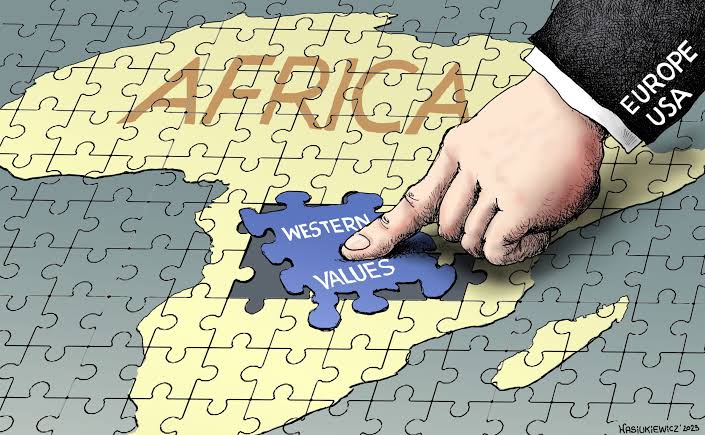
A social media post by X user De Black Star (@niq_black) has ignited fresh debate over foreign military influence in West Africa, contrasting the presence of French soldiers in Abidjan, Côte d’Ivoire, with the movement of Russian troops and tanks across Mali, Burkina Faso and Niger. The post, shared on September 17, 2026, described Ivory Coast as “a threat” that has “found comfort as a French proxy, doing dirty work behind the scenes.”
The post included a video showing French soldiers patrolling the streets of Abidjan and claimed that French troops remain stationed in the country. The user wrote: “They are threat because French soldiers are walking in Abidjan. But you are cool with Russian troops moving tanks across Mali, Burkina and Niger. You panafs are just something else.” Another comment in the thread added: “It’s always a black man that betrays a black man. It’s a proven fact and a present continues sentence.”
Ivory Coast is a threat.
They've found comfort as a French proxy, doing dirty work behind the scenes. https://t.co/vVdnPmeQU7— De Black Star ★ (@niq_black) September 16, 2026
The contrast highlighted in the post reflects a deepening divide in West Africa over foreign military partnerships. Côte d’Ivoire has maintained close military ties with France, conducting joint exercises like “Touraco 2026” in April and May 2026, which involved nearly 200 personnel from both countries. France began withdrawing troops from Côte d’Ivoire in September 2026, leaving its only base after decades of military presence, though about 100 French soldiers are expected to remain for training and support missions.
Meanwhile, the Alliance of Sahel States, comprising Mali, Burkina Faso and Niger, has expelled Western forces and replaced them with Russian troops. Russia today has about 1,500 soldiers deployed in Mali, with Africa Corps convoys of armored vehicles and logistics trucks moving across the region. A large Russian convoy reportedly entered Mali from Burkina Faso in July 2026, strengthening what analysts describe as a Russian-backed belt across the three Sahel nations.
READ MORE: Niger Settles $7.6m Debt With UK Aviation Firm to Save $35m New York Mansion From Seizure
The debate over foreign influence in West Africa has intensified in recent months. Critics of Côte d’Ivoire’s alignment with France have accused Abidjan of serving as a base for French operations aimed at destabilising Sahel states. A March 2026 commentary published on Burkina24 claimed that “la Côte d’Ivoire sert de base à la France pour mener des actions de subversion contre les pays du Sahel,” adding that about 100 French soldiers deployed in Abidjan serve as a relay with sleeper cells ready to destabilise the region. In May 2026, Malian forces reportedly thwarted an attempt to transport explosives from Côte d’Ivoire, with a convoy of three trucks loaded with dangerous chemicals destroyed.
Supporters of the Sahel states argue that Russia’s presence is a legitimate response to security threats and a rejection of France’s post-colonial influence. Critics of Russia’s growing footprint in Africa warn that Moscow’s involvement comes with its own risks, including the potential for resource exploitation and the suppression of democratic freedoms.
The post by @niq_black is one of many voices in an ongoing online debate about which foreign powers should be welcome in West Africa and at what cost. For Ivory Coast, the continued presence of French troops is framed as a partnership for security and stability. For the Sahel states, the Russian presence is presented as a break from the past and a step towards sovereignty. What remains unclear is whether either arrangement will deliver the peace and prosperity that ordinary West Africans are demanding.
About The Author


Related Articles
ASUU Strike Threatens to Shut Down Federal Universities as Nigerians Accuse Media of Ignoring the Crisis
The Academic Staff Union of Universities is on the verge of a...

Niger Settles $7.6m Debt With UK Aviation Firm to Save $35m New York Mansion From Seizure
The government of Niger has settled a long-running dispute with Menzies Aviation,...
NANS Hails Tinubu and Umahi on Road Tour, But the Pictures Tell a Different Story
The National Association of Nigerian Students has begun a nationwide tour of...

Veteran Actor Olu Jacobs Dies at 84, Nollywood Mourns the Lion of Lufodo
Veteran Nigerian actor and film executive Oludotun Baiyewu Jacobs, popularly known as...
Leave a comment