







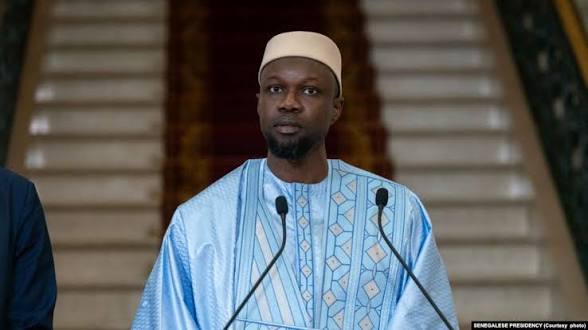
Senegal’s Prime Minister Ahmadou Al Aminou Lo has told parliament that the West African nation will not pursue a formal restructuring of its sovereign debt, opting instead to reprofile its obligations as part of efforts to restore public finances.
Lo said the government would seek to extend debt maturities and renegotiate interest rates, distinguishing the move from a restructuring which he described as more far-reaching. “It is not a restructuring, it is reprofiling,” Lo told lawmakers on Tuesday. “Reprofiling involves extending maturities and renegotiating interest rates.”
The announcement comes after Senegal and the International Monetary Fund reached a staff-level agreement on a $2.2 billion, three-year loan package. The previous IMF programme was suspended in 2024 following the discovery that the previous government had misreported the country’s debt figures. The true scale of the crisis became clear when investigations revealed billions of dollars in hidden borrowing, pushing Senegal’s debt burden to an estimated 132 per cent of GDP.
READ MORE: FG Reportedly Enters Secret Ceasefire with Boko Haram Faction, Denies N5bn Ransom Payment
Lo also disclosed that Senegal must clear 1,956 billion CFA francs ($3.5 billion) in domestic payment arrears that accumulated as of March 2025. He warned that the arrears risk stalling economic activity and triggering job losses. The government is moving to rationalise public spending, reform subsidies and control the public-sector wage bill as part of the broader fiscal consolidation effort.
The prime minister added that roughly 30 mining agreements are currently being renegotiated as the government seeks to generate more revenue from its natural resources. A new mining code is expected to be adopted before the end of 2026.
The decision to reprofile rather than restructure is also a political one. Lo was appointed prime minister in May, three days after President Bassirou Diomaye Faye dismissed the government led by Ousmane Sonko, a firebrand populist who had spoken out against debt restructuring. Sonko, who is now speaker of parliament, had previously called restructuring a “disgrace” that would compromise Senegal’s sovereignty. The government’s choice of language reflects an attempt to manage debt pressures without triggering the stigma that investors associate with a formal default. But financial markets often regard maturity extensions and interest rate reductions as forms of restructuring, regardless of the terminology used.
For Senegal, the coming months will determine whether reprofiling can provide the fiscal breathing room the country needs without alienating the creditors and investors it must rely on to rebuild its economy.
About The Author





Leave a comment