



Nigeria’s Budget Deficit Doubles to N31 Trillion in 2026, Violating Its Own Fiscal Rules, BudgIT Warns
 West Africa WeeklyAugust 18, 20262 Mins read438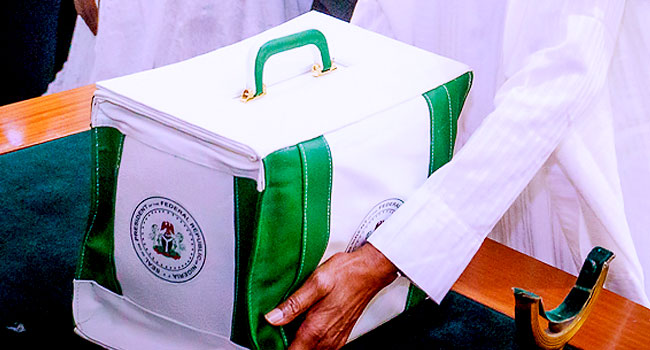
Nigeria’s projected budget deficit has more than doubled from N13.08 trillion in 2025 to over N31 trillion in 2026, a breach of the country’s own fiscal laws that has raised serious questions about the government’s commitment to financial discipline, according to BudgIT, a civic technology organisation tracking government spending. The organisation said the record N68.32 trillion budget is being funded almost entirely by borrowing, with projected revenue sitting at just N36.87 trillion, meaning the government can only fund 53.9 per cent of its own budget from actual revenue. The rest is borrowed. Debt service alone will consume N15.81 trillion before anything else gets funded.
BudgIT noted that Nigeria already has a law that sets rules for how public money should be managed. The Fiscal Responsibility Act requires realistic revenue projections, responsible borrowing, and proper assessment of fiscal risks. Yet the government has ignored these rules, expanding its fiscal numbers while revenues remain stagnant. BudgIT’s analysis warned that the 2026 budget is “ambitious but unrealistic” and unviable, with a fiscal deficit equivalent to 6.4 per cent of GDP, well above the three per cent threshold recommended by the Fiscal Responsibility Act. BudgIT argued that budget performance should be measured not by appropriations but by releases and implementation, noting that historically, the government has consistently failed to meet its revenue targets.
READ MORE: Okpebholo’s Own Roads Are Collapsing While He Calls Adeleke a Dancing Governor
The fiscal indiscipline has drawn sharp criticism from opposition figures. Peter Obi, the 2027 presidential candidate of the Nigeria Democratic Congress, has described Nigeria as a “relentless scene of corruption,” pointing to BudgIT’s revelations that a staggering N7 trillion in questionable projects were inserted into the 2025 national budget. Obi has consistently maintained that for Nigeria to make progress, the country must cease to function as a crime scene and be repositioned for genuine development.
The warning comes as Nigerians continue to grapple with the removal of fuel subsidies, the floating of the naira, and record inflation that has pushed millions deeper into poverty. The World Bank has revealed that poverty rose sharply from 56 per cent in 2023 to 61 per cent in 2024, peaking at 63 per cent in 2025. PricewaterhouseCoopers projects that an additional two million Nigerians will fall below the poverty line in 2026, bringing the total to 141 million people. As BudgIT’s analysis shows, the government’s fiscal recklessness is not just a budget problem. It is a crisis that is making life harder for millions of Nigerians.
About The Author


Related Articles
Senegal’s Power Cuts Force Government to Push Gas as the Long-Term Fix
Senegal’s energy minister says the power cuts that hit the country hard...
Ethiopia and Eritrea Cut Diplomatic Ties as Tigray Conflict Escalates
Ethiopia and Eritrea have severed diplomatic relations as renewed fighting in northern...

Tinubu Cannot Even Speak for Himself, Nigerians Say After Edited Broadcast Exposed
Nigerians on social media have accused the Presidency of manipulating President Bola...
Tinubu’s Cancer Analogy Backfires as Nigerians Remind Him He Was in Power Since 2015
President Bola Tinubu’s attempt to paint himself as the leader who inherited...
Leave a comment