






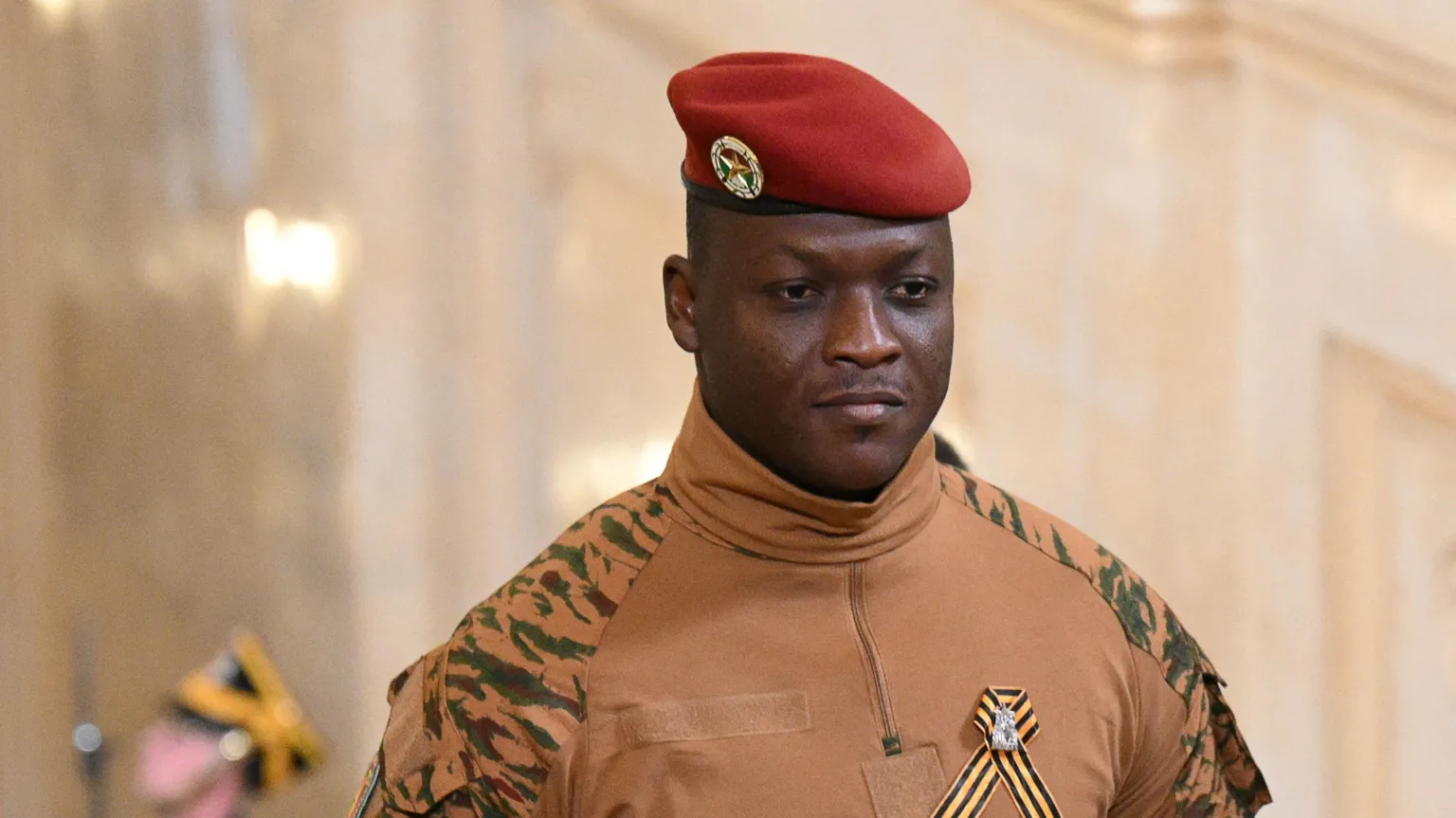
Burkina Faso’s transitional President, Captain Ibrahim Traoré, has declared that Sharia law will never be allowed in the country, reaffirming the nation’s secular identity despite being a practicing Muslim himself.
In a nationwide address to community representatives, Traoré made clear that Burkina Faso’s constitution stands above all religious codes. “I am a Muslim, but everyone in Burkina Faso has the right to practice their own religion. There will never be Sharia law in this country,” he said.
The military leader also announced plans to repatriate hundreds of Burkinabè students studying Islamic law in Saudi Arabia and other Arab countries, warning that those who refuse to return risk losing their citizenship. According to reports, Traoré said around 1,000 Burkinabè students are currently registered in Saudi Arabia studying Sharia and Islamic law rather than acquiring technical and vocational skills the country needs to develop.
“Instead of acquiring technological knowledge and skills that can help develop our country, you chose to study Sharia law. Stay where you are, you won’t be allowed back here,” he was quoted as saying. He questioned why hundreds of students were pursuing religious studies instead of acquiring skills in engineering, innovation, healthcare, and other fields that could contribute directly to national development.
READ MORE: CAF Clears Burkina Faso, Mali and Niger to Proceed with Joint AFCON 2032 Bid
Reports also indicate that Traoré, who is Muslim himself, turned down an offer from Saudi Arabia to build 200 mosques in Burkina Faso. Instead, he encouraged investment in schools, hospitals, industries, and businesses capable of creating jobs and improving living standards for the Burkinabè people.
His comments come as part of a broader push for what he describes as “moderate” Islam, following the adoption of a new law regulating religious freedoms. The law, unanimously adopted by the transitional parliament on June 20, aims to “entrench the secular nature of the state” and imposes criminal penalties for practices deemed arbitrary by authorities, including forced child begging and lack of financial transparency among religious organizations.
Traoré has also warned that authorities will suspend imams who use their sermons to spread extremist messages, pledging government financial support for those who promote peaceful and responsible religious discourse. He accused a “minority of extremists” of fuelling insecurity and alleged that foreign actors were attempting to exploit religion to destabilise Burkina Faso.
“If this is your Islam, we will fight it. Extremists must change, and if they do not, the battle has begun,” he told preachers accused of extremism. The measures have generated mixed reactions across West Africa, with some analysts viewing them as part of the military government’s broader strategy to tackle violent extremism, while others warn that restricting religious education could alienate sections of the country’s Muslim population.
About The Author


Leave a comment