




Tinubu and National Assembly Caught Diverting N8.4bn From Almajiri Commission to Roads, Dental Chairs, Solar Lights
 West Africa WeeklyJuly 13, 20262 Mins read643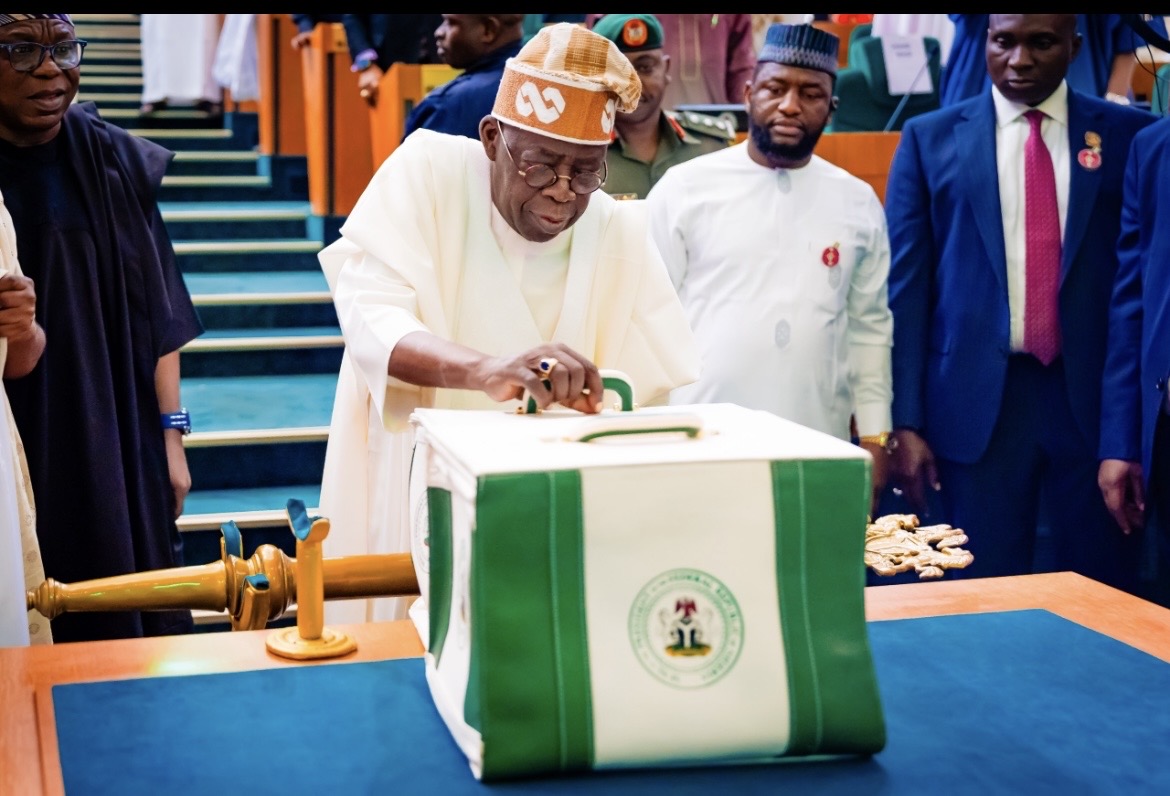
The National Commission for Almajiri and Out-of-School Children Education was allocated N8.4 billion in the 2026 budget to construct roads in Ogun, Katsina and Ekiti states, a staggering deviation from its statutory mandate to tackle Nigeria’s out-of-school children crisis.
The commission, established by an Act of Parliament on May 27, 2023, is mandated to coordinate interventions aimed at reducing the scourge of almajiri and out-of-school children by integrating formal and Qur’anic education and skills acquisition into its curriculum. It is expected to work with state governments to register teachers and learning centres, mobilise resources, provide funding for scholarships and school feeding, abolish almajiri street begging, and provide learning materials.
Yet the 2026 Appropriation Act shows the commission was allocated N22.82 billion, comprising N21.68 billion for capital expenditure and N1.14 billion for recurrent expenditure. Among the approved projects are N1.4 billion for the rehabilitation and construction of roads in Ogun State, N1.05 billion for township roads in Ipokia Ward 2, and additional funds for roads in Katsina and Ekiti states.
The commission was also saddled with procuring ambulances, dental X-ray machines, dental chairs, solar street lights and empowerment tools. How any of these assignments will reduce the number of children roaming Nigerian streets without education remains unanswered.
The commission has since distanced itself from the controversial projects, insisting they were inserted into its budget by members of the National Assembly as constituency projects. In a statement, the commission’s spokesperson, Nura Muhammad, said these projects are “National Assembly constituency projects incorporated into the 2026 Appropriation Act for implementation through the Commission” and that this is “in line with the long-standing budgetary practice under which constituency projects are assigned to Ministries, Departments and Agencies for execution.”
Wait till you see what we found.
• ₦3.5bn for a Technical & Vocational Training College in Kaduna.
• ₦1.4bn for road construction in Ogun.
• ₦700m for dental X-ray machines and dental chairs in Ekiti.All under the National Commission for Almajiri and Out-of-School… https://t.co/okZy7PARiU
— BudgIT Nigeria (@BudgITng) July 12, 2026
But the explanation has done little to quell the outrage. Road construction is the statutory responsibility of the Federal Ministry of Works and the Federal Roads Maintenance Agency. Ambulances and dental equipment belong to the health sector. Solar street lighting falls within the mandates of relevant energy and public infrastructure agencies. The Almajiri Commission has no business executing any of these projects.
This is not an isolated incident. Daily Trust reported that 16 federal Ministries, Departments and Agencies received N205.96 billion in the 2026 Appropriation Act to implement constituency projects outside their statutory mandates. The Executive Director of the Civil Society Legislative Advocacy Centre and Head of Transparency International Nigeria, Auwal Rafsanjani, described the allocations as “a troubling case of mandate distortion that weakens institutional specialisation, encourages duplication of responsibilities and undermines accountability.”
BudgIT, a civic tech organisation, uncovered 11,122 projects valued at N6.93 trillion inserted by the National Assembly into the 2025 budget alone. “The insertion of over 11,000 projects worth N6.93 trillion into the 2025 budget by the National Assembly is not just alarming, it is an assault on fiscal responsibility,” said Gabriel Okeowo, BudgIT’s country director.
At a time when Nigeria still has the highest number of out-of-school children in the world, estimated by UNICEF and other stakeholders at between 15 million and 20 million, every available resource should be devoted to expanding access to education, improving learning facilities, training teachers and supporting vulnerable children. Instead, billions meant for one of the country’s most pressing educational emergencies have been diverted into projects bearing no relationship whatsoever to the commission’s statutory responsibilities.
The Almajiri Commission’s budget is a glaring illustration of how far Nigeria’s appropriation process has drifted from reason, planning and accountability. If an education commission can be turned into a road construction agency today, what prevents tomorrow’s budget from assigning hospital construction to the National Library or flood control to the National Orientation Agency? Nigerians must demand answers. The government cannot continue to treat the budget as a slush fund for politically convenient projects while millions of children remain out of school.
About The Author

Related Articles

Congo’s Former President Kabila Forms New Rebel Coalition With M23 to Oust Government
Former Congolese President Joseph Kabila has launched a new political-military coalition with...

Ukraine Woos Ghana to Help Return Children Abducted by Russia as War Rages On
Ukraine is pressing Ghana to join its international campaign to reunite children...
EKEDC Slams N181,000 Back Charge on Customers After Billing Error, Operations Manager Tells Residents to Do Their Worst
An Eko Electricity Distribution Company customer has accused the company of imposing...


Traoré’s Two Books Raise CFA 125 Million for Burkina Faso’s Patriotic Support Fund
Two books centred on the actions and vision of Burkina Faso’s military...
Leave a comment