






Tinubu’s Nigeria Secures Another $1.25 Billion World Bank Loan as Debt Hits N159 Trillion
 West Africa WeeklyJuly 3, 20263 Mins read589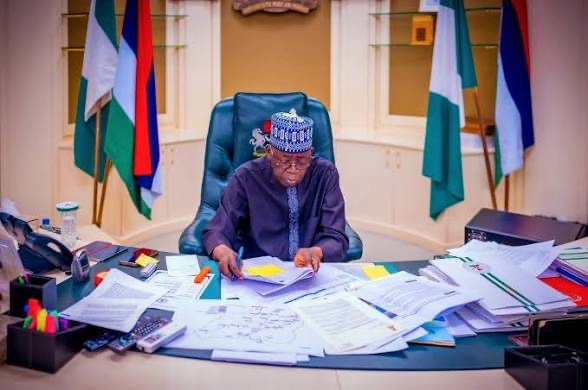
The World Bank has approved a fresh $1.25 billion loan for Nigeria under its Nigeria Actions for Investment and Jobs Acceleration programme, marking the latest addition to President Bola Tinubu’s growing foreign borrowing portfolio as the country’s total public debt balloons to N159.28 trillion.
The approval, announced on Wednesday, July 1, 2026, alongside the launch of the World Bank’s new Country Partnership Framework for Nigeria covering 2026 to 2032, comes as the Tinubu administration faces mounting criticism over its reliance on external borrowing to fund infrastructure and development programmes while Nigerians grapple with record inflation, soaring food prices, and widespread unemployment.
The $1.25 billion Development Policy Financing operation is designed to support government reforms aimed at strengthening economic growth, improving competitiveness, and stimulating private sector investment. According to the World Bank, the programme will support reforms to deepen Nigeria’s capital markets, modernise regulations for the digital economy and e-governance, advance power sector reforms, reduce trade barriers in line with Nigeria’s commitments under ECOWAS and the African Continental Free Trade Area, improve access to quality agricultural seeds, and strengthen domestic revenue mobilisation.
But critics see the loan as yet another addition to a debt burden that has spiralled out of control under Tinubu’s watch. Data from the Debt Management Office reveals that Nigeria’s total public debt has climbed to N159.28 trillion, a staggering figure that represents a significant increase from the N87.38 trillion recorded at the end of June 2024. The country’s debt to the World Bank alone rose from $17.81 billion at the end of 2024 to $19.89 billion by December 2025, meaning the Washington-based lender now accounts for over 38 percent of the nation’s total external debt stock of $51.86 billion.
Since assuming office in May 2023, President Tinubu has secured approvals for over $9.3 billion in World Bank financing, with total World Bank approvals under his leadership now approaching $10.6 billion. The latest $1.25 billion loan follows a $1.5 billion World Bank facility approved in June 2024, part of a broader borrowing spree that has seen the administration secure multiple foreign loans despite promising to grow the economy without burdening future generations.
The World Bank, in announcing the new Country Partnership Framework, acknowledged Nigeria’s significant challenges, including high poverty rates, limited access to basic services, and the need for economic diversification. The bank said the framework prioritises investments in human capital, infrastructure, private sector development, and digital transformation.
But the timing of the loan approval has raised eyebrows. The Tinubu administration has faced sustained public anger over its economic policies, including the removal of the fuel subsidy and the unification of the exchange rate, both of which have contributed to record inflation. The price of petrol has soared from less than N200 per litre to over N800, while the naira has plunged against the dollar, pushing millions of Nigerians deeper into poverty.
Labour unions have repeatedly accused the government of pursuing policies that favour international creditors over Nigerian workers. The Nigeria Labour Congress and the Trade Union Congress have called for a review of the administration’s borrowing strategy, arguing that borrowed funds have not translated into tangible improvements in the lives of ordinary Nigerians.
Senate President Godswill Akpabio, while defending the loan, said the borrowing was necessary to address Nigeria’s infrastructure deficit. “The loans approved are strictly for infrastructural development,” he said in July 2025, adding that the money would be used for critical sectors including power, education, health, roads and agriculture. But infrastructure development under Tinubu has been slow to materialise, with many projects stalled or yet to break ground.
The opposition Peoples Democratic Party has also criticised the administration’s borrowing spree. The party called on the National Assembly to scrutinise how funds from external loans have been utilised, warning that Nigeria risks sliding into a debt trap similar to that faced by several African countries that have defaulted on Chinese loans.
As Nigeria approaches the 2027 general elections, the debate over the Tinubu administration’s borrowing record is expected to intensify. For now, the $1.25 billion loan approval adds to a growing list of foreign debts that future generations of Nigerians will inherit, raising the question of what exactly the country has to show for the billions borrowed under President Tinubu’s leadership.
About The Author



Related Articles
Senegal’s Power Cuts Force Government to Push Gas as the Long-Term Fix
Senegal’s energy minister says the power cuts that hit the country hard...
Ethiopia and Eritrea Cut Diplomatic Ties as Tigray Conflict Escalates
Ethiopia and Eritrea have severed diplomatic relations as renewed fighting in northern...

Tinubu Cannot Even Speak for Himself, Nigerians Say After Edited Broadcast Exposed
Nigerians on social media have accused the Presidency of manipulating President Bola...
Tinubu’s Cancer Analogy Backfires as Nigerians Remind Him He Was in Power Since 2015
President Bola Tinubu’s attempt to paint himself as the leader who inherited...
Leave a comment