




Iran’s Strikes on U.S. Bases Expose the Hidden Dangers of Hosting Western Troops — A Warning for Africa as Leaders Like Tinubu Expand U.S. Military Presence
 West Africa WeeklyMarch 5, 20262 Mins read677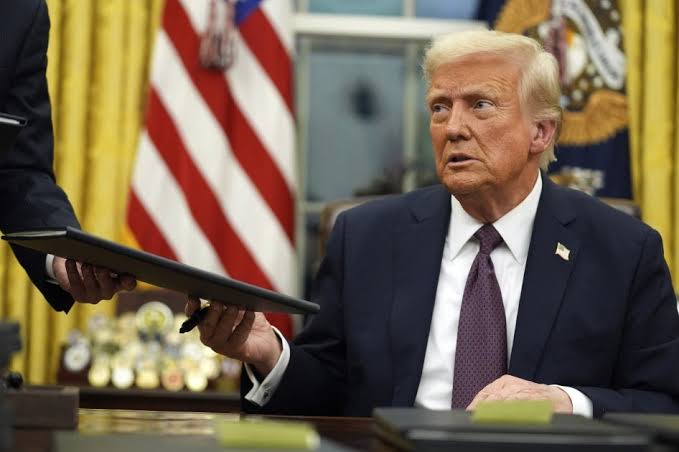
The recent escalation in military tensions between the United States and Iran highlights how overseas military bases can serve as main targets for retaliation during conflict, even without any attacks on U.S. soil.
Following U.S. strikes on Iranian-linked targets in the Middle East, Tehran chose a tactical response instead of attacking the American mainland directly. It launched missile and drone attacks against U.S. military installations across the Gulf region, targeting bases in Iraq, Qatar, and Bahrain as part of its declared retaliation strategy. The pattern was unmistakable, simple, and it is when confronting a major power’s homeland seems risky or escalatory, Iran shifts the battleground to foreign bases, turning the Gulf into a tense theatre of confrontation.
The United States mainland remained completely unaffected. It was the host nations—states geographically proximate to the U.S. that allowed U.S. military presence, which found themselves vulnerable to incoming projectiles, airspace alerts, and escalated security threats. This situation highlights a clear structural vulnerability inherent in hosting foreign military infrastructure. When a global power conducts military operations abroad, its forward operating bases become integral parts of that conflict.
These installations are unequivocally targeted by adversaries, regardless of whether the host nation was involved in the decision-making process. The process that led to retaliation illustrates significant risks for African nations. Many African countries host Western military facilities involved in surveillance, logistics, and counter-insurgency. If a Western power gets involved in a larger interstate conflict, these bases might be seen as strategic targets and attacked. Iran’s retaliation approach demonstrates that a state doesn’t have to target Washington or New York directly; instead, it can hit bases in third countries. This transfers the physical impact of conflict to a foreign land.
READ ALSO: What Do Countries Targeted by the United States Have in Common?
In Nigeria, discussions about deepening defence cooperation with the United States have periodically resurfaced in political debates over the past few years. Although the country currently hosts no permanent U.S. military base, the possibility of establishing one in Nigeria under President Bola Ahmed Tinubu’s administration could significantly influence regional security dynamics. If an agreement were reached to allow a U.S. military presence, Nigeria would become a strategic factor in U.S. defence planning, potentially aligning it with U.S. adversaries’ calculations during major regional or global conflicts.
In wartime planning, forward bases are recognised as critical high-value targets because they house aircraft, store essential equipment, and coordinate operational activities. Successfully destroying or disabling these bases significantly undermines an opponent’s regional capabilities without crossing the threshold of striking their homeland. The Iran–U.S. confrontation clearly illustrates how this doctrine operates effectively in real-world scenarios.
For host countries, the implications are profound. A facility originally intended for cooperation or counterterrorism can quickly become a prime target in an unrelated geopolitical conflict. Civilian populations living near such sites face increased risk. Even limited exchanges can lead to airspace closures, economic disruption, and emergency security measures.
The current Middle East crisis clearly demonstrates a fundamental reality of modern warfare: safety cannot be assured by distance from a superpower’s capital if that power’s military infrastructure exists within national borders. When global rivalries intensify, foreign bases often shift from strategic assets to frontline liabilities.
About The Author



Related Articles
Gambia Protests Turn Chaotic as Power Outages Worsen Ahead of December Elections
Thousands of Gambians took to the streets overnight in Banjul and surrounding...
Russia and North Korea Open First Road Bridge, Raising Fears of Covert Military Corridor
Russia and North Korea have opened the first road bridge linking the...

Only Two African Players Nominated for 2026 Men’s Ballon d’Or
Only two African players have been named among the 30 nominees for...

Senegal to Reprofile Debt Rather Than Restructure, Prime Minister Says
Senegal’s Prime Minister Ahmadou Al Aminou Lo has told parliament that the...
Leave a comment