



TikTok’s Late-Night Live Ban Sparks Outrage in Nigeria
 West Africa WeeklyDecember 8, 20252 Mins read1.2k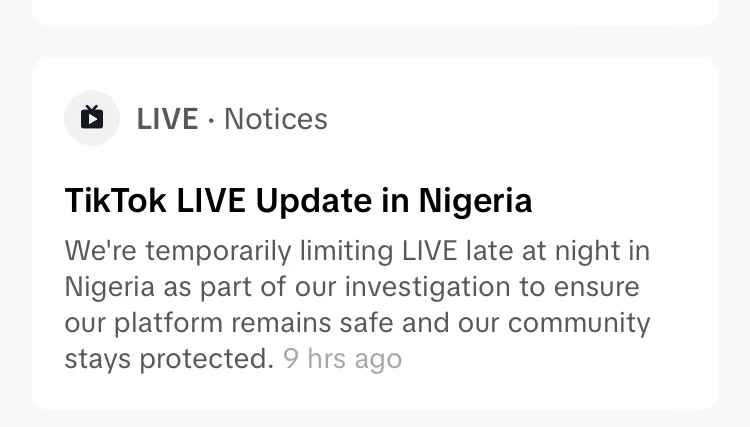
TikTok has quietly restricted late-night LIVE streaming in Nigeria, a move that has triggered anger among creators who say the platform is cutting off a major source of income at a time when many rely on digital hustles to survive.
The restriction, which blocks users from hosting or viewing LIVE sessions between late evening and early morning, was discovered when creators received in-app notifications about a “temporary safety measure.” TikTok says the change is part of a broader effort to curb harmful and sexually explicit content on the platform. But for many Nigerians, it feels like an unfair punishment handed down without consultation.
The company’s own data shows it banned more than 49,000 LIVE sessions in Nigeria between April and June this year and removed nearly four million videos in the same period. TikTok argues that the spike in violations, especially involving exploitative or sexual acts on LIVE, forced them to introduce tighter controls. During a recent West Africa Safety Summit, the platform insisted that Nigeria’s safety landscape needed “special attention.”
Still, the backlash has been swift. Nigerian creators say TikTok’s approach is too blunt and disproportionately affects users who follow the rules. Late-night LIVE sessions are among the most active hours in the country, when viewers unwind after work, join comedy streams, play games, or watch musicians perform. For many creators, this is when they earn the bulk of their income through virtual gifts and sponsorships. Cutting off those hours is, for many, the same as cutting off their paycheck.
READ MORE: Nigeria’s Proposed Mining Ban Sparks Backlash From Industry Stakeholders
Across social media, Nigerians are calling the decision discriminatory. They argue that creators in other countries also push boundaries on LIVE, yet TikTok rarely imposes blanket bans on entire regions. Instead of punishing the whole community, they say, the platform should target repeat offenders, improve moderation tools, or invest in local partnerships to manage the problem.
There is also frustration over the lack of clarity. TikTok has not said how long the restriction will last, or what metrics will guide its decision to lift it. With no timeline, creators feel left in limbo, unable to plan content or revenue streams. Some have already begun exploring alternatives, such as Instagram LIVE, YouTube streaming, or smaller Nigerian-owned platforms. But none offers the scale or monetisation potential that TikTok currently provides.
Nigeria is one of TikTok’s most active markets in Africa. The platform has become a cultural engine, driving music trends, influencing fashion, and shaping careers for young comedians, dancers, and commentators. Because of the country’s high cost of living, many creators run TikTok like a full-time job. Losing late-night LIVE is not just about entertainment; it affects rent, bills, and family support.
While TikTok says it is prioritising user safety, many Nigerians believe the platform has taken the easy route by imposing a blanket shutdown instead of making more thoughtful, locally informed decisions. Until the restriction is reversed, creators fear the country’s vibrant TikTok economy will shrink, and the trust between Nigerian users and the platform will continue to erode.
In a country where digital creativity is one of the few growing opportunities for young people, the debate is no longer just about community guidelines. It is about fairness, economic survival, and whether global platforms truly understand or value their Nigerian users.
About The Author


Related Articles
Gambia Protests Turn Chaotic as Power Outages Worsen Ahead of December Elections
Thousands of Gambians took to the streets overnight in Banjul and surrounding...
1st Niger Bridge Closure Begins as Commuters Lament Owerri Road
The temporary closure of the 1st Niger Bridge to traffic for emergency...
Russia and North Korea Open First Road Bridge, Raising Fears of Covert Military Corridor
Russia and North Korea have opened the first road bridge linking the...


Only Two African Players Nominated for 2026 Men’s Ballon d’Or
Only two African players have been named among the 30 nominees for...
Leave a comment